
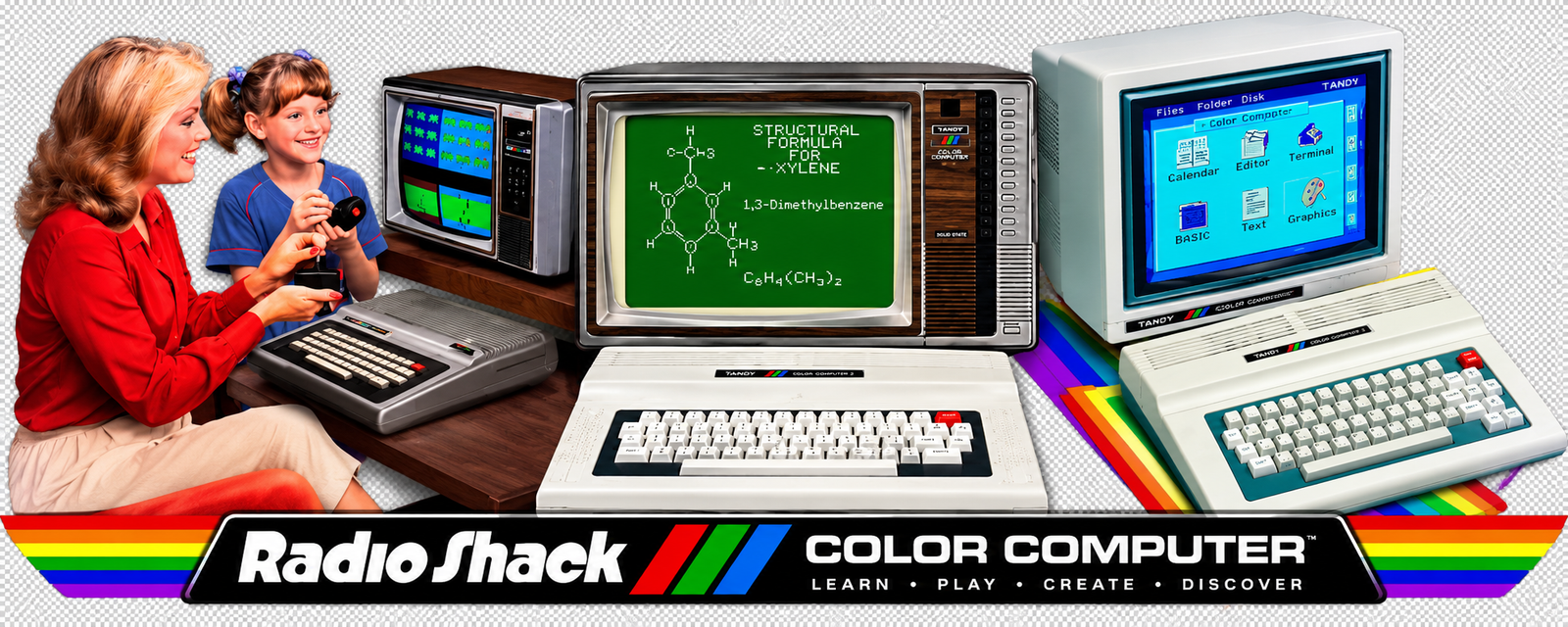
MY FIRST COMPUTER
The Color Computer was my first computer. My parents bought it for my 13th birthday in 1981, along with an Okidata 82A printer, a floppy drive and a few other odds and ends.
At the time I wanted an Atari 800, like my friends had - and in one conversation, I got a little bratty about it. Thankfully, at the ripe old age of 12, I lost that argument.
It wasn't until I found The Rainbow magazine at Wilkie's News near the Dayton Mall that I began to realize what the Color Computer family was really capable of becoming. Even in an age of multi-core computers, this little single-board 8-bit machine still holds a special place in my heart.
THE COLOR COMPUTER STORY
Introduced by Radio Shack in 1980, the TRS-80 Color Computer was very different from the Z80-based TRS-80 Model I, III and 4 systems. The CoCo was built around Motorola's 6809 processor family and was designed as an expandable home computer capable of programming, education, games, communications and serious applications.
Across three generations the basic platform evolved from the original gray Color Computer, through the smaller white Color Computer 2, to the substantially enhanced Tandy Color Computer 3. The machines retained a remarkable degree of family continuity while memory, video, storage and operating-system capabilities grew dramatically.
BEFORE THE COCO — GREEN THUMB, AGVISION & VIDEOTEX
The story of the Color Computer begins before the Color Computer itself. Project Green Thumb explored low-cost videotex terminals for delivering remotely updated information through telephone connections and television displays.
That work led through AgVision and Radio Shack's TRS-80 Videotex system toward the architecture that would become the Color Computer. The later AgVision and Videotex machines used the Motorola 6809 with the MC6847 Video Display Generator and MC6883 Synchronous Address Multiplexer — the same basic hardware family at the heart of the original CoCo.
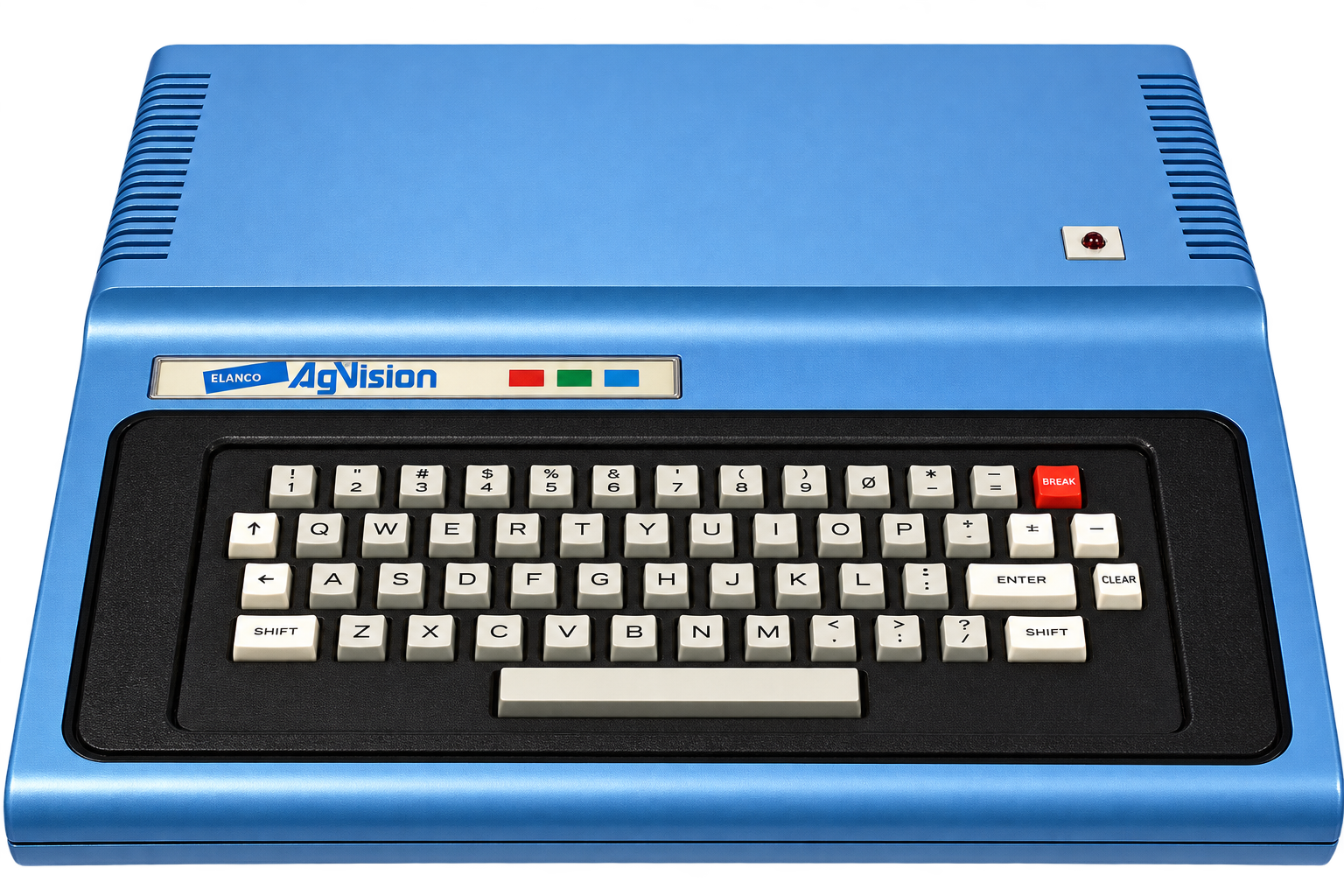
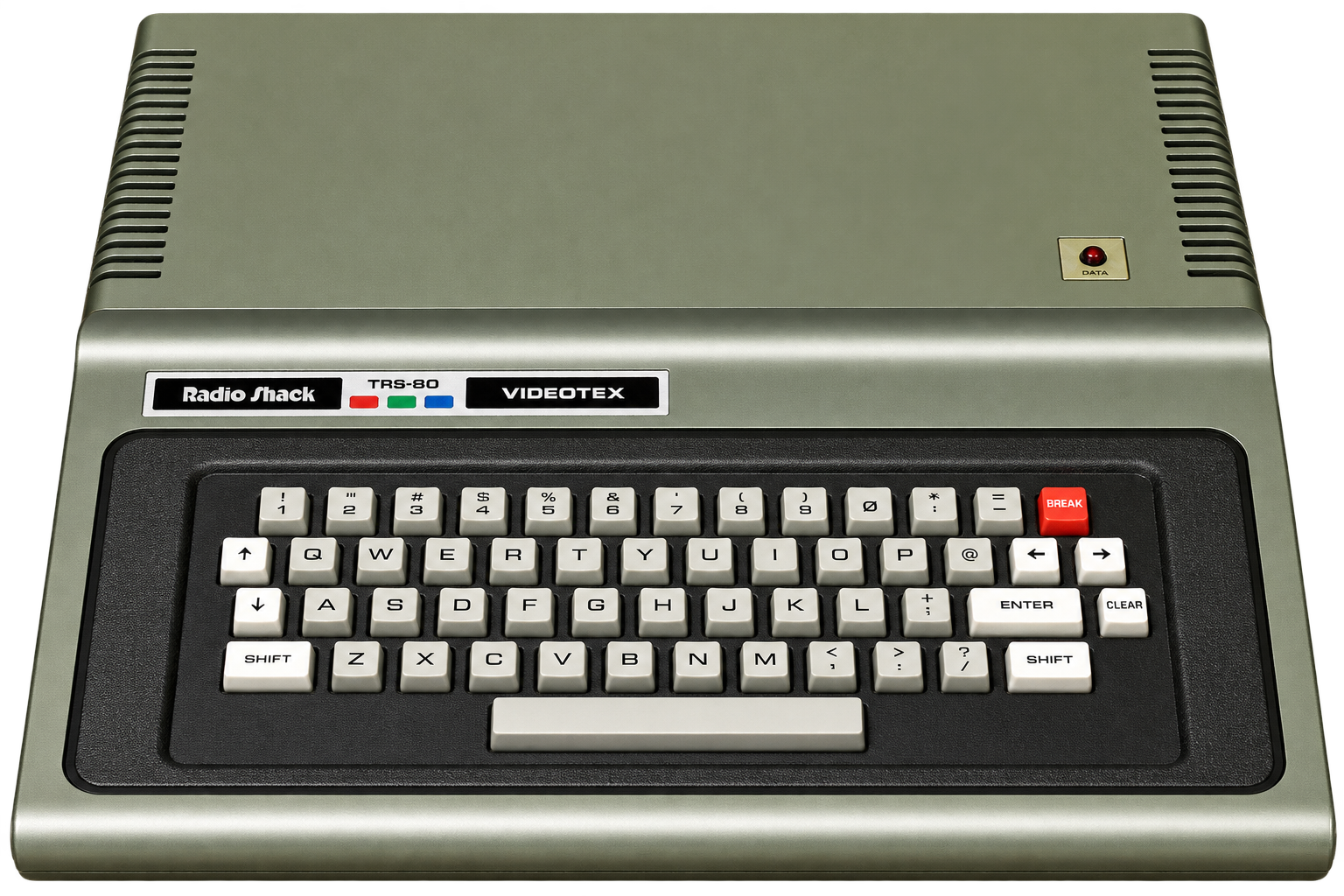
The transition from a dedicated information terminal to a general-purpose home computer changed the purpose of the machine while preserving much of its underlying design. The result was the TRS-80 Color Computer — a programmable, expandable 6809-based system that could stand on its own rather than simply connect to a remote information service.
COLOR COMPUTER 1 — 1980
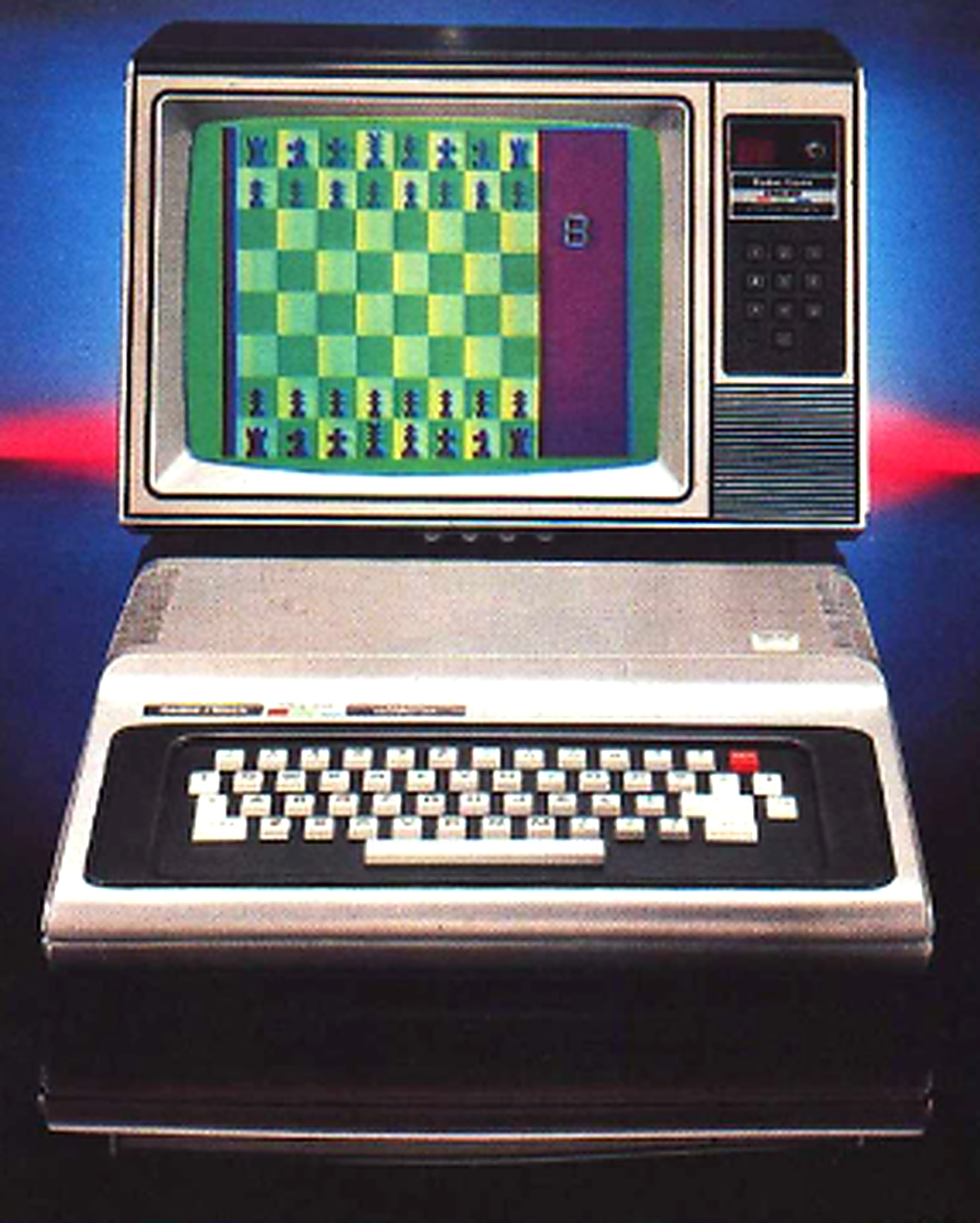
The original Color Computer established the architecture that would define the family. Early systems appeared with small memory configurations and the distinctive gray case, while later revisions gained more RAM, improved keyboards and numerous internal board changes.
| Introduced | 1980 |
| Processor | Motorola 6809E family |
| Memory | Varied by model and revision; expandable configurations became increasingly common |
| Video | MC6847-family VDG architecture |
| Built-in language | Color BASIC / Extended Color BASIC depending on configuration |
COLOR COMPUTER 2 — 1983
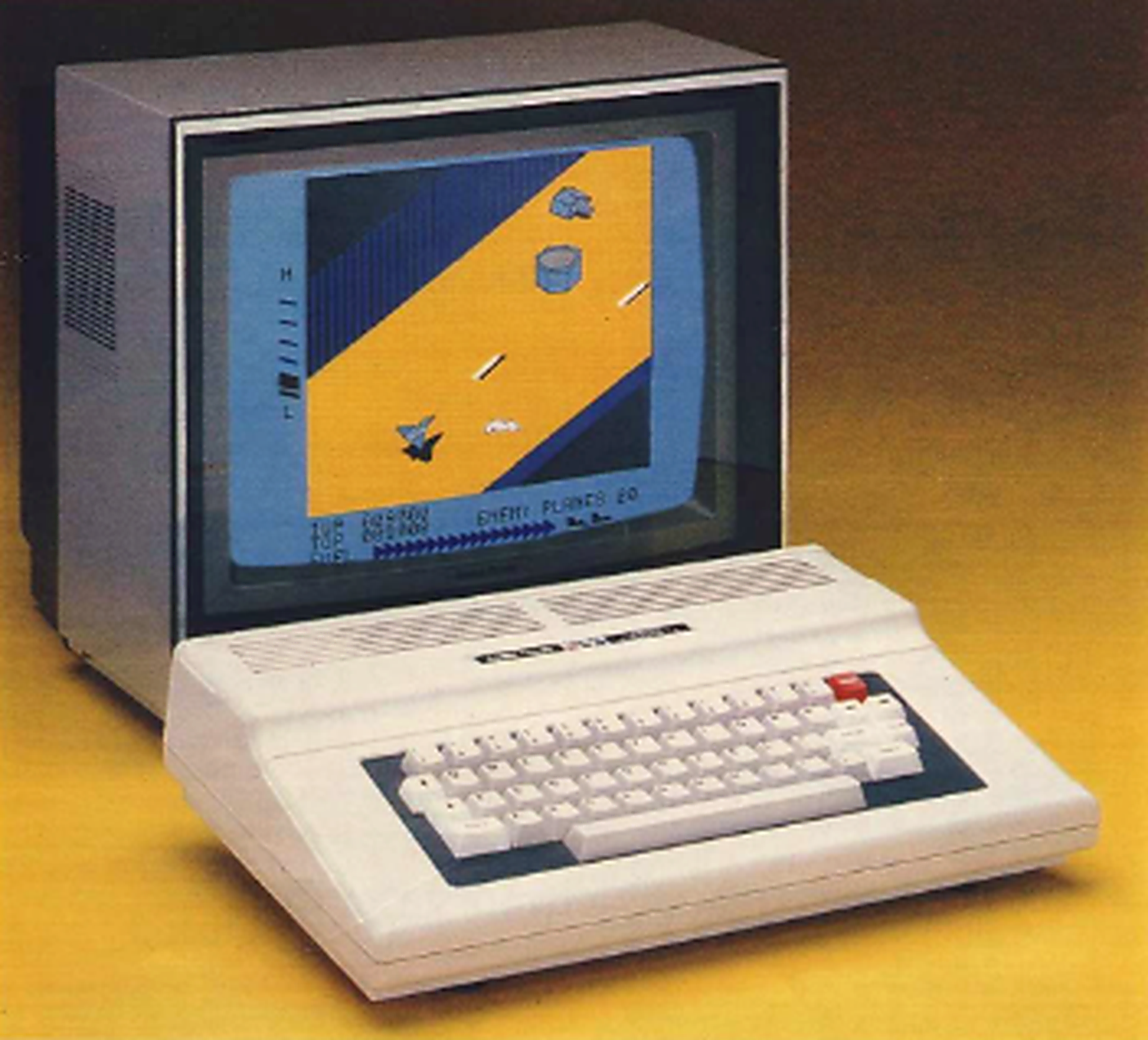
The Color Computer 2 placed the familiar CoCo architecture into a smaller white enclosure and continued Radio Shack's effort to reduce manufacturing cost while refining the platform. Behind the similar outward appearance were numerous model numbers, board revisions, memory configurations and production differences.
| Introduced | 1983 |
| Processor | Motorola 6809E family |
| Memory | Multiple factory configurations and revisions |
| Video | MC6847-family VDG; later hardware revisions added capabilities |
| Software compatibility | Broadly compatible with the established Color Computer software and peripheral ecosystem |
COLOR COMPUTER 3 — 1986
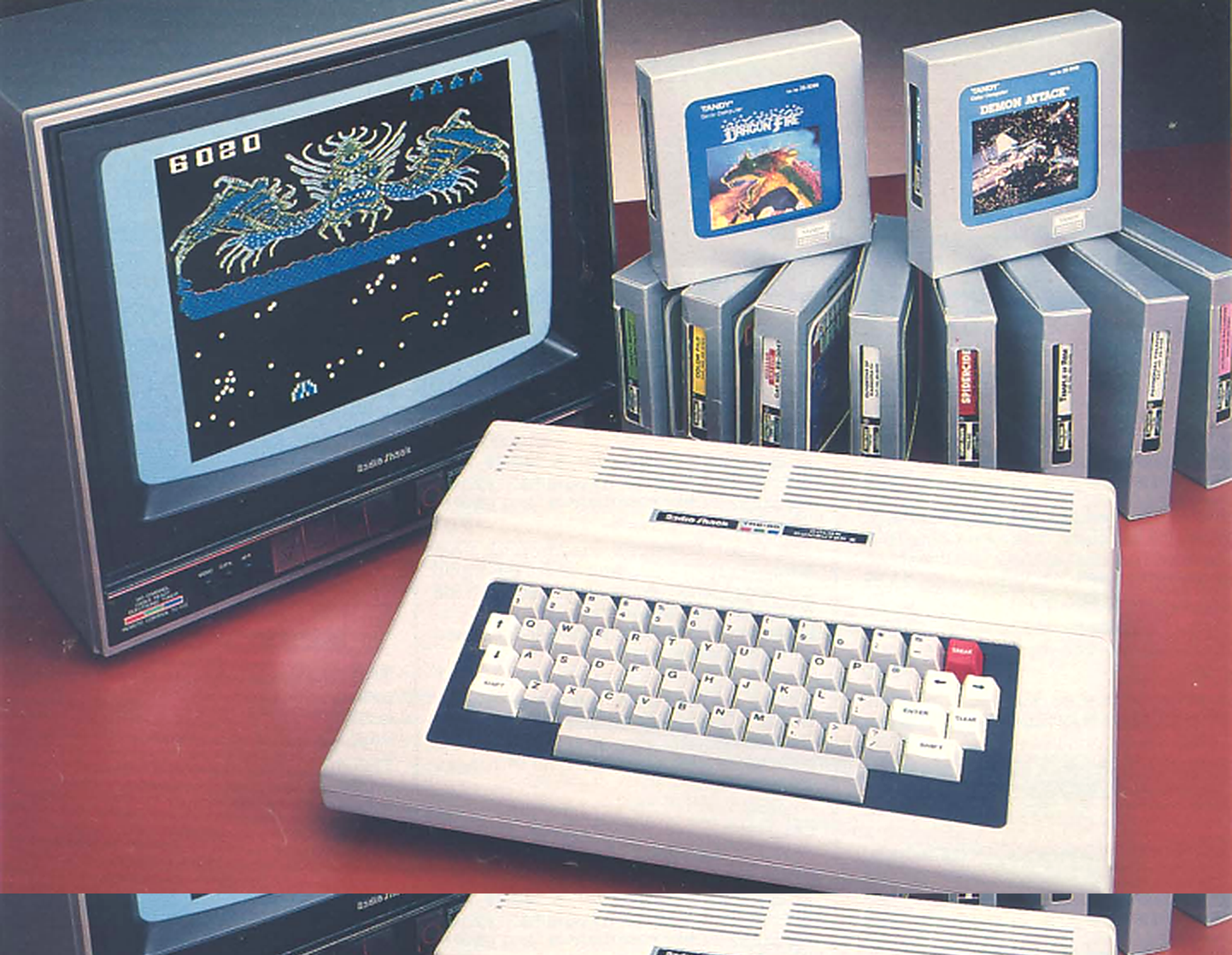
The Color Computer 3 was the largest technical step in the family's history. Its GIME chip brought enhanced graphics and text modes, a larger color palette and memory-management capabilities while maintaining compatibility with much of the existing CoCo software base.
| Introduced | 1986 |
| Processor | Motorola 6809-family architecture |
| Standard memory | 128K |
| Common expansion | 512K |
| Video / system logic | GIME |
| Advanced operating system | OS-9 Level II |
THREE GENERATIONS — ONE FAMILY
The Color Computer changed considerably during its eleven-year commercial life, but the continuity between generations is one of the platform's defining characteristics.
| FEATURE | COCO 1 | COCO 2 | COCO 3 |
|---|---|---|---|
| Introduced | 1980 | 1983 | 1986 |
| CPU family | 6809 | 6809 | 6809 |
| Video architecture | VDG / SAM | VDG / SAM family | GIME |
| Standard / Common RAM | 4K - 64K | 16K - 64K | 128K |
| Expansion Capability | Up to 64K | Up to 64K | 512K, 1MB & 2MB* |
| ROM BASIC | Color / Extended BASIC | Color / Extended BASIC | Extended Color BASIC |
| OS-9 | Yes | Yes | OS-9 Level II |
* The CoCo 3 shipped with 128K RAM and Radio Shack offered a 512K upgrade. Third-party manufacturers, including Disto, offered larger memory expansions of 512K, 1MB and 2MB.
THE MOTOROLA 6809 — HEART OF THE COCO
The Motorola 6809 architecture separated the Color Computer from Radio Shack's Z80-based TRS-80 business and personal-computer lines. It provided the common foundation that allowed the CoCo family to grow from an inexpensive home computer into a system capable of sophisticated disk software and multitasking operating systems.
That architectural continuity is a major reason the three generations feel like one family rather than three unrelated computers.
FROM VDG TO GIME
COCO 1 / COCO 2
MC6847-family VDG
Video generation for the original architecture.
SAM
Memory addressing, timing and system functions worked alongside the VDG.
COCO 3
GIME
Integrated system and video functions while adding enhanced text and graphics modes, a larger palette and memory-management capabilities.
EXPANDING THE COCO
Expansion was central to the Color Computer experience. A basic machine could grow into a disk-based workstation surrounded by cartridges, interfaces, printers, modems and other peripherals.
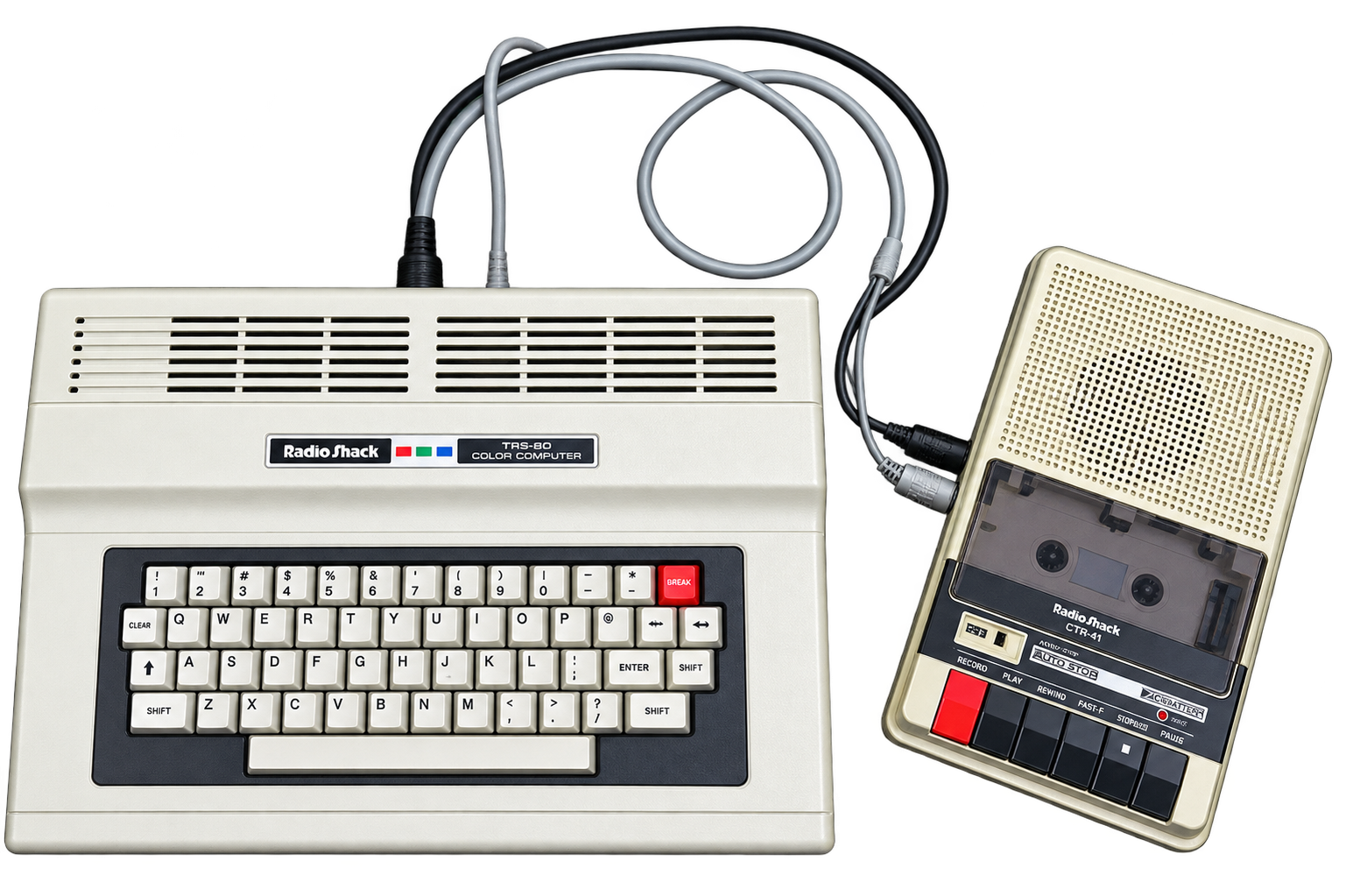
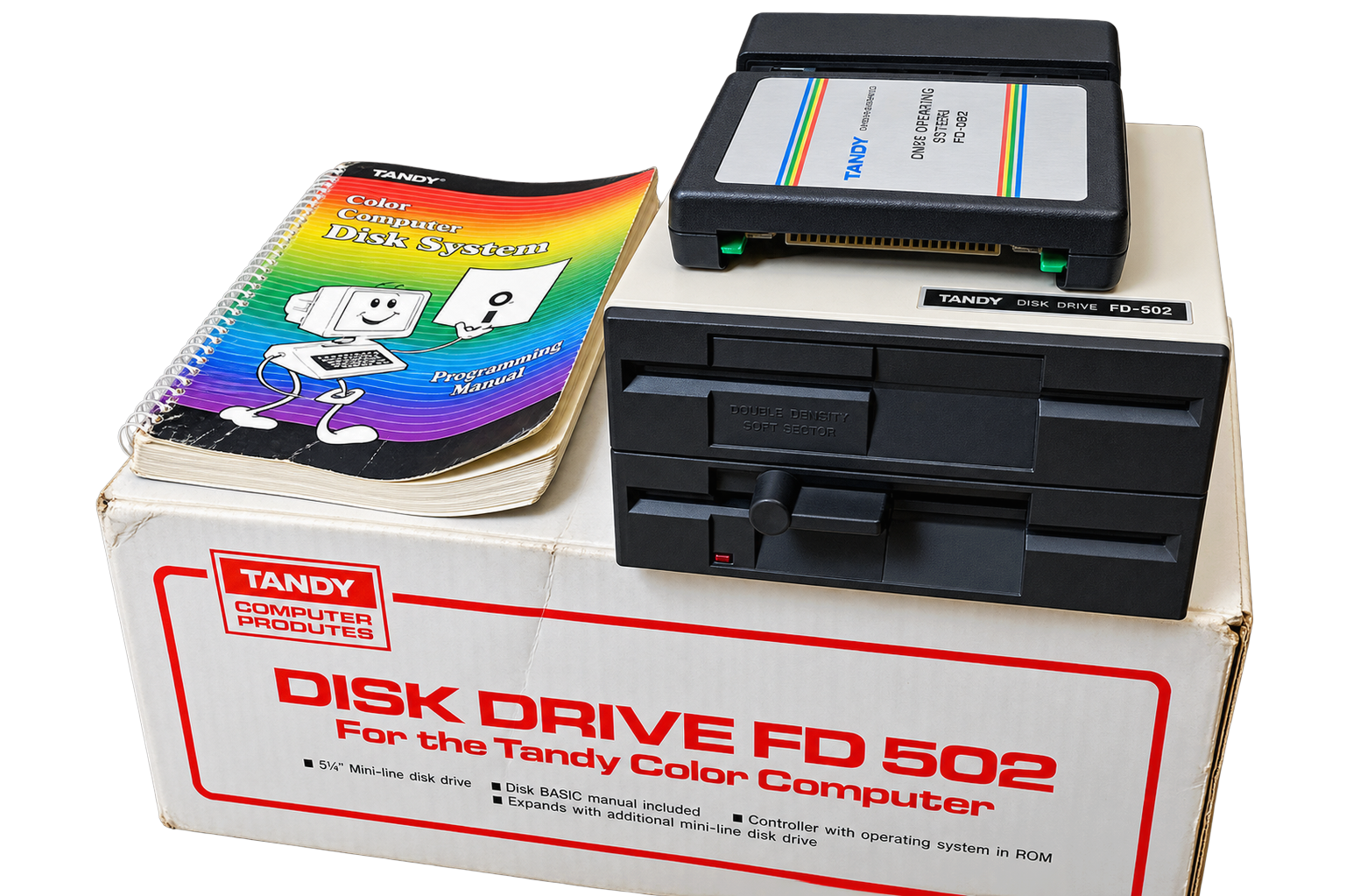
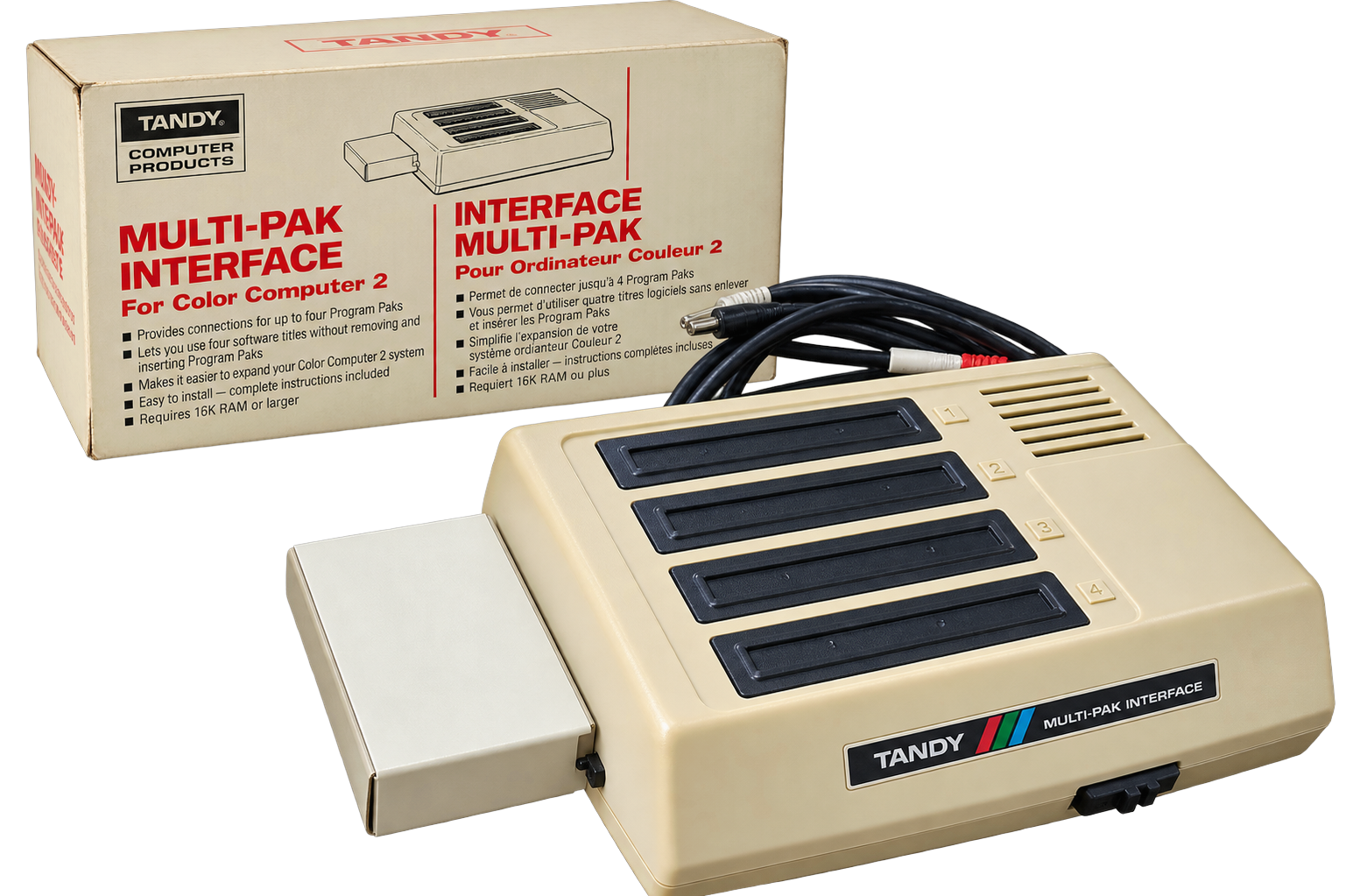
Radio Shack and third-party hardware included Program Paks, floppy controllers and drives, the Multi-Pak Interface, RS-232 communications hardware, printers, joysticks, mice, sound devices and memory expansions. Decades later, enthusiasts continued extending the platform with new storage, communications and display hardware.
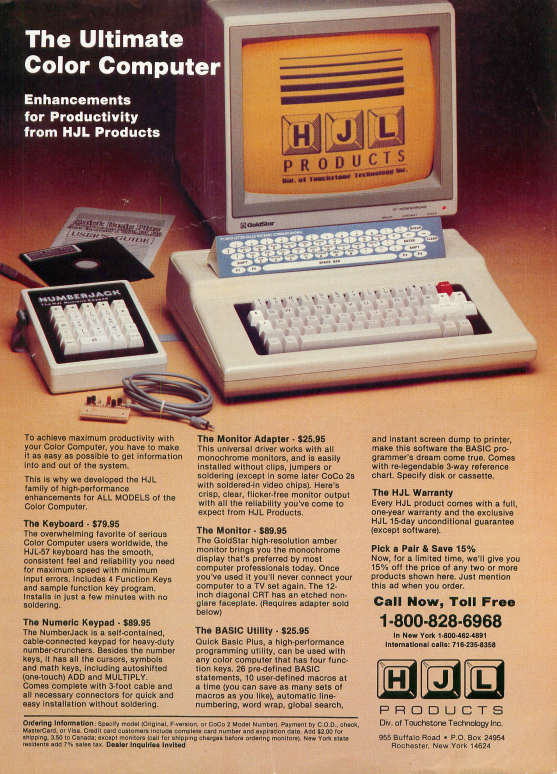
UPGRADING THE COCO - HJL PRODUCTS
The Color Computer's third-party market offered far more than disk drives and memory expansions. Companies such as HJL Products offered hardware intended to transform the inexpensive home computer into a more comfortable and productive system.
One of HJL's best-known upgrades was the HJL-57 keyboard, a full moving-key replacement for the original CoCo keyboard. HJL also offered a separate numeric keypad, a monitor adapter for connecting the CoCo to a higher-quality monochrome display, and software utilities aimed at programmers and more serious users.
Upgrades like these illustrate an important part of the Color Computer story. Owners didn't necessarily replace their CoCo when they wanted something better - they upgraded it. Keyboards, monitors, memory, storage, communications interfaces and countless other accessories allowed the same basic computer to grow along with its owner.
MUSIC, MIDI - AND A COCO THAT COULD LISTEN
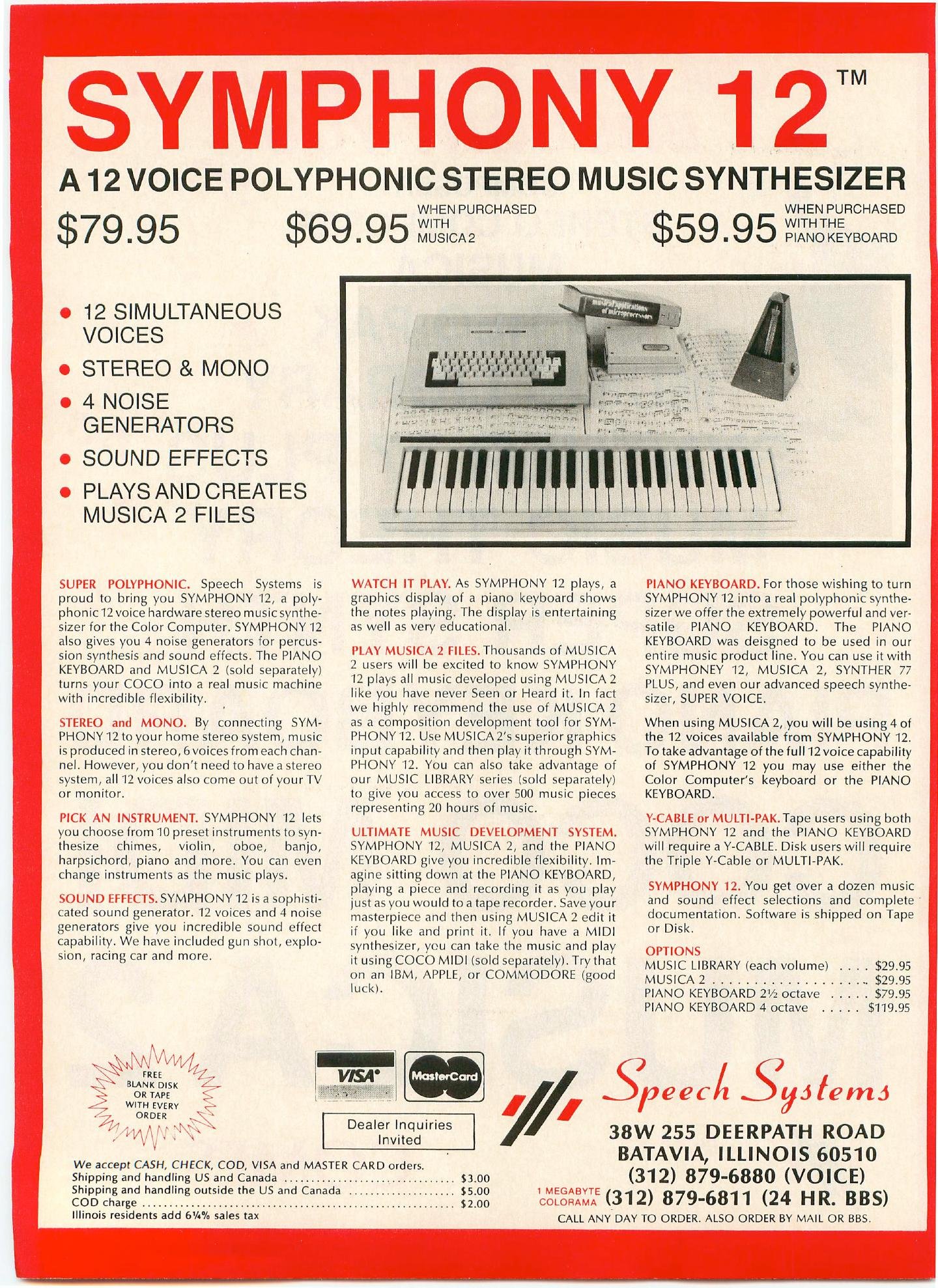
The Color Computer's expansion market wasn't limited to keyboards, memory and storage. Speech Systems developed an extraordinary collection of music, sound and speech products that could turn the CoCo into everything from a music workstation to a voice-controlled computer.
One of the company's more ambitious products was Symphony 12, a hardware music synthesizer providing 12 simultaneous voices, stereo or mono output, four noise generators and sound effects. Combined with Speech Systems' Musica 2 software and its external Piano Keyboard, a Color Computer could become a surprisingly capable music composition and performance system.
Speech Systems pushed the CoCo further into electronic music with CoCo MIDI. The interface allowed the computer to communicate with MIDI-equipped synthesizers from companies such as Korg, Roland, Casio and Yamaha. Music created for Musica 2 could be played through an external synthesizer, while users could also create their own music using the same music composition software.
Sound generation was only part of the story. The company's Super Voice speech synthesizer used the SSI-263 speech/sound chip and was capable of speech, sound effects and even singing. Speech Systems advertised a text-to-speech translator that allowed the computer to speak ordinary written text.
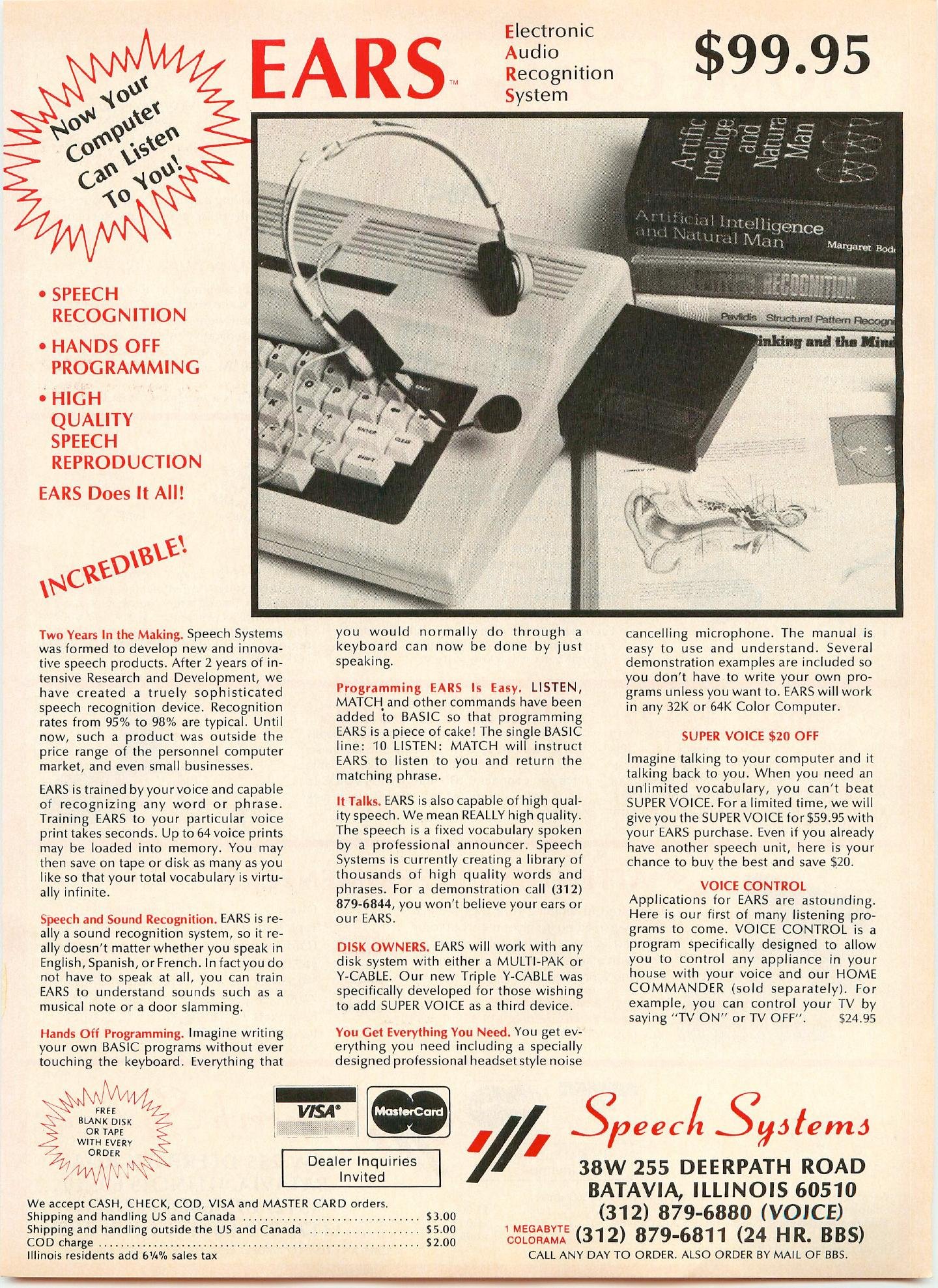
Perhaps the most unusual product was EARS - the Electronic Audio Recognition System. Instead of allowing the CoCo to speak, EARS allowed it to listen. The $99.95 interface used a microphone and voice-training software to recognize words or phrases spoken by its user. Speech Systems even promoted it for hands-off programming, allowing BASIC commands that would normally be entered at the keyboard to be issued by voice.
Products like these demonstrate just how inventive the Color Computer third-party market became. The same machine that began life connected to a television and cassette recorder could be expanded into a multi-voice synthesizer, connected to professional MIDI equipment, made to speak - and even taught to respond to its owner's voice.
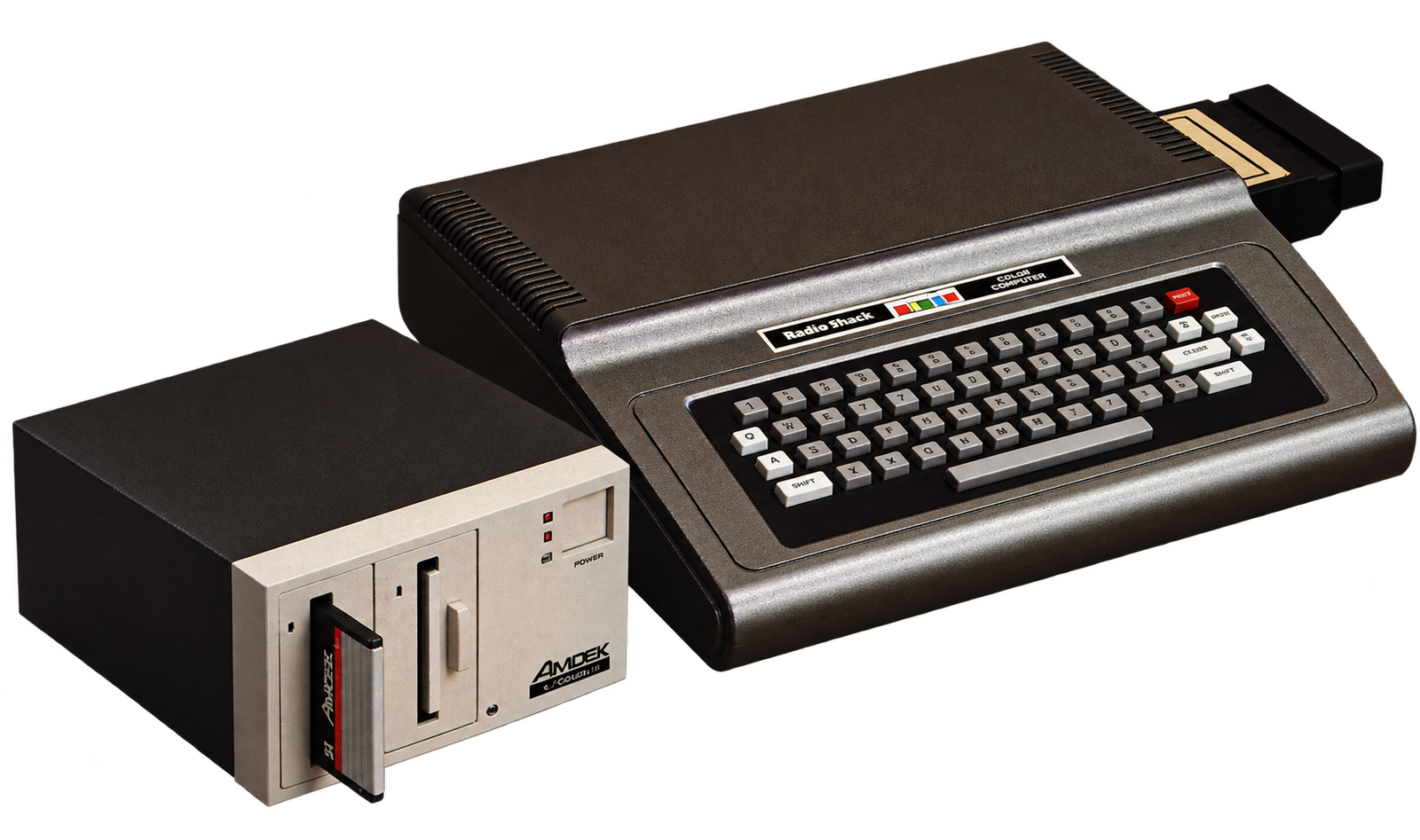
THE ODD ONE OUT - AMDEK AMDISK-III
Among the rarest storage systems offered for the Color Computer was the Amdek Amdisk-III. Introduced during the early 1980s, the Amdisk-III used unusual 3-inch micro-floppy disks rather than the familiar 5.25-inch disks used by Radio Shack's own drives.
The media looked surprisingly modern. Instead of the flexible outer jacket of a 5.25-inch floppy, the 3-inch disk was enclosed in a rigid plastic case. Amdek's format was based on the Hitachi 3-inch micro-floppy standard, one of several competing formats developed during the industry's search for a smaller replacement for the 5.25-inch floppy.
The Color Computer Amdisk-III contained two 3-inch drives. Amdek advertised the system as providing as much as 624K of formatted storage when both sides of the media were used. The disks were physically double-sided, but accessing the opposite side required removing the disk and turning it over - a rather unusual combination of new micro-floppy technology and the old "flippy disk" idea familiar to early computer users.
The system appeared in Color Computer advertising during 1983, and at least some CoCo software publishers supported it. Softlaw, for example, offered its disk software on 3-inch Amdisk media for an additional charge. But the format never developed anything approaching the software library of the standard 5.25-inch CoCo disk.
The Amdisk-III ultimately became a technological dead end. The competing 3.5-inch micro-floppy format eventually became the industry standard, while Amdek's 3-inch format disappeared. That short life, combined with relatively limited Color Computer adoption, makes an original CoCo Amdisk-III system an especially unusual piece of Color Computer hardware today.
HARD DRIVES AND MASS STORAGE
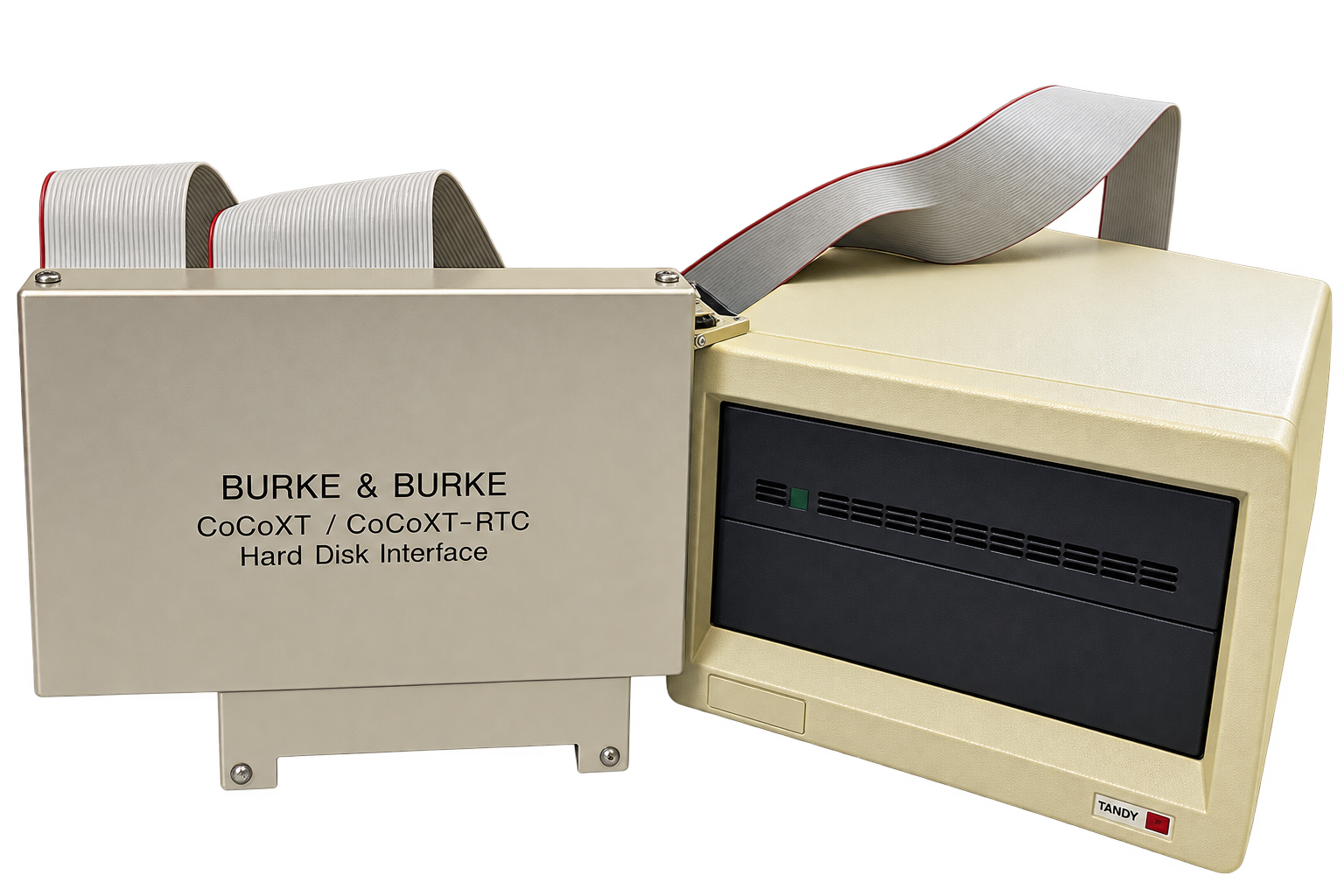
As Color Computer systems became more powerful, particularly with the CoCo 3 and OS-9 Level II, users began looking beyond floppy disks for mass storage. A surprisingly healthy third-party hardware market developed around the CoCo, providing hard drive controllers and storage systems that greatly expanded the machine's capabilities.
Companies including Disto , J&M Systems , Burke & Burke and Cloud-9 produced hard drive controllers for the Color Computer. These solutions allowed CoCo owners to use hard disks with capacities far beyond what could be stored on the machine's traditional floppy disks.
Hard drive storage was particularly valuable to OS-9 users. With its hierarchical file system, multitasking environment and support for larger applications, OS-9 could make excellent use of the additional storage. Combined with expanded memory, a hard-drive-equipped CoCo 3 could become a remarkably capable small computer system.
THE MODERN COCO MASS STORAGE - CoCoSDC
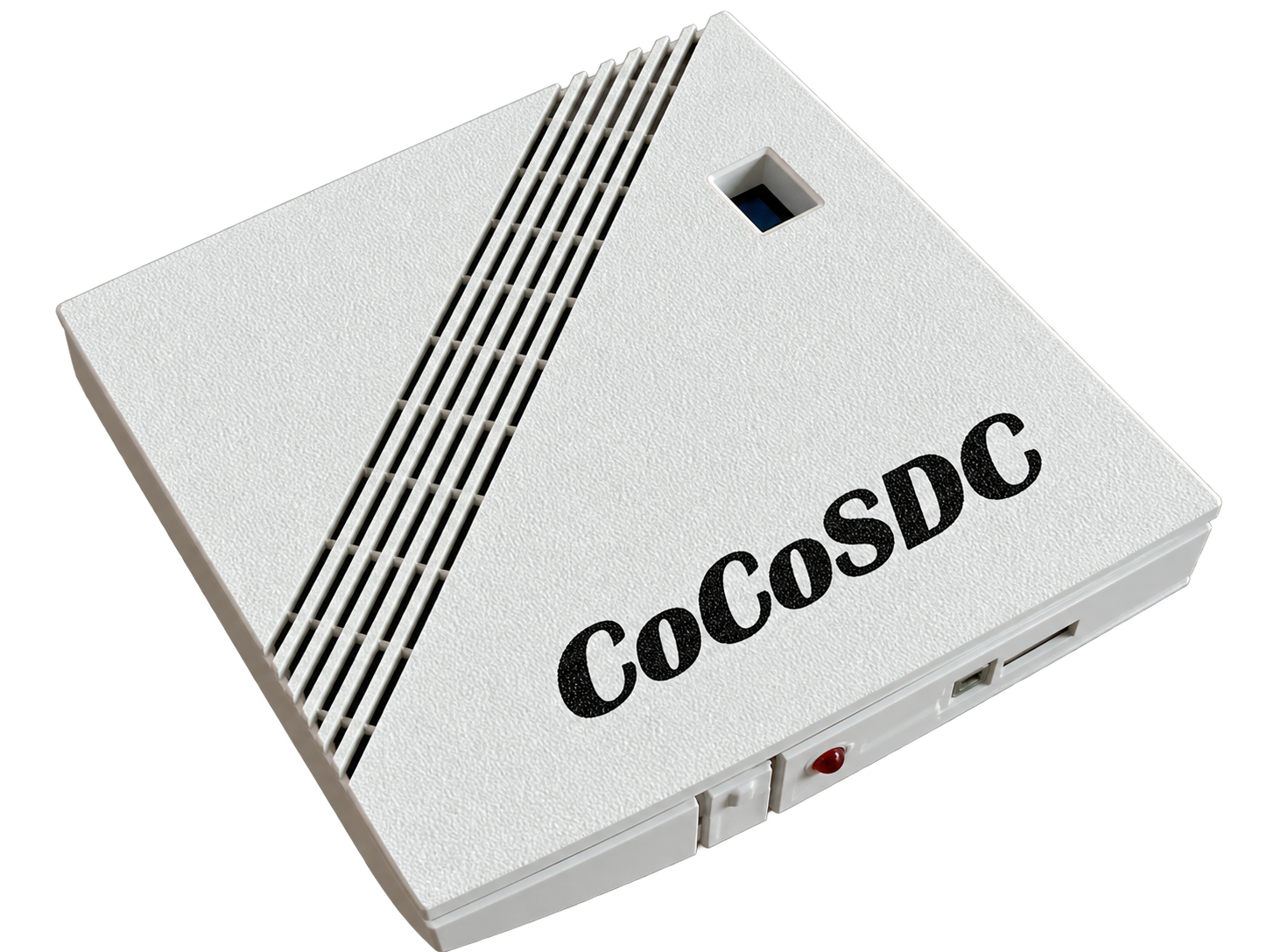
Today, the standard mass-storage device for many Color Computer users is the CoCoSDC . Rather than relying on aging floppy or hard disk hardware, the CoCoSDC uses an SD card and allows disk images to be mounted and accessed by the Color Computer.
The CoCoSDC has become one of the most useful upgrades available to a working CoCo. A single SD card can hold a large library of disk images, making it practical to keep software, games, utilities and development tools immediately available without maintaining a large collection of physical floppy disks.
BASIC & OPERATING SYSTEMS
COLOR BASIC
The built-in programming environment that introduced many owners to computing and programming.
EXTENDED / DISK BASIC
Expanded graphics capabilities and, with disk systems, a much more capable storage environment.
OS-9
A sophisticated operating-system environment that demonstrated how far the 6809-based machines could be pushed.
OS-9 LEVEL II / NITROS-9
The CoCo 3's expanded memory architecture opened the door to Level II, while later community development carried the OS-9 tradition forward.
SOFTWARE & GAMES
The CoCo library ranged from productivity and communications software to programming languages, educational titles and games. It was a machine on which many owners learned to program, but it was also very much a home entertainment computer.
PROGRAMMING
Color BASIC
Extended BASIC
Disk BASIC
Assembly language
OS-9 development
PRODUCTIVITY
Word processing
Spreadsheets
Databases
Telecommunications
Educational software
GAMES
Dungeons of Daggorath
Mega-Bug
Polaris
Donkey King
Thexder
and hundreds more
THE RAINBOW CONNECTION
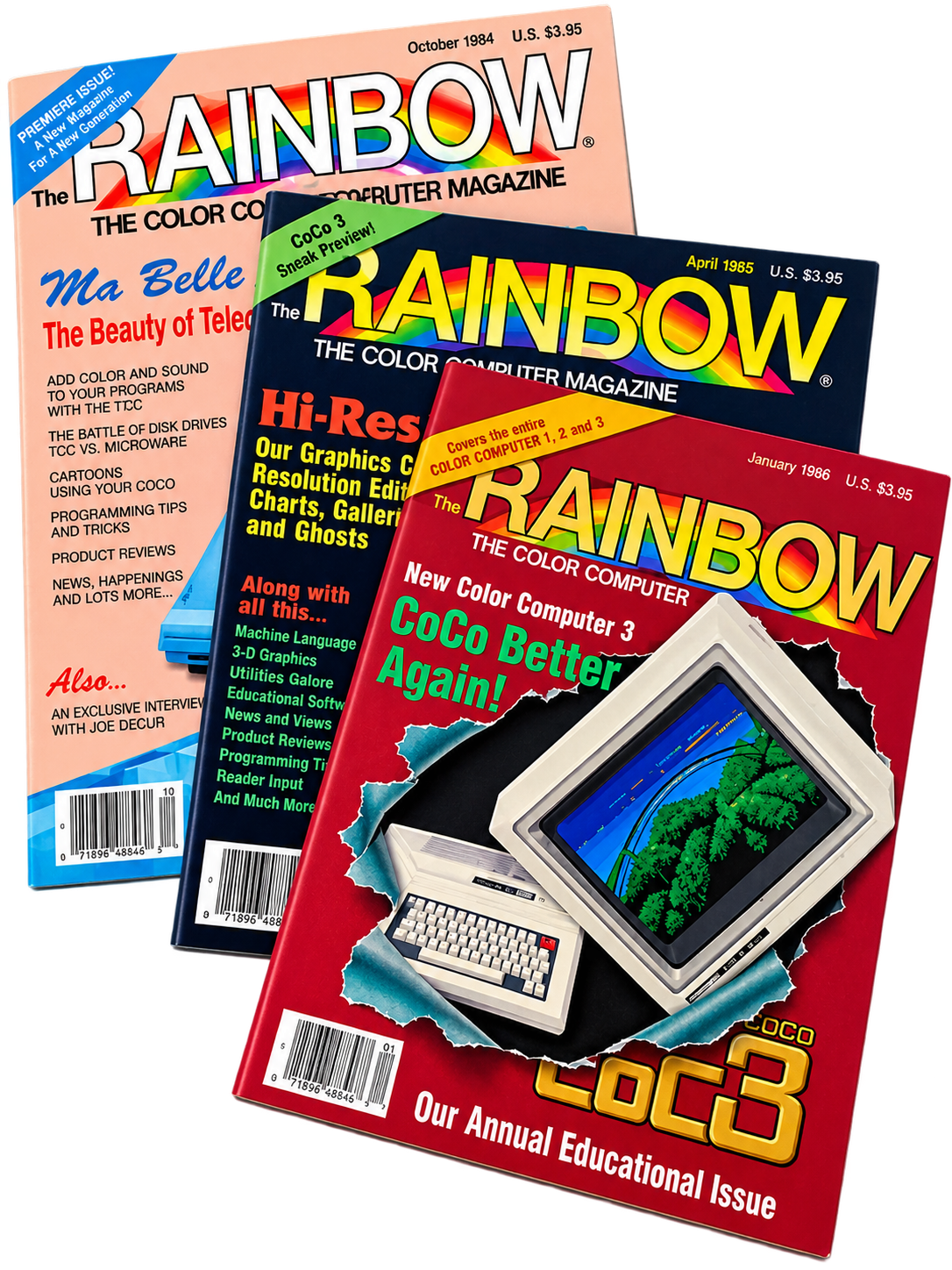
For many Color Computer owners, The Rainbow was nearly as important as the hardware itself. Its pages brought together type-in programs, games, reviews, technical articles, hardware projects, advertisements and the enormous third-party ecosystem surrounding the CoCo.
For me personally, finding The Rainbow was the point at which the Color Computer stopped being simply the computer I owned and became a platform whose possibilities seemed almost endless - and it took me too long to realize that.
THE COCO AT HOME
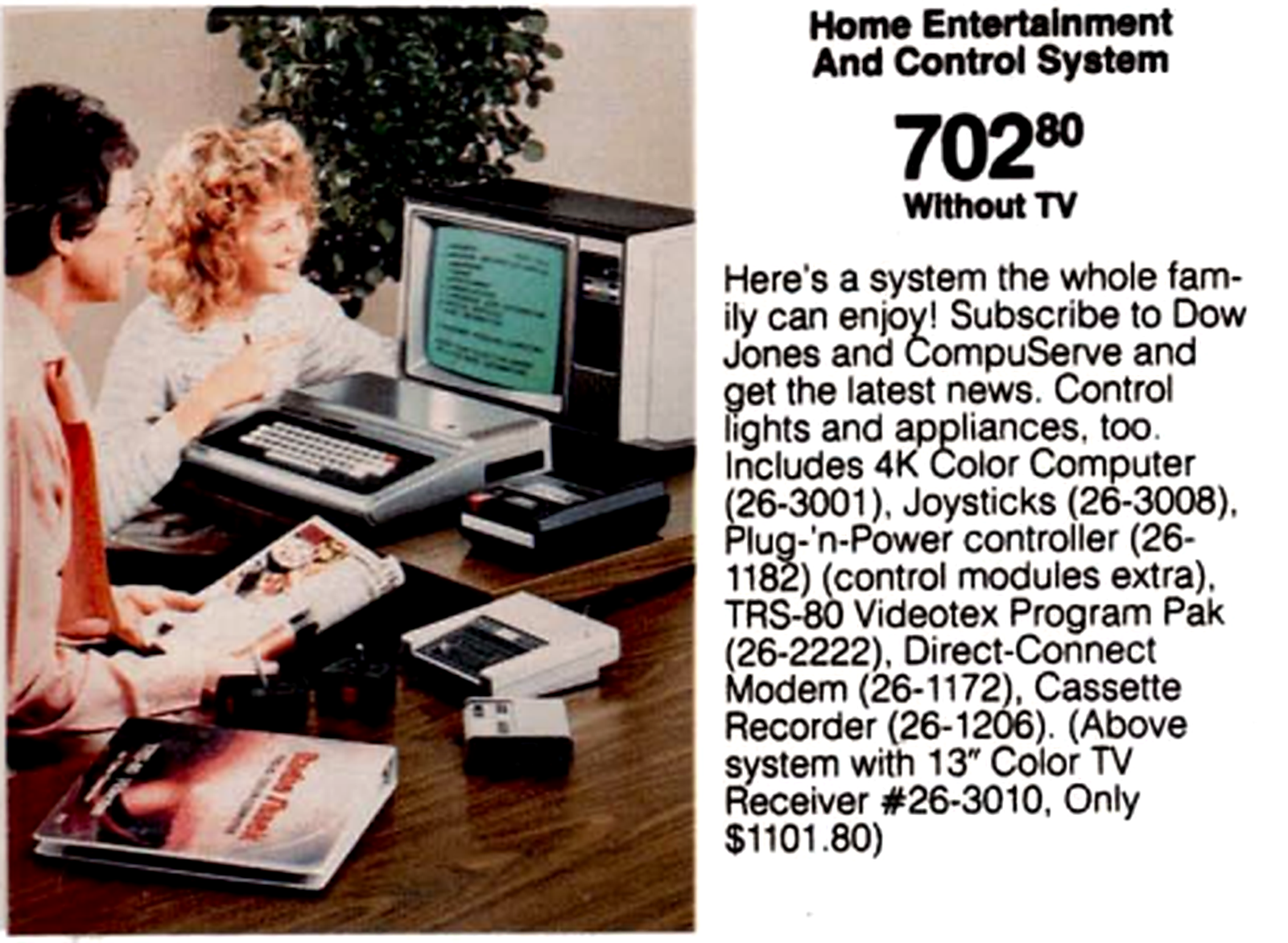
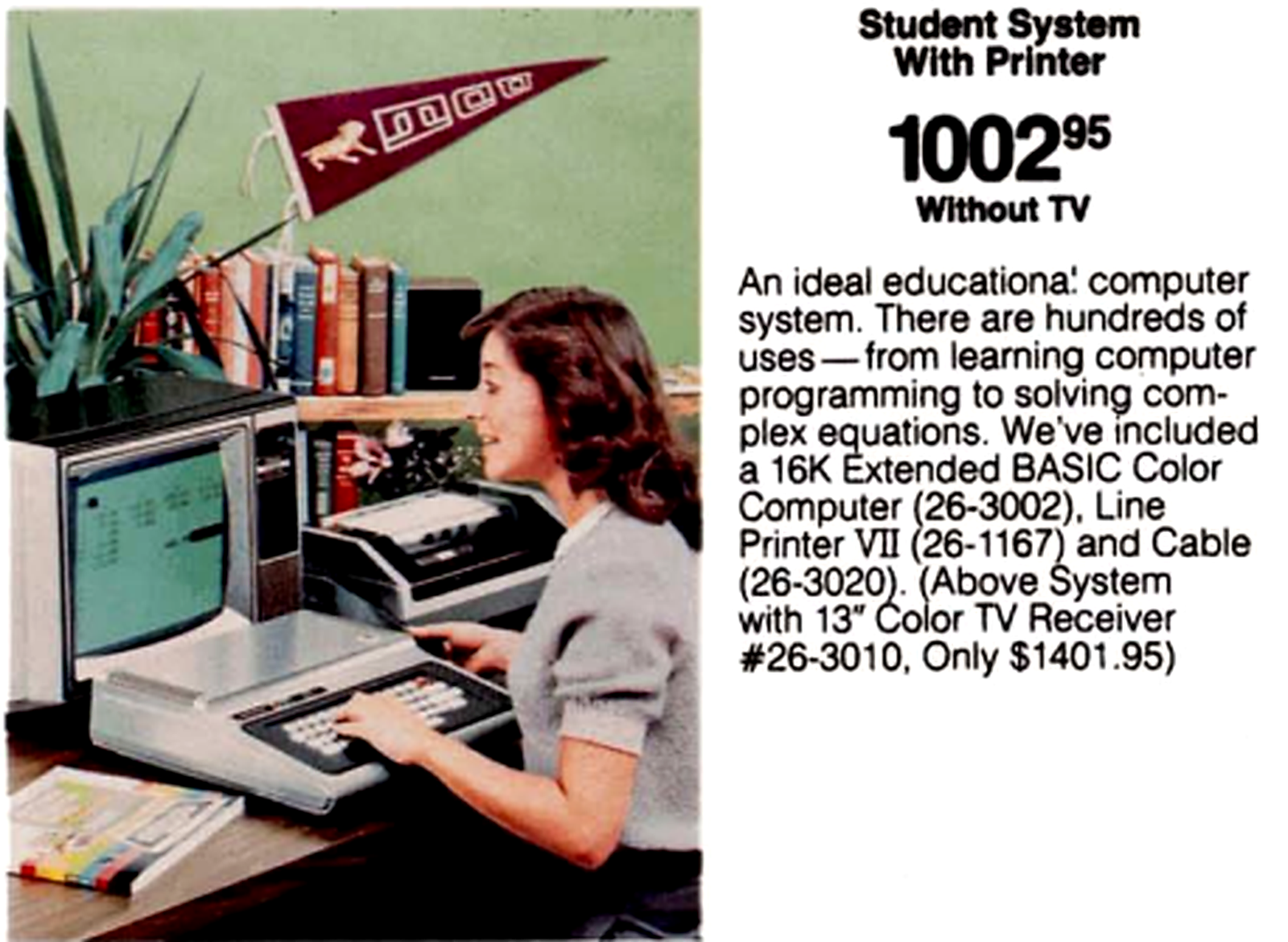
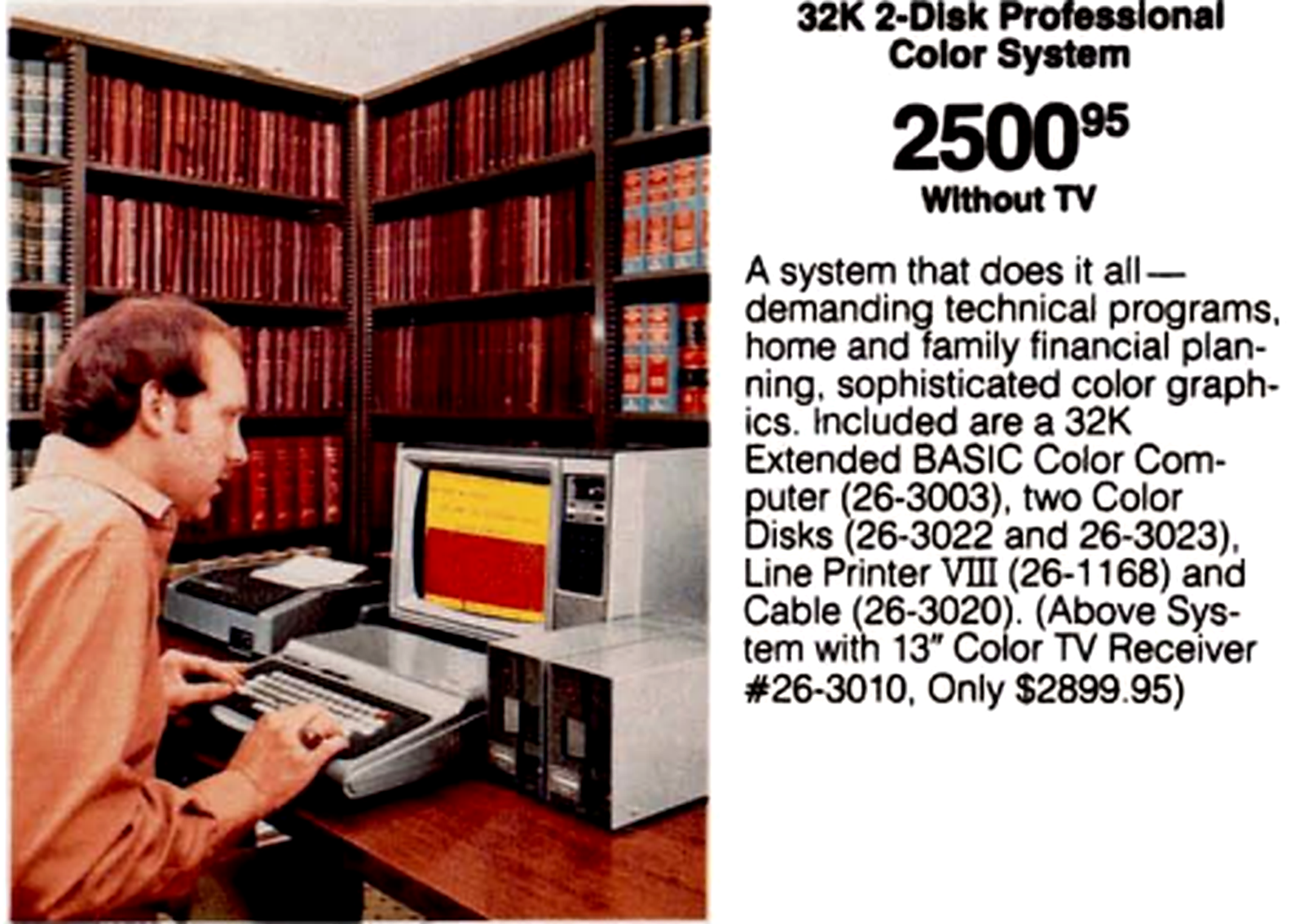
Radio Shack marketed the Color Computer as a machine for the whole household: programming, education, personal productivity and entertainment.
COLOR COMPUTER TIMELINE
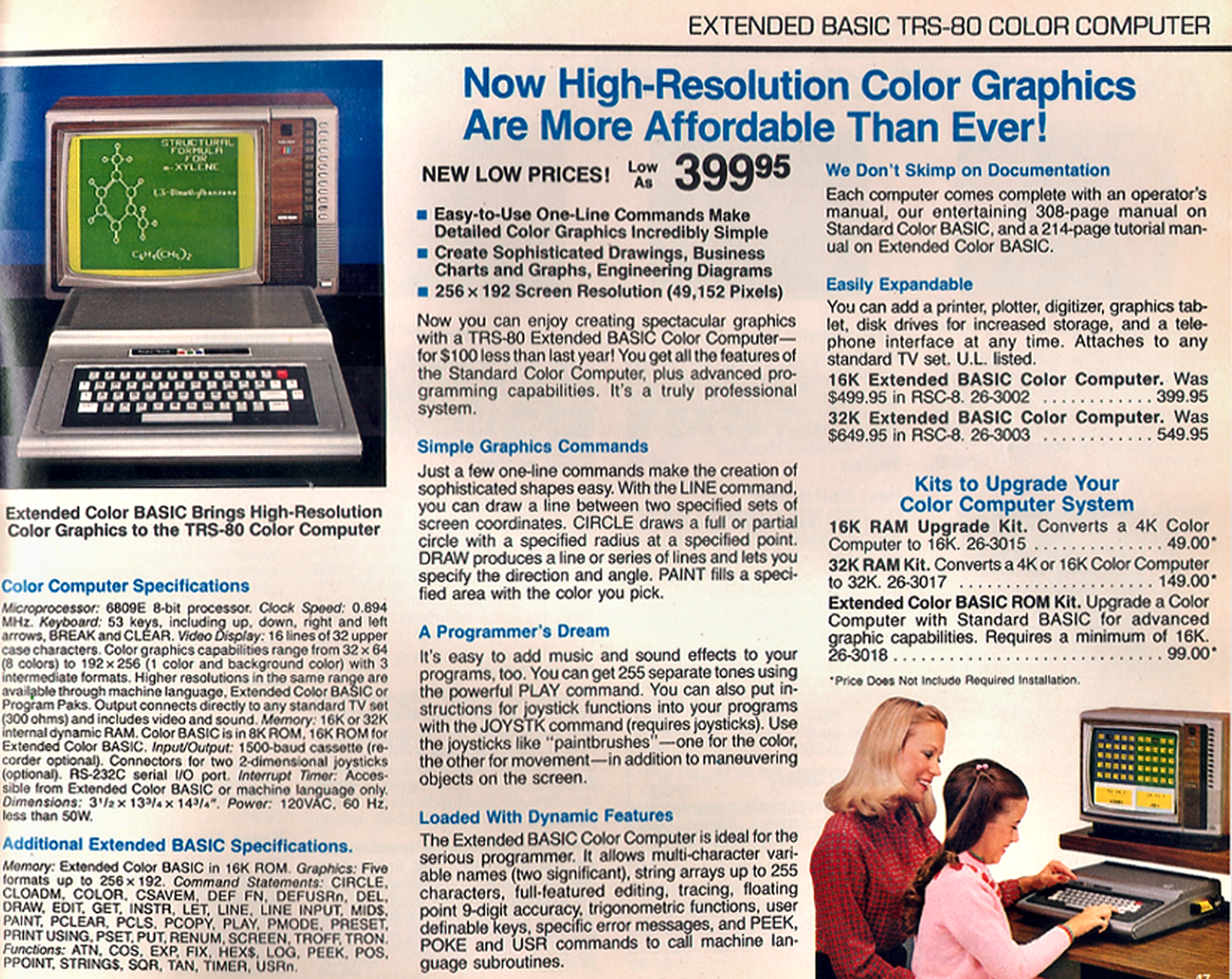
CATALOGS & ADVERTISING
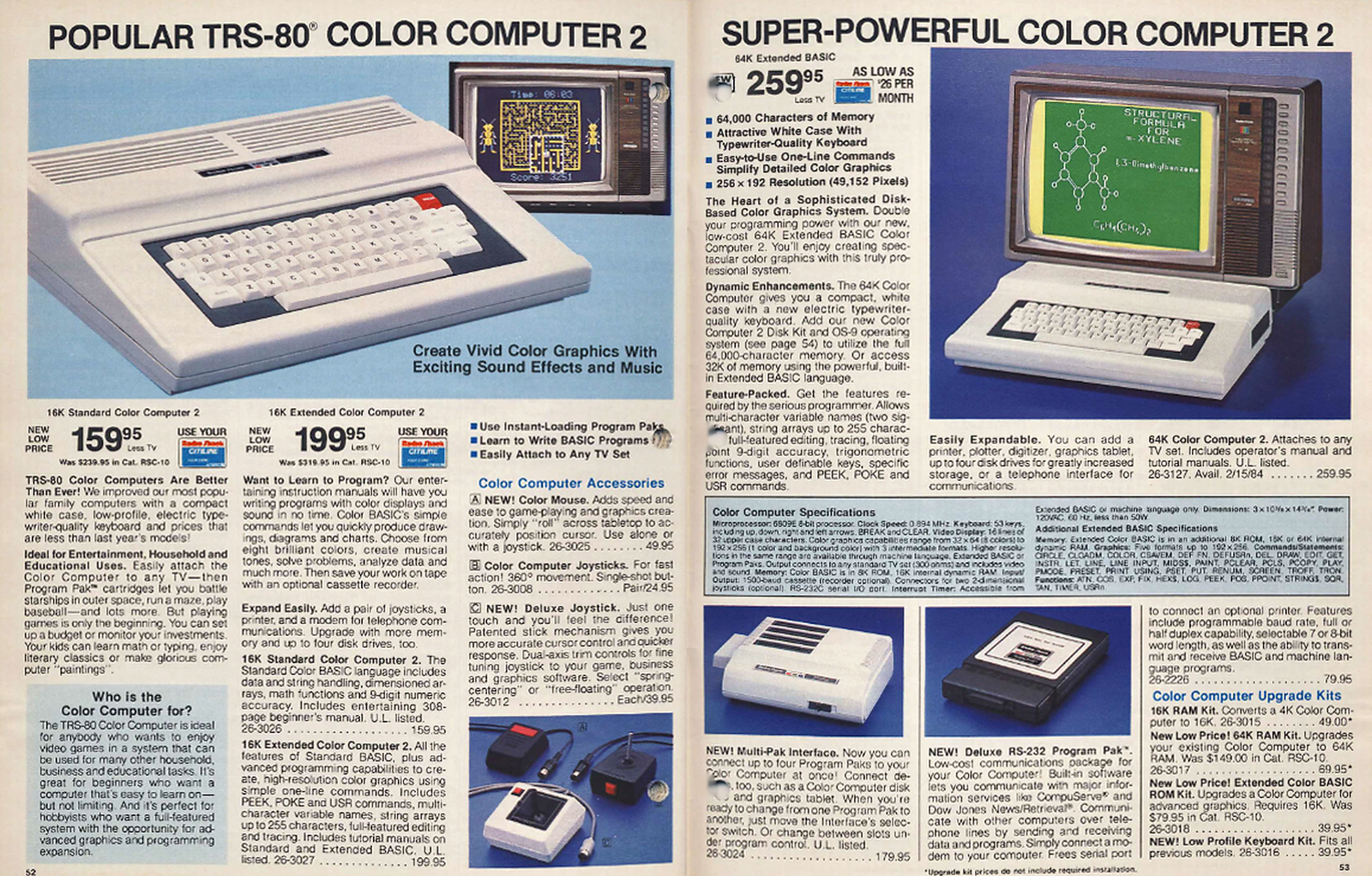
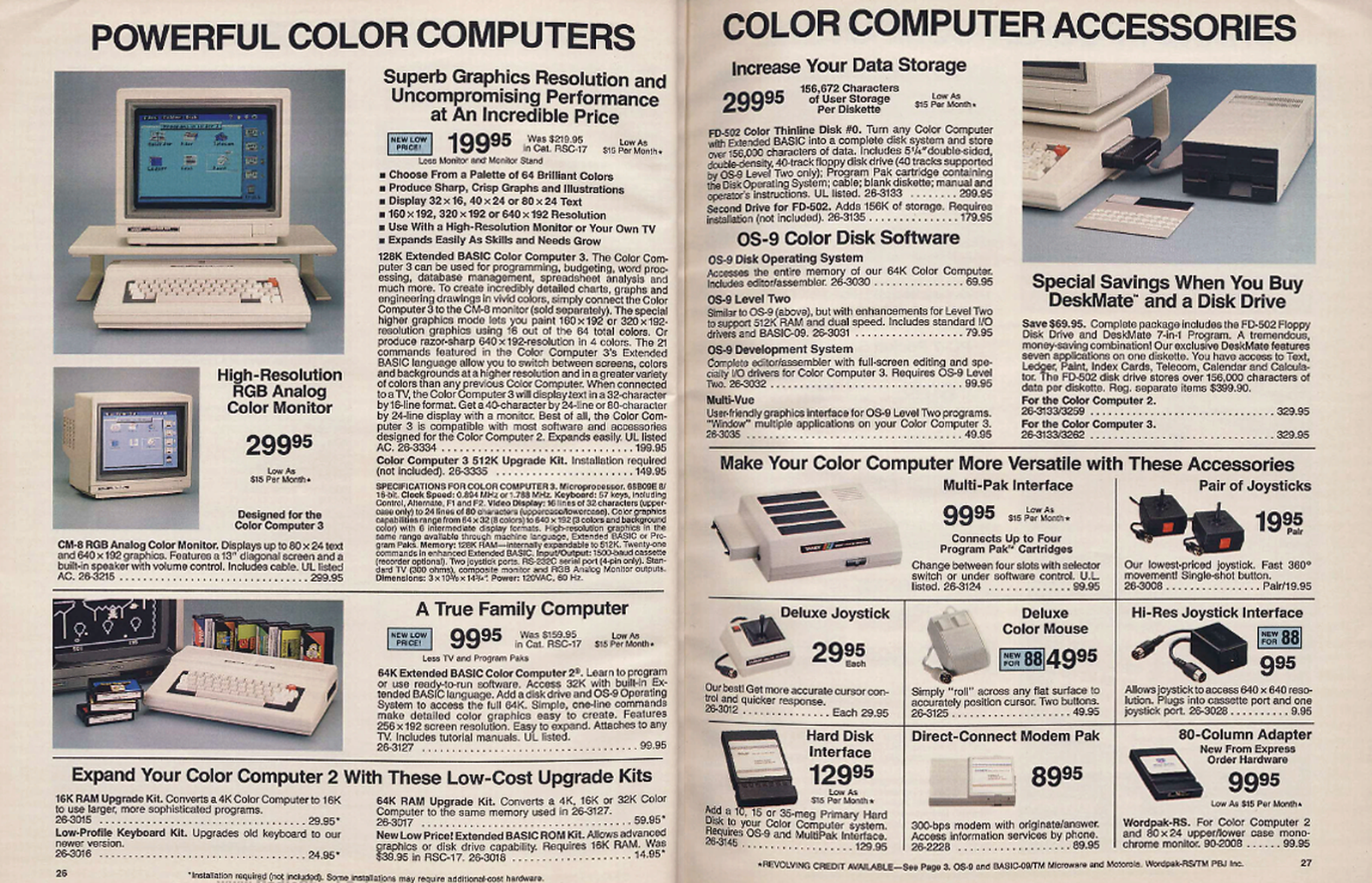
COCOLICIOUS! — THE ORIGINAL ARTICLES
The detailed model histories remain as the original long-form articles. These were written for 'Retro Gaming Times Monthly' beginning in 2011, and go far beyond the overview above, covering individual revisions, model numbers, development history, hardware differences and the oddities that make collecting the CoCo family so interesting. Are they complete? No. I'll continue to add to them as I uncover more info in the future.
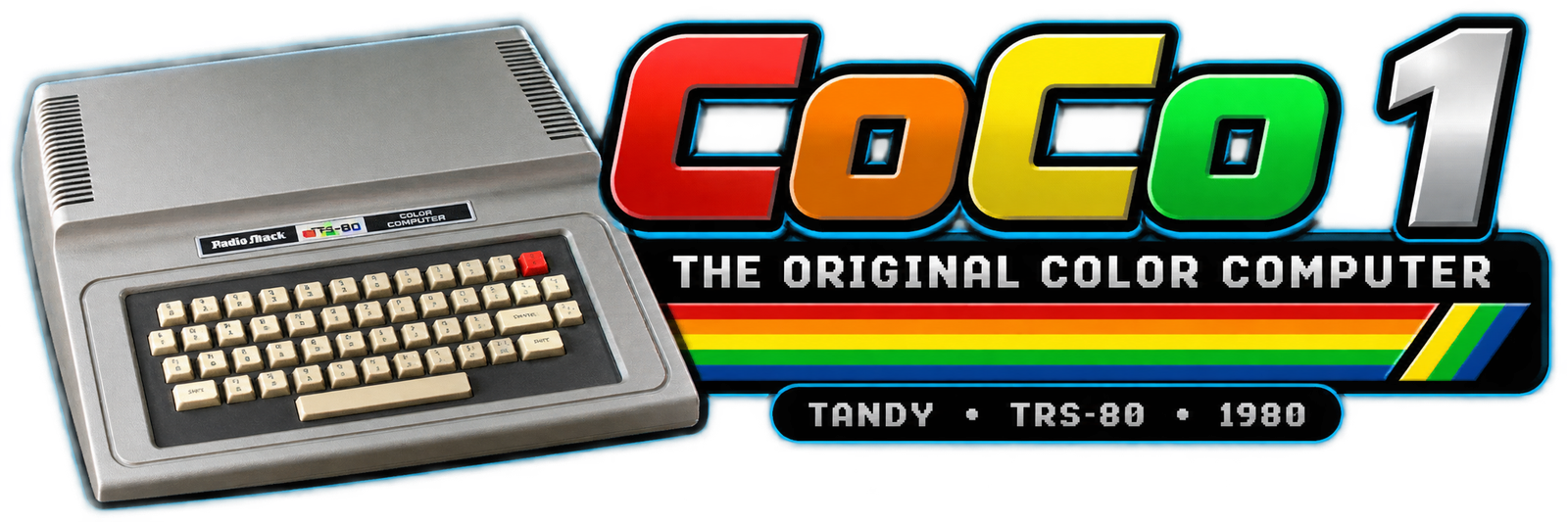
COCO 1
The original Color Computer, its revisions, memory configurations, keyboards, related machines and more.
READ ARTICLE >>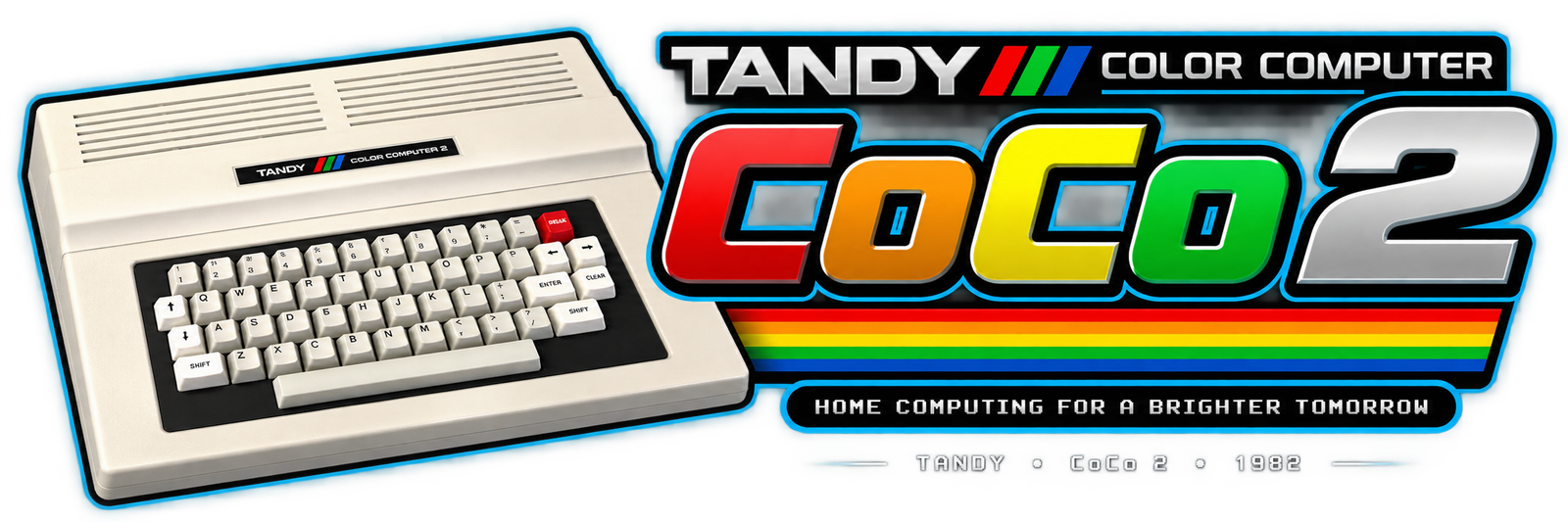
COCO 2
The many faces of the Color Computer 2: model numbers, board revisions, production differences and hardware changes.
READ ARTICLE >>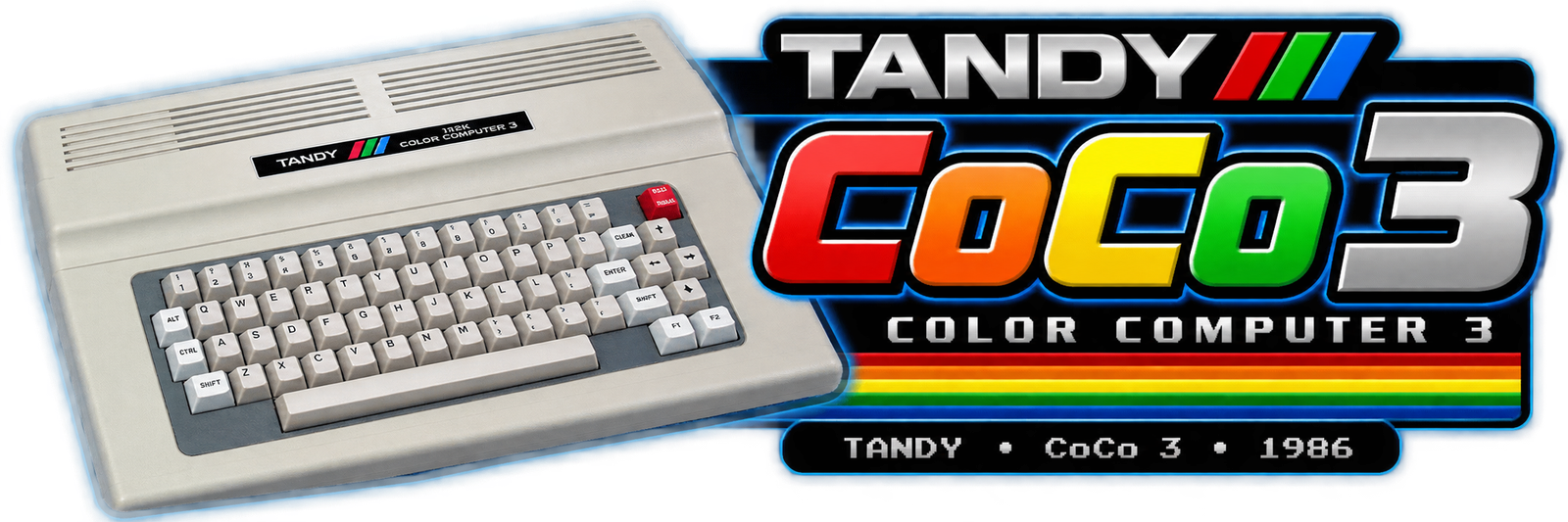
COCO 3
The development path to the CoCo 3, including its enhanced architecture and the history behind the final production machine.
READ ARTICLE >>OK
