
TRS-80 MODEL III & MODEL 4 FAMILY
MODEL III • MODEL 4 • MODEL 4 GATE ARRAY • MODEL 4D • MODEL 4P
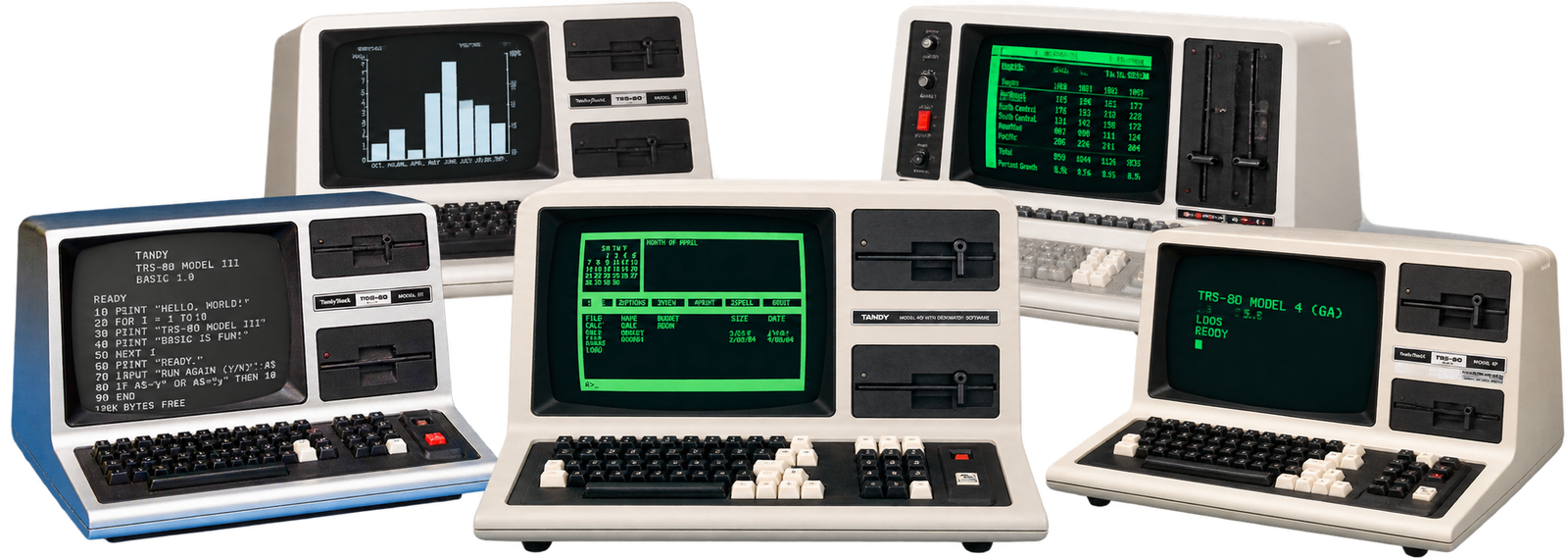
The integrated TRS-80 line that carried the original Model I architecture into the 1980s.
FROM MODEL I TO AN ALL-IN-ONE TRS-80
Radio Shack introduced the TRS-80 Model III in 1980 as the successor to the Model I. Instead of the Model I's separate monitor, Expansion Interface and external drives, the Model III brought the display, keyboard, power supply and optional floppy drives together in one cabinet. The cleaner, self-contained design reduced cabling and radio-frequency interference while retaining substantial compatibility with the enormous Model I software library.
In 1983 the TRS-80 Model 4 carried the design forward with a 4 MHz Z80A, an 80-column display, expanded memory capability and TRSDOS 6, while maintaining a Model III operating mode for older software. Tandy continued refining the platform through the Gate Array redesign, the transportable Model 4P and finally the Model 4D.
TRS-80 MODEL III - 1980
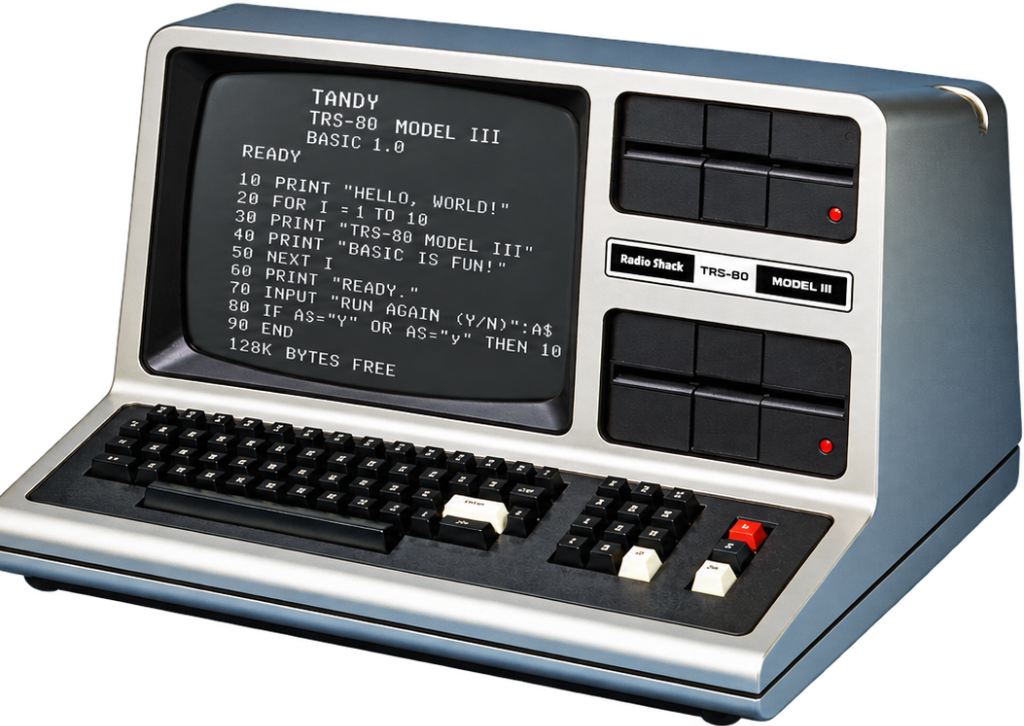
The Model III transformed the original TRS-80 concept into a much cleaner all-in-one computer. Its Z80A ran at approximately 2 MHz, memory ranged from 4K to 48K, and Model III BASIC provided a 14K ROM with upper- and lowercase support. The built-in 12-inch monochrome display normally operated at 64 characters by 16 lines.
Disk-equipped systems could contain two internal double-density 5.25-inch floppy drives, with support for additional external drives. A numeric keypad, printer interface and optional RS-232 interface made the Model III equally comfortable in homes, schools and small businesses.
CPU: Z80A, approximately 2.03 MHz
RAM: 4K to 48K
Display: 64 x 16 text, integrated 12-inch monochrome CRT
Storage: Cassette and up to two internal double-density floppy drives, with external expansion
BASIC: Level I or 14K Model III BASIC
Compatibility: Substantial Model I software compatibility
TRS-80 MODEL 4 - 1983
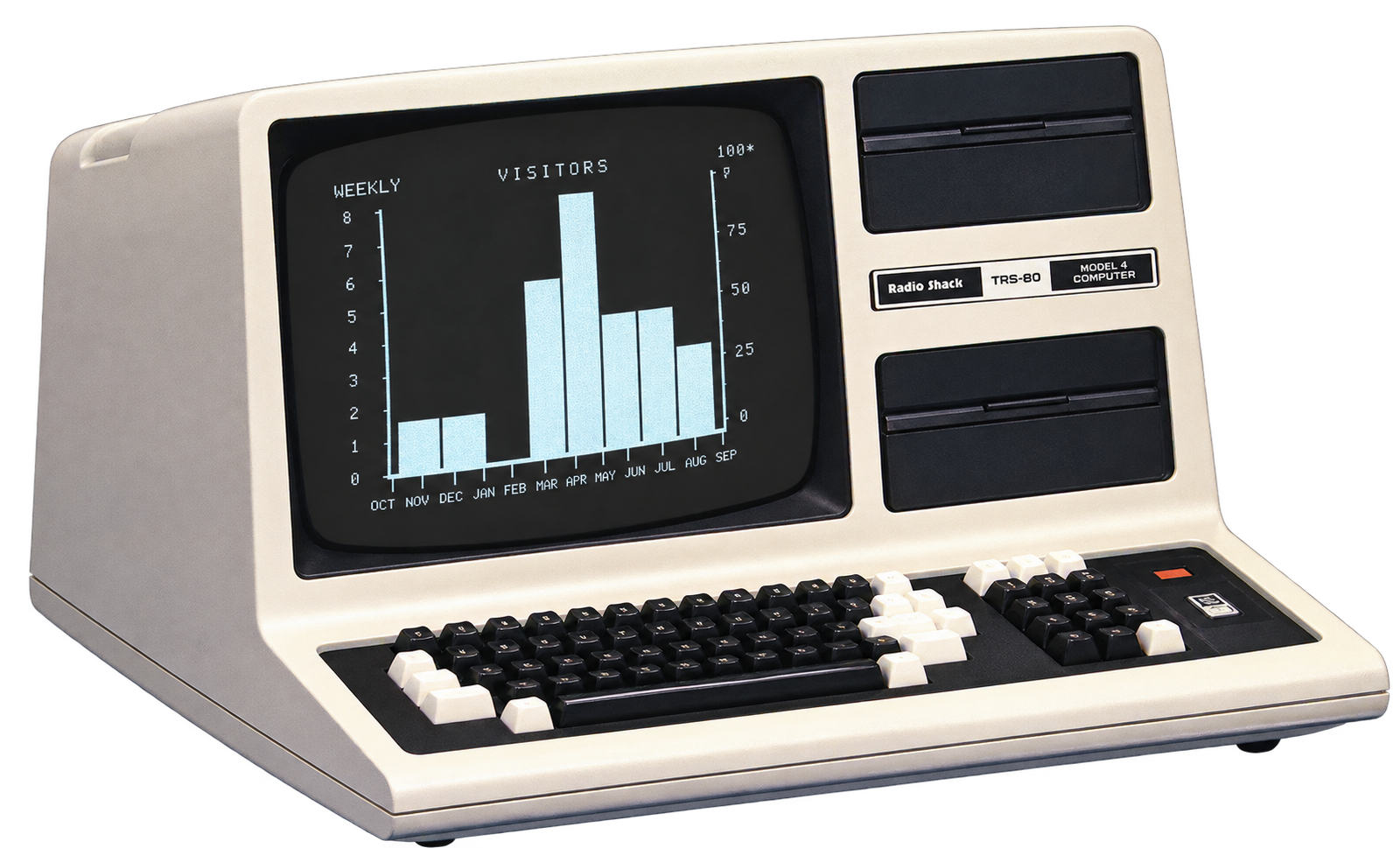
Introduced in April 1983, the Model 4 looked familiar but represented a significant upgrade. Its Z80A could run at 4 MHz, Model 4 mode provided an 80 x 24 text display, and memory could be expanded to 128K using bank switching. A redesigned keyboard added function keys and other refinements.
Just as important was compatibility. The Model 4 retained a Model III mode, allowing the large existing library of Model III software to remain useful. In native Model 4 mode, TRSDOS 6 provided a substantially more capable operating environment developed by Logical Systems.
CPU: Z80A, 4 MHz in Model 4 mode / approximately 2 MHz in Model III mode
RAM: Configurations from 16K; disk systems commonly 64K, expandable to 128K
Display: 80 x 24 in Model 4 mode; 64 x 16 in Model III mode
Storage: Cassette on applicable models; one or two internal 5.25-inch floppy drives on disk systems
Operating Systems: TRSDOS 6 / LS-DOS, Model III operating systems and CP/M
MODEL 4 GATE ARRAY
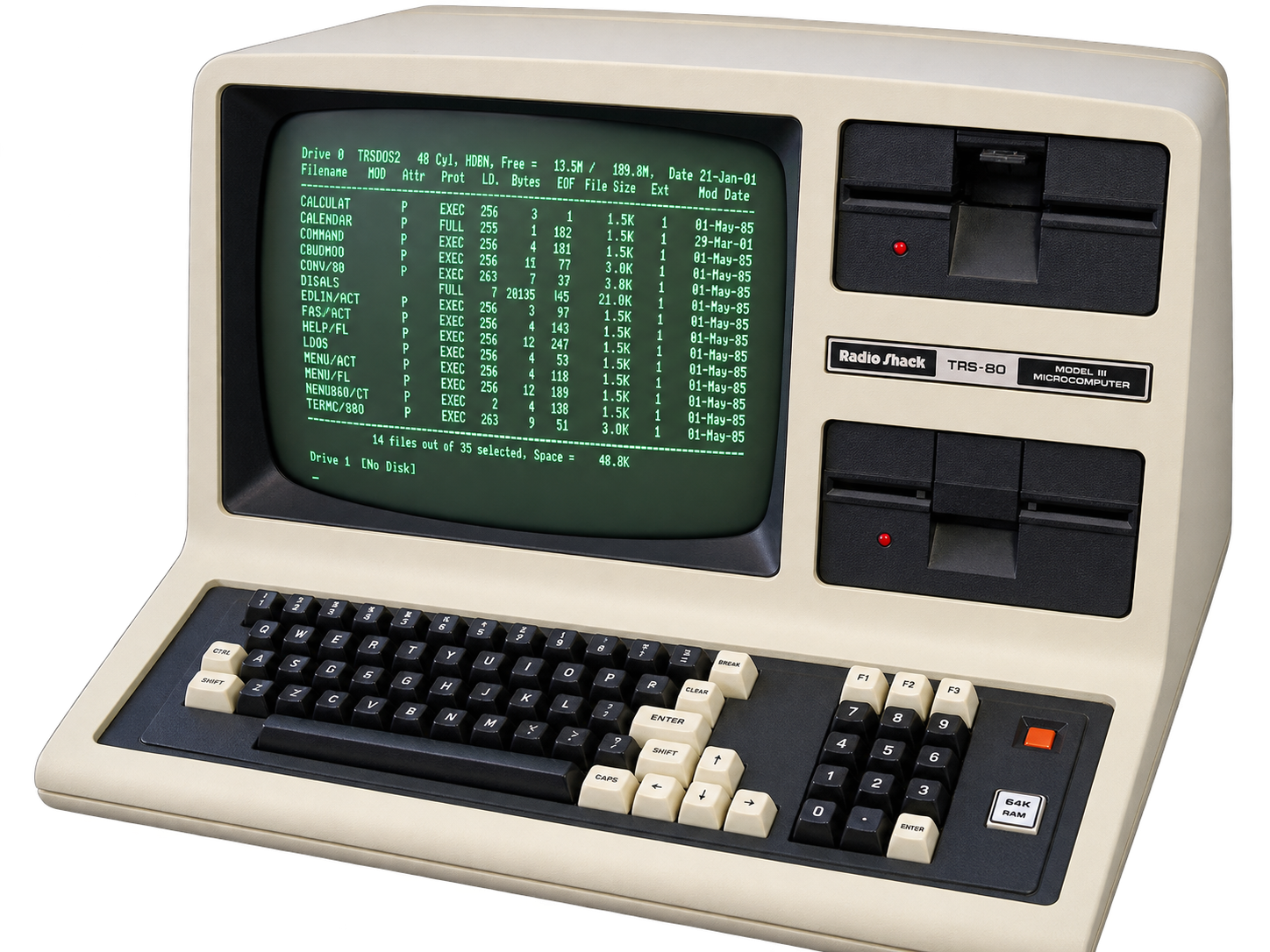
The later Model 4 Gate Array redesigned the Model 4 around a more highly integrated motherboard, combining circuitry that previously required multiple boards and components. Gate Array machines offered improved video performance and simpler 128K memory upgrades. The easiest external identifier is the RS-232 port, which faces out the rear rather than downward as on earlier Model 4 systems.
To the user it was still a Model 4, with the same basic software environment and compatibility. Internally, however, it was a cleaner and more integrated implementation of the design and became the basis for the final desktop versions of the family.
TANDY TRS-80 MODEL 4D - 1985
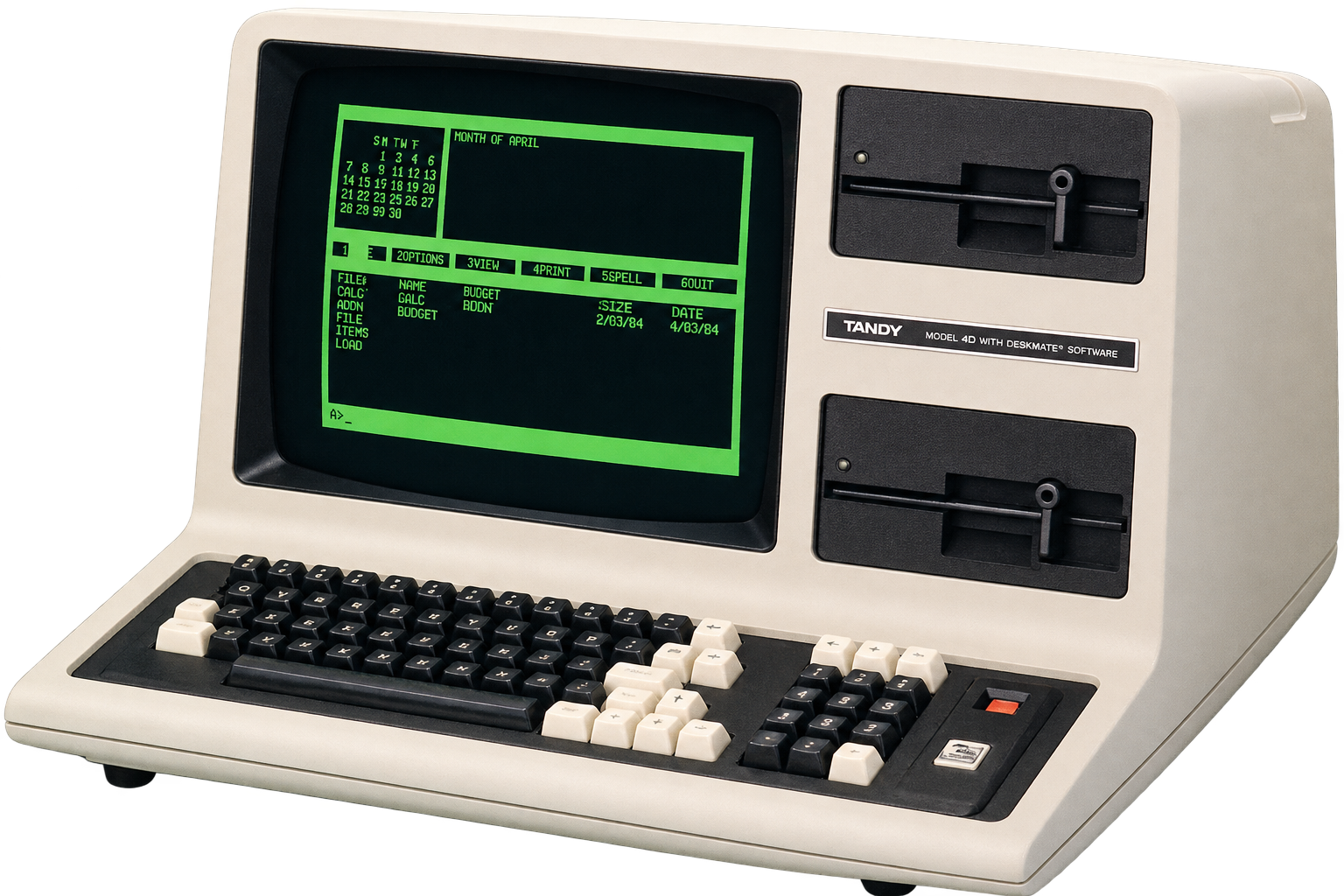
The Model 4D, catalog number 26-1070, arrived in 1985 as the final desktop development of the original TRS-80 line. Built around the Gate Array hardware, it came with two double-sided floppy drives and bundled Tandy's DeskMate productivity software.
The 4D also marked a subtle branding change: its front badge identified it as a Tandy TRS-80 Model 4D rather than using the older Radio Shack branding. Despite the changes, it remained compatible with Model 4 and a wide range of Model III software, extending the life of an architecture whose roots reached back to the Model I of 1977.
Model 4D highlights: Gate Array motherboard, two double-sided 5.25-inch floppy drives, 4 MHz Z80A, up to 128K RAM, 80 x 24 Model 4 display mode and bundled DeskMate. The "D" referred to DeskMate, not "double-sided," even though the improved double-sided drives became one of the machine's best-known features.
TRS-80 MODEL 4P - 1983
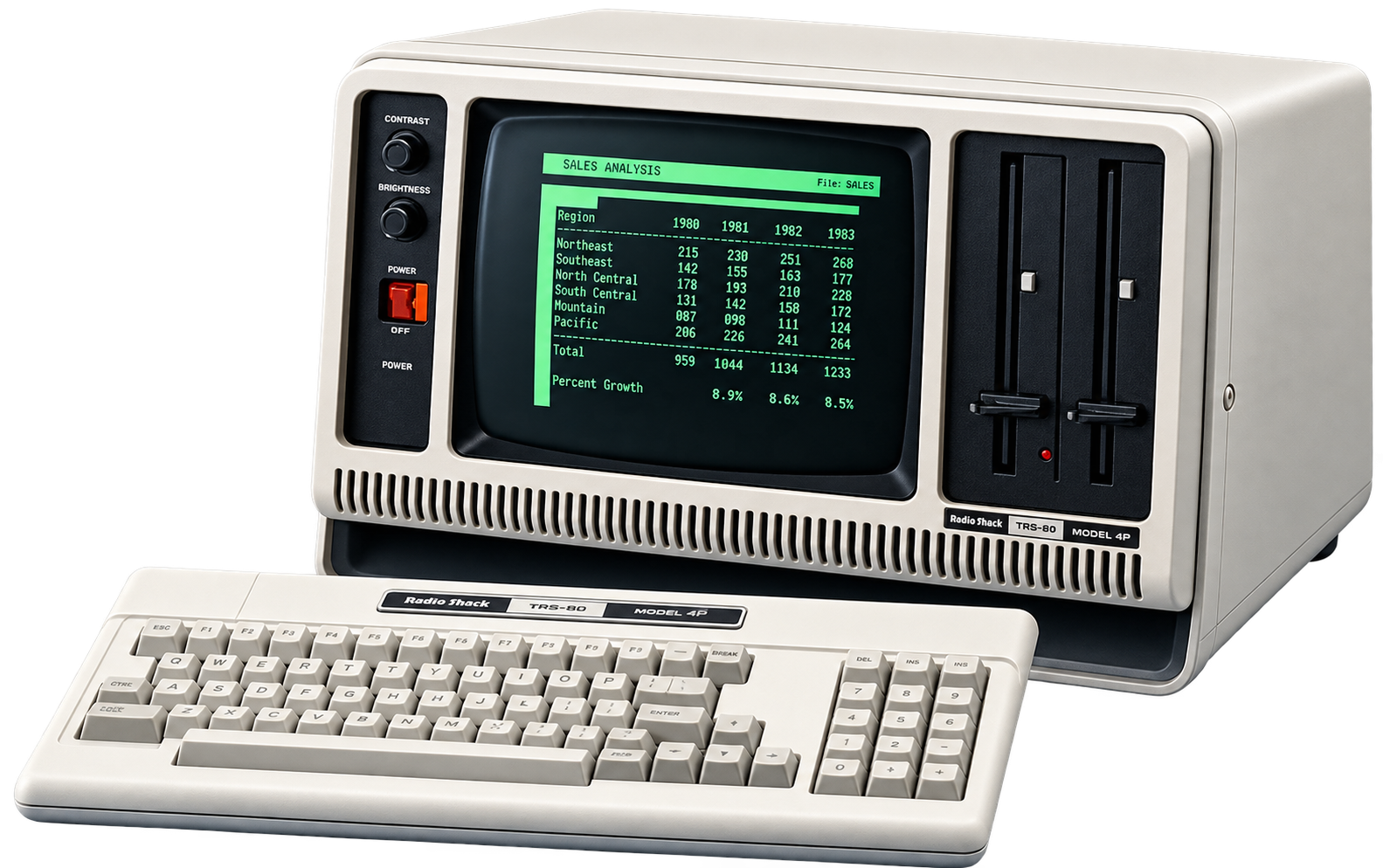
The Model 4P repackaged Model 4 capability into a transportable computer with a built-in 9-inch monochrome display, two 5.25-inch floppy drives and a detachable keyboard. At roughly 26 pounds it was more "luggable" than laptop, but it allowed a complete Model 4 workstation to travel as a single unit.
Unlike the desktop Model 4, the 4P did not contain Model III BASIC in ROM. A small boot ROM could instead load a Model III ROM image from disk, preserving Model III compatibility without permanently storing the BASIC ROM inside the machine.
CPU: Z80A at 4 MHz
RAM: 64K, expandable to 128K
Display: Built-in 9-inch monochrome CRT, 80 x 24 text
Storage: Two internal 5.25-inch floppy drives
Ports: Parallel, serial and system bus
Compatibility: Model 4 software plus Model III compatibility through a disk-loaded ROM image
THE FAMILY AT A GLANCE
| Model | Introduced | CPU | RAM | Primary Display | Notable Feature |
|---|---|---|---|---|---|
| Model III | 1980 | Z80A ~2 MHz | 4K-48K | 64 x 16 | Integrated successor to Model I |
| Model 4 | 1983 | Z80A 4 MHz | 16K-128K | 80 x 24 | Model III mode + native Model 4 mode |
| Model 4 Gate Array | Later Model 4 production | Z80A 4 MHz | Up to 128K | 80 x 24 | Integrated Gate Array motherboard |
| Model 4P | 1983 | Z80A 4 MHz | 64K-128K | 80 x 24 | Transportable Model 4 |
| Model 4D | 1985 | Z80A 4 MHz | 64K-128K | 80 x 24 | Double-sided drives + DeskMate |
MODEL III COMPATIBILITY
Compatibility was one of the Model 4 family's greatest strengths. Rather than abandoning Model III owners and their software, the desktop Model 4 retained the Model III hardware environment and could operate in a Model III-compatible mode. This gave buyers access to an established software library while new Model 4 programs could take advantage of the faster processor, 80-column display, additional memory and expanded keyboard.
The Model 4P handled the same problem differently. Because it lacked the desktop machine's Model III BASIC ROM, its boot ROM could load a Model III ROM image from disk when compatibility was needed.
TRSDOS, LDOS & LS-DOS
The Model III could use Radio Shack TRSDOS as well as third-party operating systems such as LDOS. For the Model 4, Radio Shack turned to Logical Systems, the developers of LDOS, for the new TRSDOS 6. The operating system supported the Model 4's native hardware and offered features such as device redirection, batch processing and device filtering. The system was also sold under the LS-DOS name.
DISK STORAGE EVOLVES
The Model III brought double-density floppy storage inside the computer cabinet, eliminating much of the external hardware associated with a disk-equipped Model I. Early Model 4 disk systems continued with internal 5.25-inch drives, while the final Model 4D moved to two double-sided drives providing substantially more storage per disk.
THE END OF THE ORIGINAL TRS-80 LINE
From the Model I in 1977 through the Model III, Model 4, 4P and 4D, Radio Shack continually refined the same basic Z80-based computer family rather than replacing it with an entirely incompatible machine. By the time the Model 4D appeared, the design had gained integrated disk storage, 80-column video, bank-switched memory, a mature disk operating system and a far cleaner internal architecture. The Model 4D became the final computer descended directly from the original Model I and the last model in this branch to carry the TRS-80 name.
FAMILY TIMELINE
TRS-80 MODEL III INFORMATION LINKS
The original aggregation links are preserved below as additional sources for Model III and Model 4 research.
Wikipedia TRS-80 Model III entry
Stats, basic hardware description, capabilities and history. A useful starting point for additional research.
A detailed look at Model III specifications, hardware, peripherals and operating systems.
A brief Model III description, specifications and visitor commentary.
Model III specifications, photographs and a short historical overview.
PC Magazine Look Back at TRS-80s
A retrospective covering several of Radio Shack's best-known TRS-80 computers.
Radio Shack's Original TRS-80 Family of Computers
Low End Mac's overview of the Z80-based Radio Shack computer family and several competitors.
History Computer TRS-80 Discussion
An overview of the TRS-80 Z80 line with historical material and advertising.
A short Model III entry with photographs and links to related systems.
David Keil's TRS-80 Model III/4 Emulator Page
David Keil's Model III and Model 4 emulation resources for running TRS-80 software on a PC.
An additional vintage-computer reference covering the early TRS-80 family.
TRS-80 Model III commentary and photographs.
TRS-80 COMMUNITY & RESOURCE LINKS
Expansion and support hardware for several vintage Radio Shack TRS-80 microcomputers.
A traditional-format newsletter for TRS-80 enthusiasts.
Hardware support and replacement products for numerous TRS and Tandy computers.
A podcast focused heavily on the Model I, II, III and 4 while covering the wider TRS-80 family.