
TRS-80 PERSONAL COMPUTER FAMILY
MODEL I • MODEL III • MODEL 4 • MODEL 4 GATE ARRAY • MODEL 4P
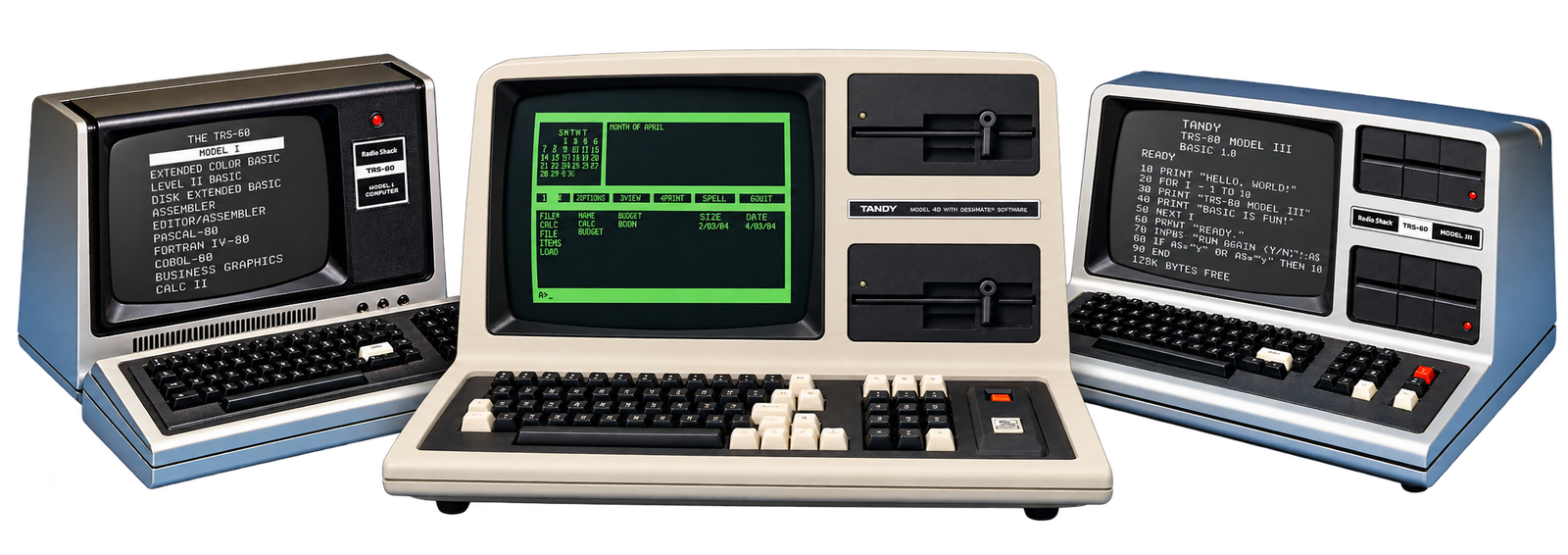
FROM THE MODEL I TO THE MODEL 4
Radio Shack entered the personal-computer market in 1977 with the TRS-80 Model I. What began as a relatively simple Z80-based computer with 4K of RAM and cassette storage quickly grew into a complete computing platform with expanded memory, floppy disks, printers, business software and a large third-party software industry.
The Model III brought the major pieces of a working TRS-80 system together in one cabinet. The monitor, keyboard, memory expansion and optional floppy drives no longer required the collection of separate boxes and cables associated with a fully expanded Model I.
The Model 4 continued that design while substantially increasing its capabilities. A faster Z80A processor, support for 128K configurations, an 80-column display and TRSDOS 6 gave the machine a more capable working environment while retaining Model III compatibility.
Radio Shack also produced the transportable Model 4P and later revised the desktop Model 4 around a more highly integrated gate-array design. Together these computers form a continuous family descended from the machine that put the TRS-80 name on thousands of Radio Shack storefronts.
THE COMPUTERS
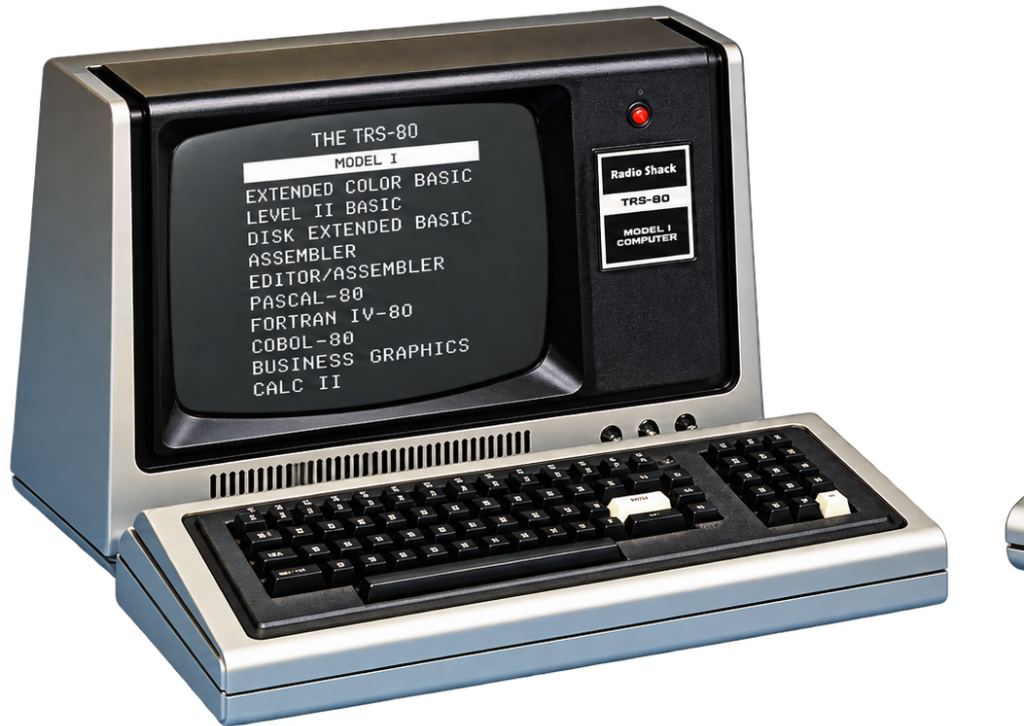
TRS-80 MODEL I
Introduced in 1977, the Model I began Radio Shack's personal-computer line. Its Zilog Z80 ran at approximately 1.77 MHz, and early systems were sold with as little as 4K of RAM.
Cassette tape provided the original storage. With the Expansion Interface, additional RAM and 5.25-inch floppy drives, the Model I could grow into a 48K disk-based system suitable for programming, education, games and small-business applications.
TRS-80 MODEL III
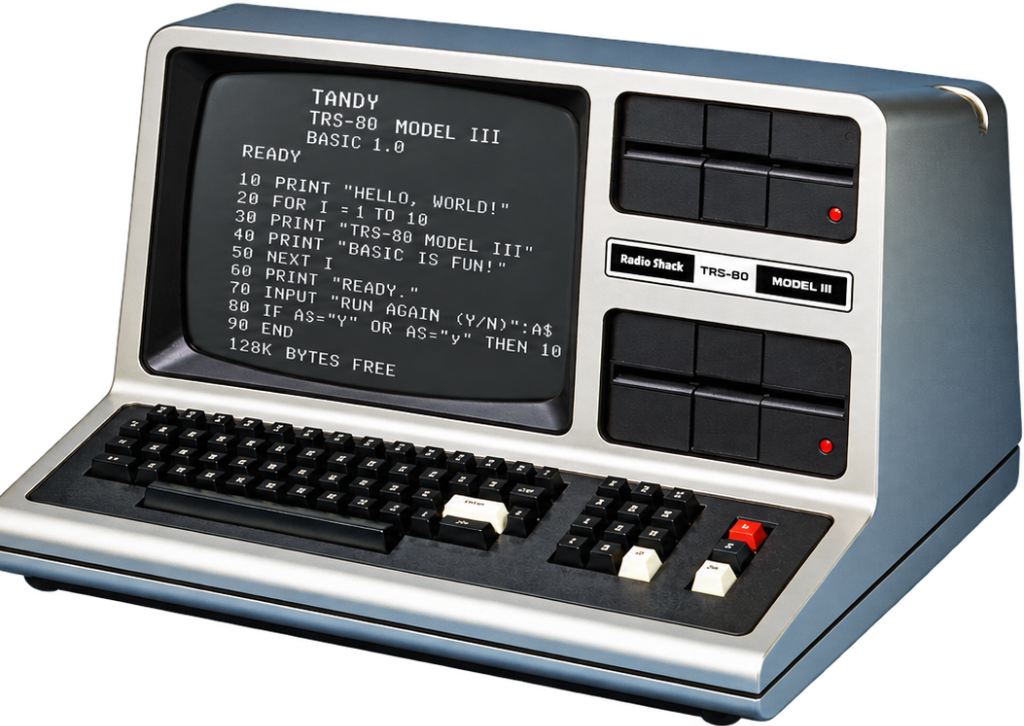
Introduced in 1980, the Model III integrated the computer, monitor and disk-drive bays into one cabinet. It retained the Z80 architecture while increasing the clock speed to about 2 MHz and supporting as much as 48K of RAM internally.
The Model III added lowercase capability, a numeric keypad, an integrated printer interface, faster cassette operation and double-density disk support. It was largely, but not completely, compatible with Model I software.
MODEL III DETAILED EXHIBIT COMING NEXT
TRS-80 MODEL 4
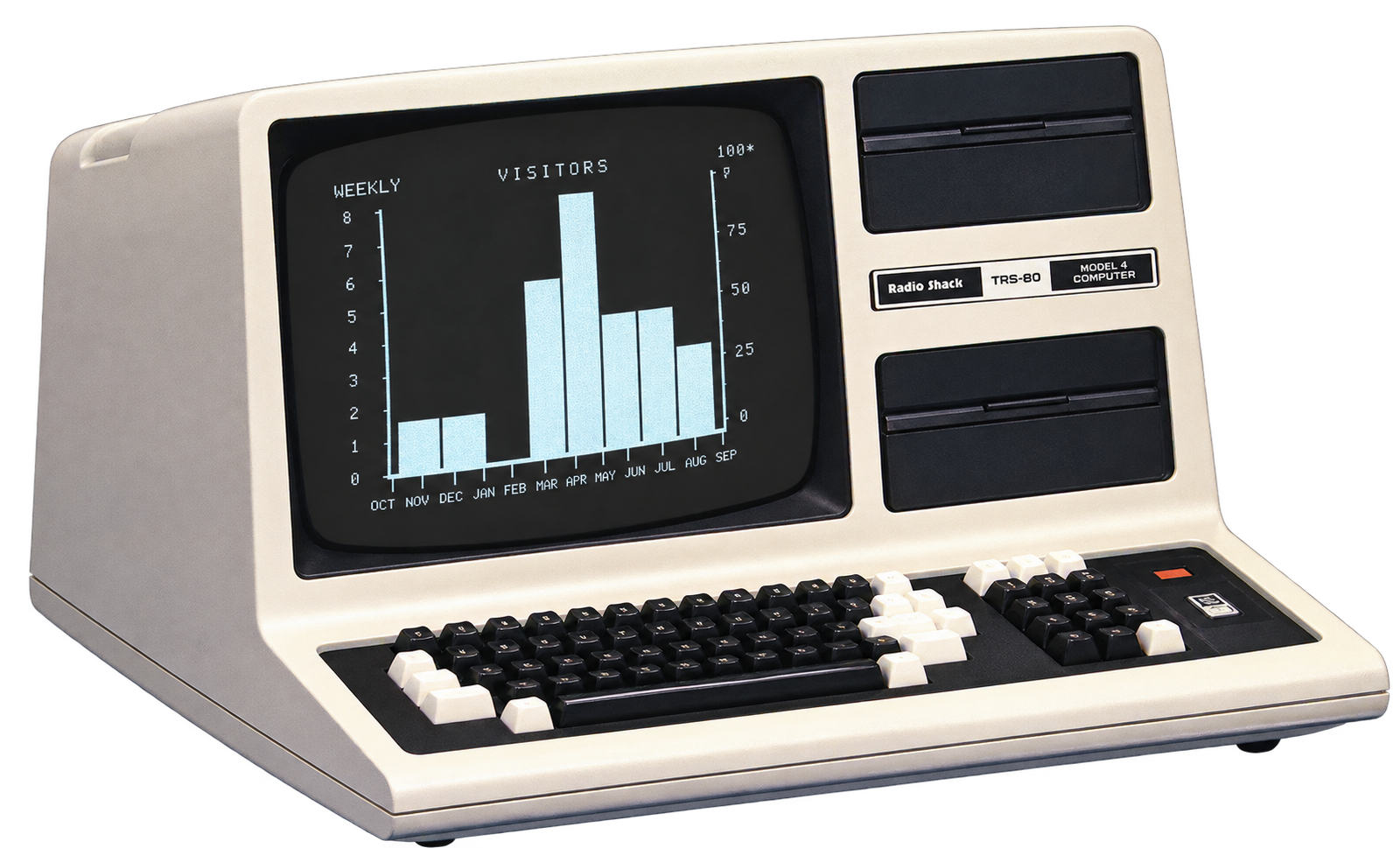
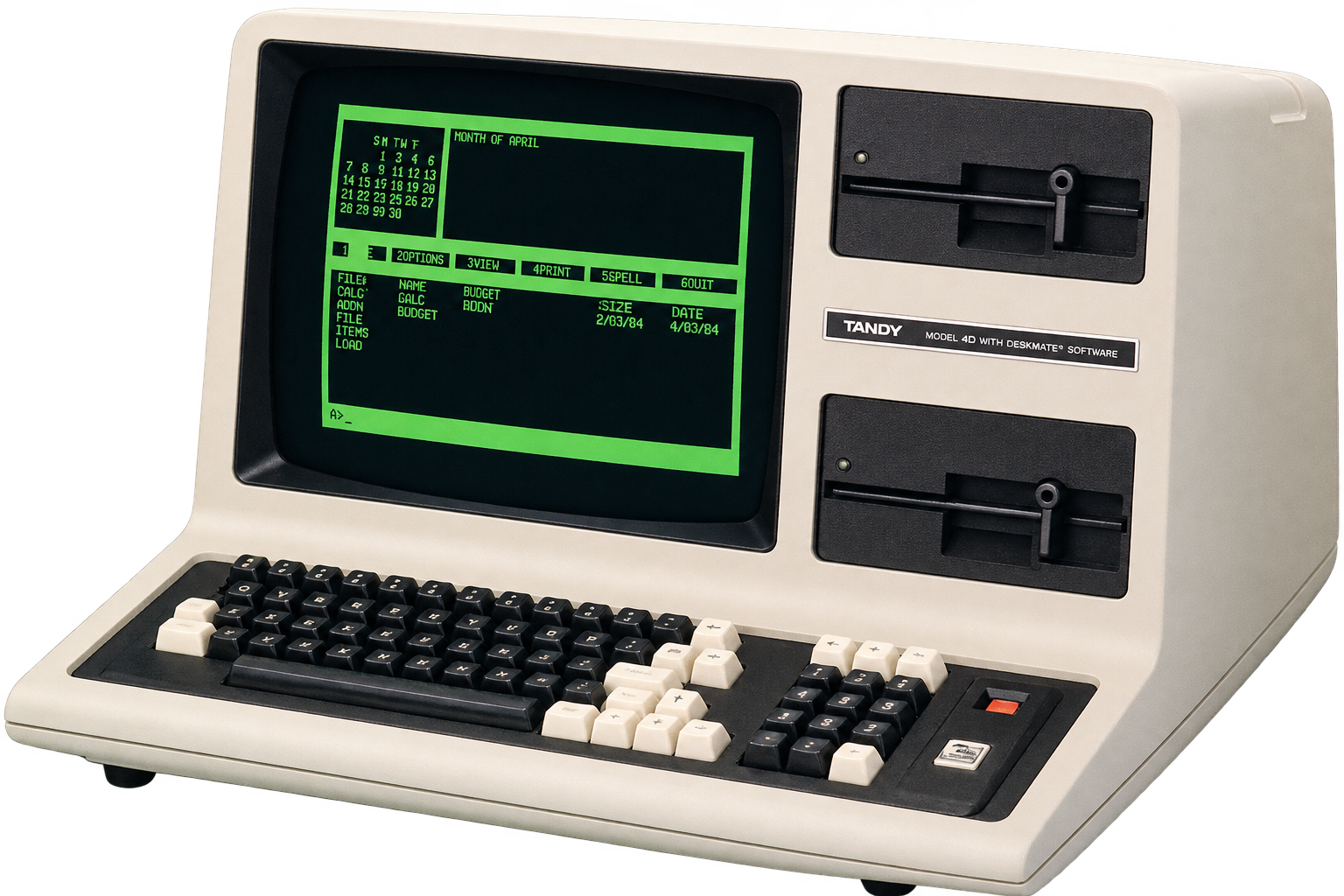
Introduced in 1983, the Model 4 retained the all-in-one form of the Model III but moved the family forward with a 4 MHz Z80A and support for 128K configurations.
Native Model 4 software could use an 80 by 24 text display, the expanded keyboard and TRSDOS 6. The machine could also operate in Model III mode, preserving access to the existing Model III software library.
MODEL 4 DETAILED EXHIBIT COMING SOON
MODEL 4 GATE ARRAY
Later Model 4 production incorporated a redesigned motherboard using gate-array logic to consolidate circuitry that had previously required a larger collection of individual logic devices.
To the user it remained a Model 4, but the internal redesign makes the Gate Array machine an important revision for collectors, restorers and hardware reference.
MODEL 4 GATE ARRAY DETAILED EXHIBIT COMING SOON
TRS-80 MODEL 4P
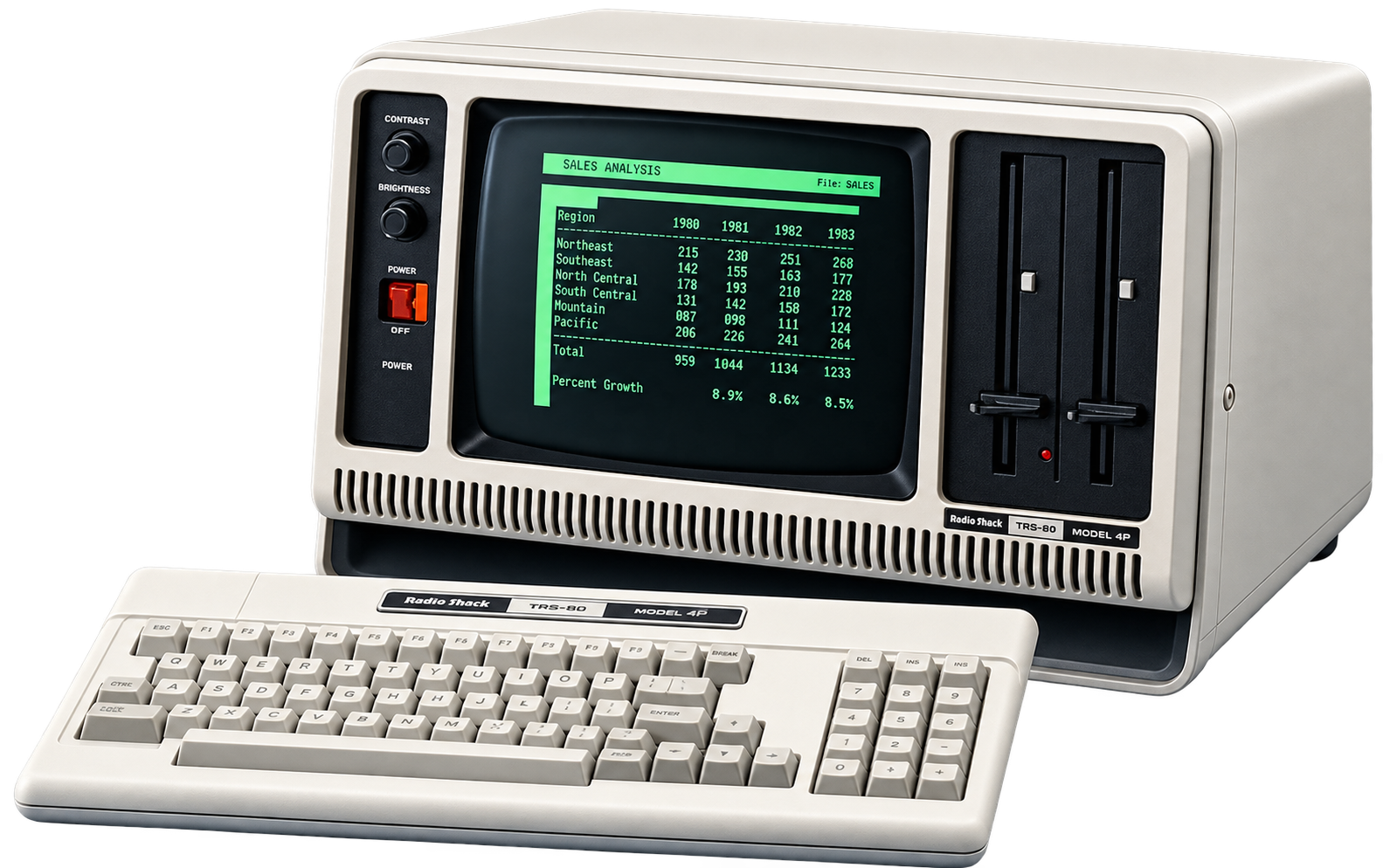
Released late in 1983, the Model 4P placed Model 4 compatibility into a transportable cabinet with a built-in 9-inch display, two floppy drives, a carrying handle and a detachable keyboard.
Unlike the desktop Model 4, the 4P did not contain Model III BASIC in ROM. Its boot ROM could load the Model III ROM image from disk, retaining Model III compatibility while using a more flexible disk-oriented startup design.
MODEL 4P DETAILED EXHIBIT COMING SOON
FAMILY COMPARISON
| System | Introduced | Processor | RAM | Display | Storage |
|---|---|---|---|---|---|
| Model I | 1977 | Z80 ~1.77 MHz | 4K-48K | 64 x 16 | Cassette / external floppy |
| Model III | 1980 | Z80 ~2 MHz | Up to 48K | 64 x 16 | Cassette / internal floppy |
| Model 4 | 1983 | Z80A 4 MHz | 16K-128K, depending on configuration | 64 x 16 / 80 x 24 | Cassette / internal floppy |
| Model 4 Gate Array | Later Model 4 production | Z80A 4 MHz | Model 4 configurations | 64 x 16 / 80 x 24 | Internal floppy |
| Model 4P | 1983 | Z80A 4 MHz | 64K / 128K | 9-inch display; 80 x 24 capable | Dual internal floppy |
HOW THE FAMILY EVOLVED
MEMORY & PROCESSING
The line progressed from a 1.77 MHz Model I with as little as 4K of RAM to 4 MHz Model 4 systems capable of using 128K. Bank switching let Model 4 software make use of memory beyond the Z80's directly addressable 64K space.
STORAGE
Cassette tape was central to the earliest Model I systems. Floppy storage moved from an external Model I expansion into the cabinets of the Model III and Model 4, while the disk-only Model 4P reflected how far the platform had moved from its cassette beginnings.
DISPLAY
The Model I and Model III centered on a 64 by 16 character display. Native Model 4 operation added an 80-column, 24-line display better suited to word processing, programming and business applications.
COMPATIBILITY & OPERATING SYSTEMS
Compatibility is one of the defining stories of this family. The Model III succeeded the Model I, but hardware and memory-map differences meant that not every Model I program made the transition unchanged.
Radio Shack took a more deliberate approach with the Model 4. It could run Model III operating systems and applications in Model III mode, while native Model 4 software could use the faster CPU, larger memory configurations and 80-column display.
TRSDOS accompanied Radio Shack's disk systems, while third-party operating systems became a major part of the TRS-80 ecosystem. The Model 4 introduced TRSDOS 6, developed by Logical Systems and later closely associated with the LS-DOS name.
FAMILY TIMELINE
FIVE MACHINES - ONE CONTINUING LINE
Although their packaging and capabilities changed substantially, the Model I, Model III, Model 4 and Model 4P represent a continuing branch of Radio Shack's Z80 computer history. The Gate Array Model 4 marks an important internal revision of that same desktop platform.