
TRS-80 MODEL I
1977 - 1981
THE BEGINNING OF RADIO SHACK COMPUTING
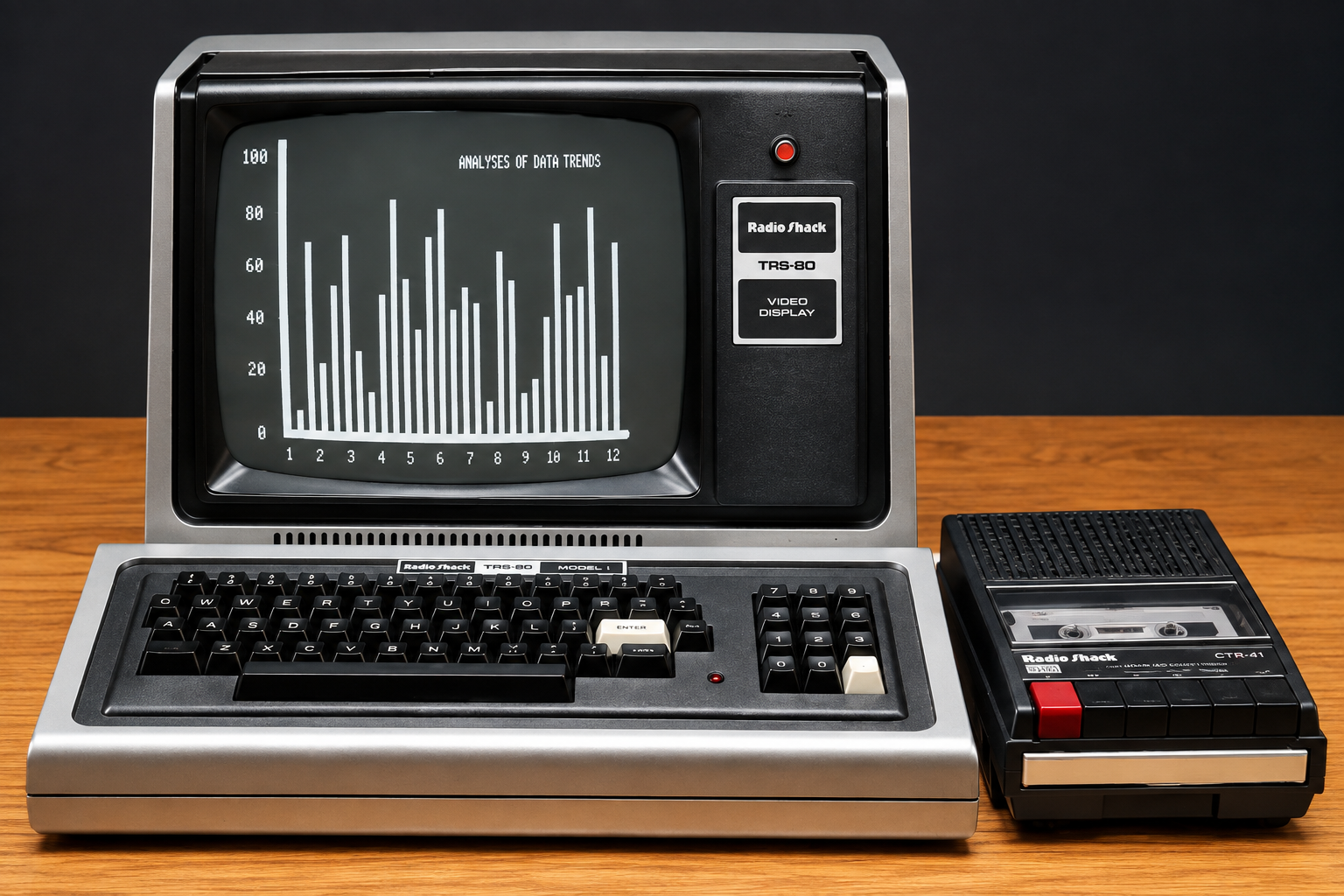
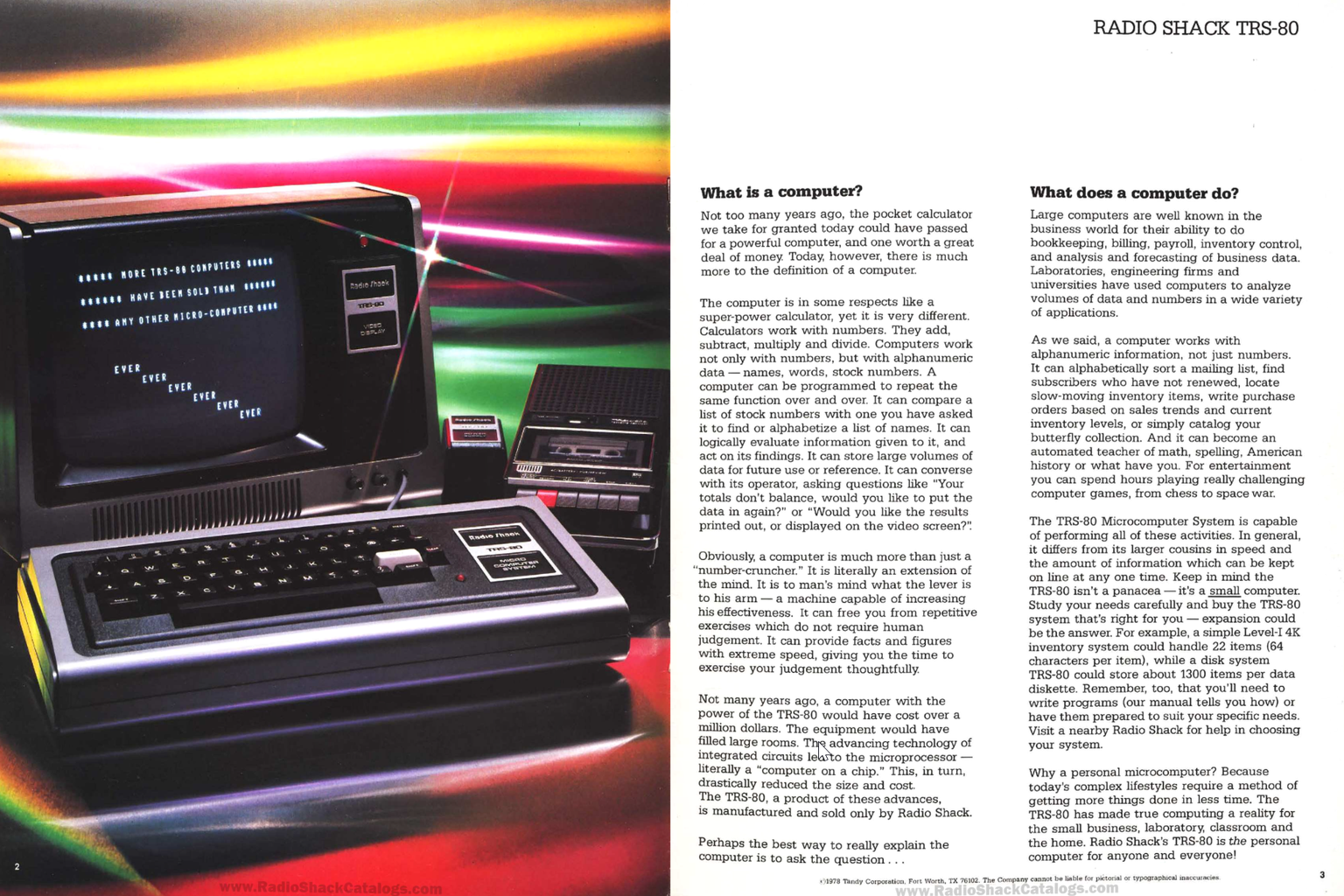
Introduced by Radio Shack on August 3, 1977, the TRS-80 Micro Computer System helped bring personal computing out of the hobbyist workshop and into retail stores across the United States.
Radio Shack buyer Don French believed that the rapidly developing microcomputer market represented an opportunity for the company. Working with computer engineer Steve Leininger, Radio Shack developed a complete personal computer based around the Zilog Z80 microprocessor.
Unlike many contemporary microcomputers that were available primarily as kits or through specialized computer dealers, the TRS-80 was sold through Radio Shack's extensive network of retail stores. Customers could see a working computer demonstrated, purchase the system locally and return to the same store for software, peripherals and support.
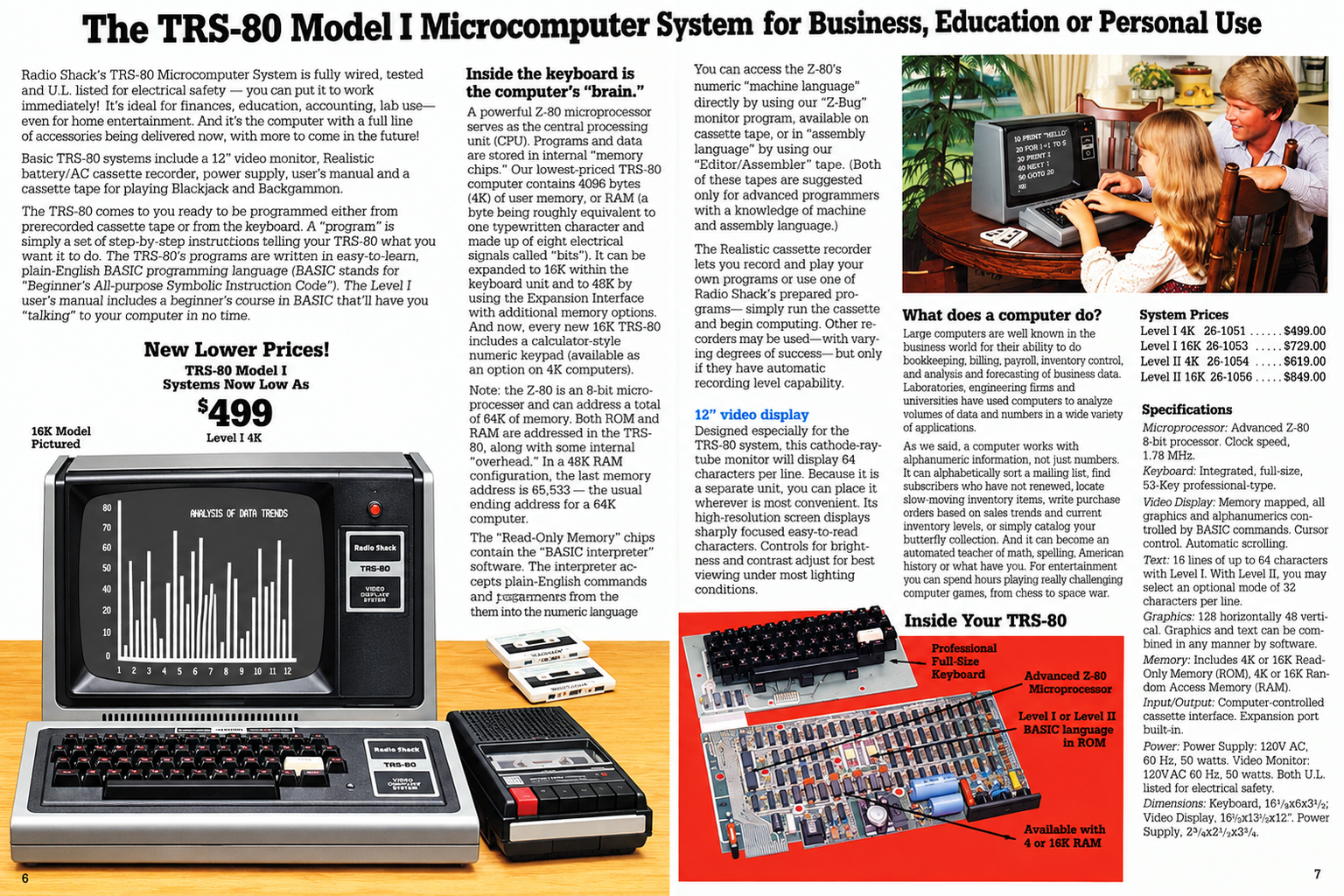
The original $599.95 TRS-80 system included the keyboard/computer unit with 4K of RAM, Level I BASIC, a 12-inch monochrome display, cassette recorder, power supply and software.
What began as a relatively simple cassette-based computer quickly developed into a complete system. Level II BASIC, additional memory, floppy disk storage, printers, communications equipment and an increasingly large software library greatly expanded what the Model I could accomplish.
THE TRS-80 MODEL I SYSTEM
THE ORIGINAL SYSTEM
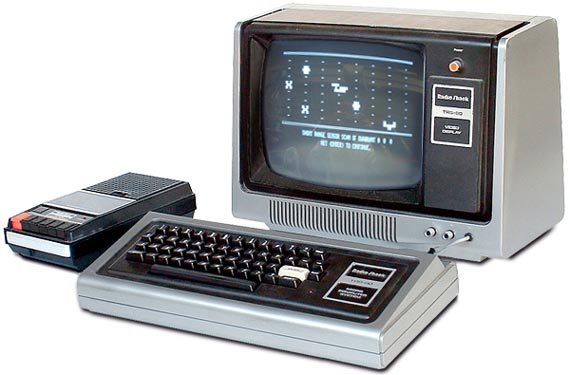
Early TRS-80 systems were supplied with Level I BASIC and 4K of memory. Programs and data were stored on ordinary audio cassette tape using the Radio Shack CTR-series cassette recorder supplied with the system.
LEVEL II BASIC
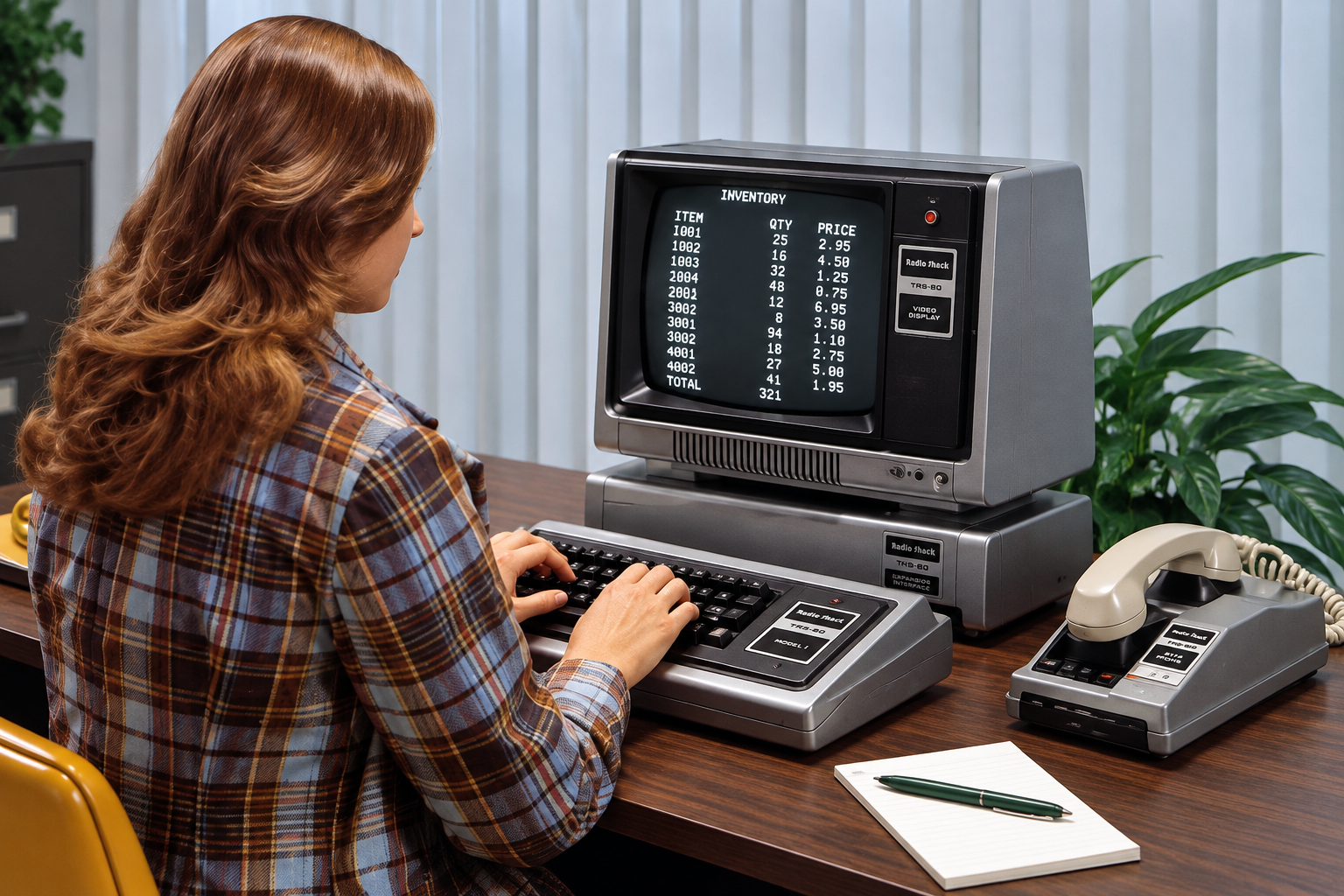
Level II BASIC greatly expanded the capabilities of the machine and became the configuration most closely associated with the Model I. Memory expansion and disk storage transformed the computer from a relatively simple home machine into a system capable of serious business and educational work.
SYSTEM SPECIFICATIONS
| Specification | TRS-80 Model I |
|---|---|
| Introduced | August 1977 |
| Processor | Zilog Z80 |
| Clock Speed | Approximately 1.77 MHz |
| Original Memory | 4 KB RAM |
| Maximum Common Configuration | 48 KB RAM |
| Display | 64 x 16 character monochrome display |
| Graphics | 128 x 48 semigraphics |
| Video | Monochrome composite video |
| Keyboard | Integrated keyboard |
| Initial Storage | Audio cassette |
| Optional Storage | 5.25-inch floppy disk drives |
| BASIC | Level I BASIC / Level II BASIC |
| Disk Operating Systems | TRSDOS and numerous third-party operating systems |
| Expansion | Expansion Interface and external peripheral bus |
| Manufacturer | Tandy Corporation / Radio Shack |
EXPANDING THE MODEL I
THE EXPANSION INTERFACE
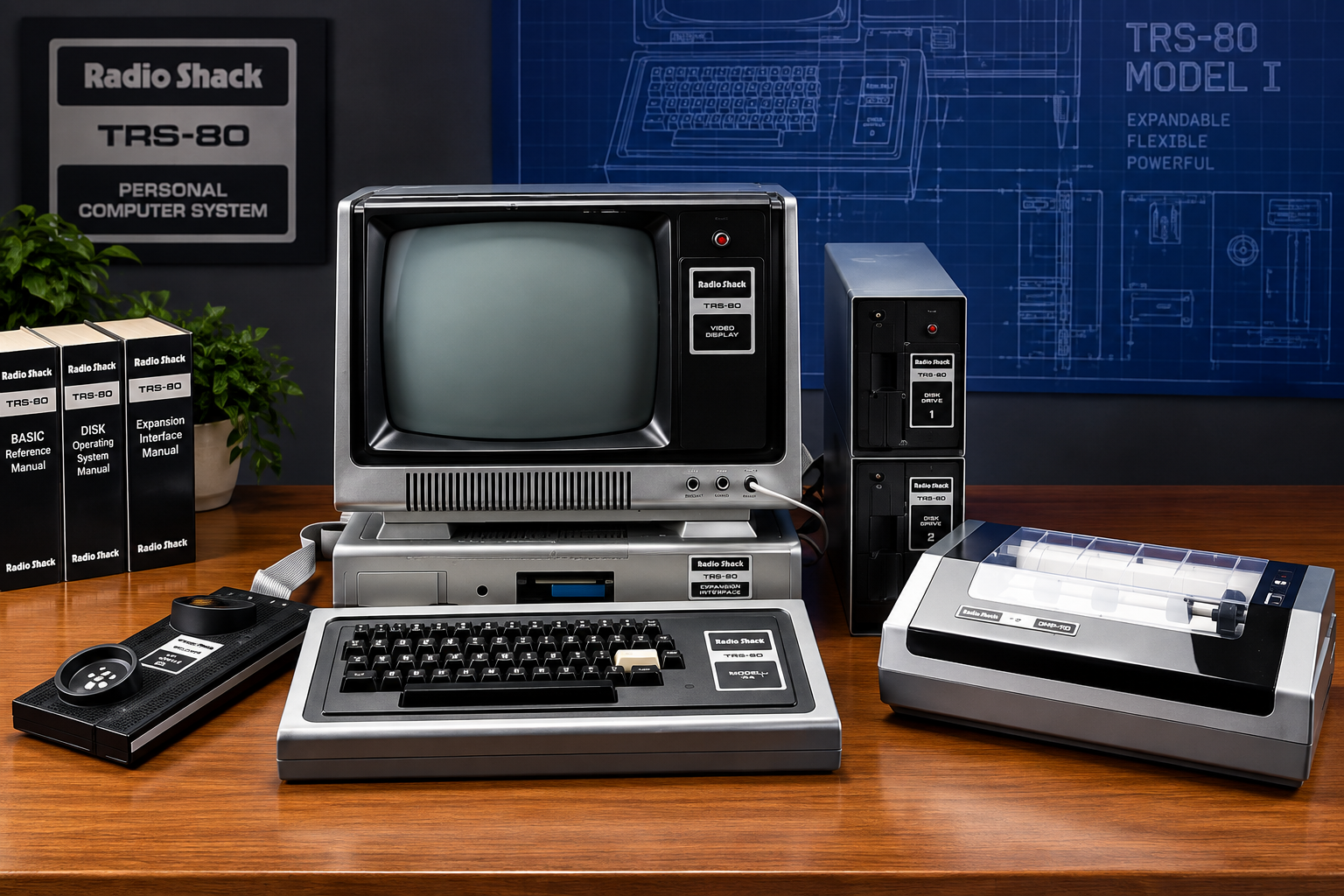
The Expansion Interface was one of the most important additions to the Model I system. Positioned beneath the monitor, it turned the original keyboard computer into the center of a much larger computer system.
Depending upon configuration, the Expansion Interface provided additional RAM, floppy disk support, printer connectivity and other expansion capabilities.
With an Expansion Interface and disk drives, a Model I could become a remarkably capable small-business or professional computer for its time.
PERIPHERALS
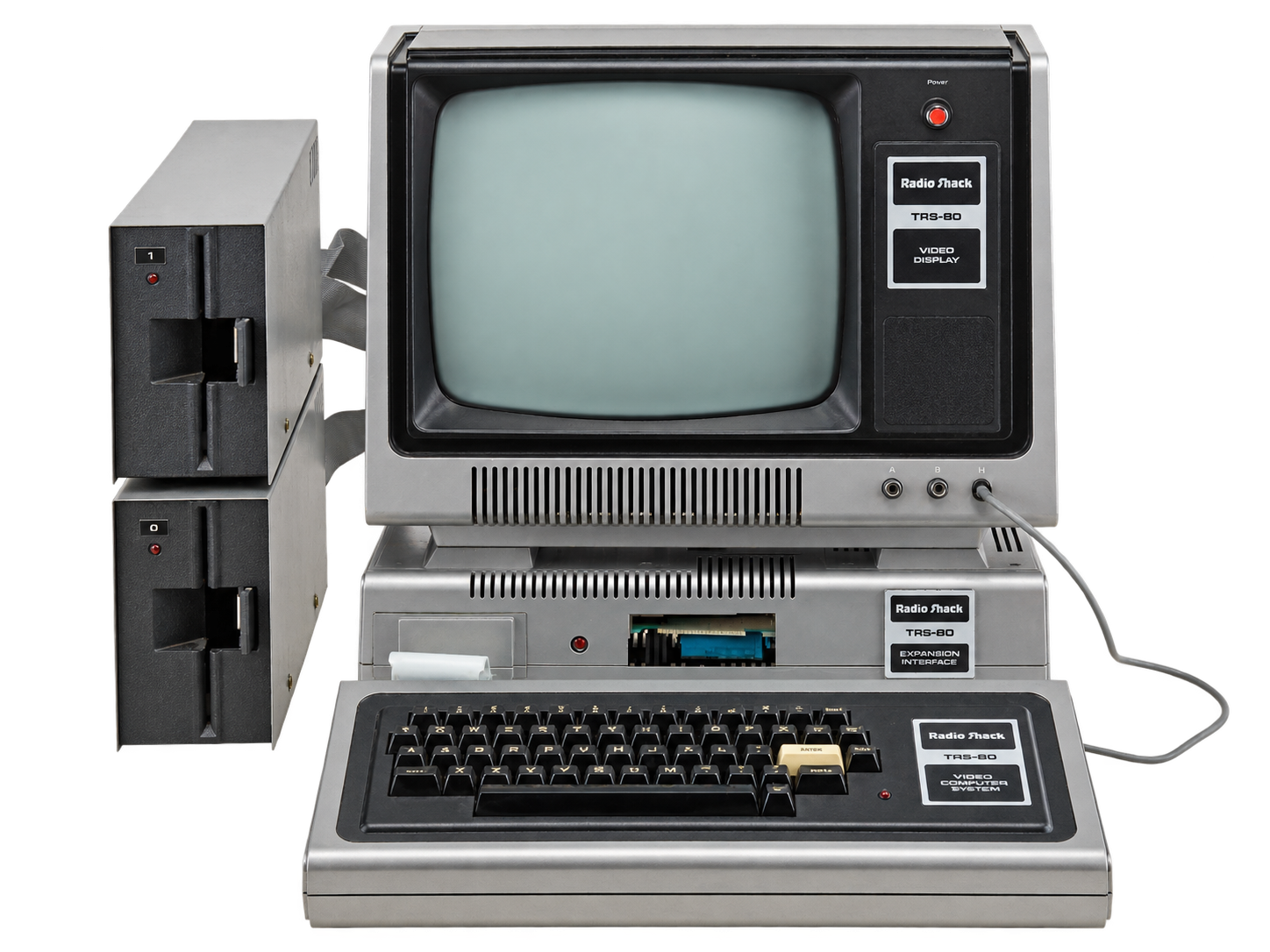
DISK STORAGE
5.25-inch floppy disk drives dramatically improved program loading and data storage compared with cassette tape. Multiple drives could be connected to suitably equipped Model I systems.
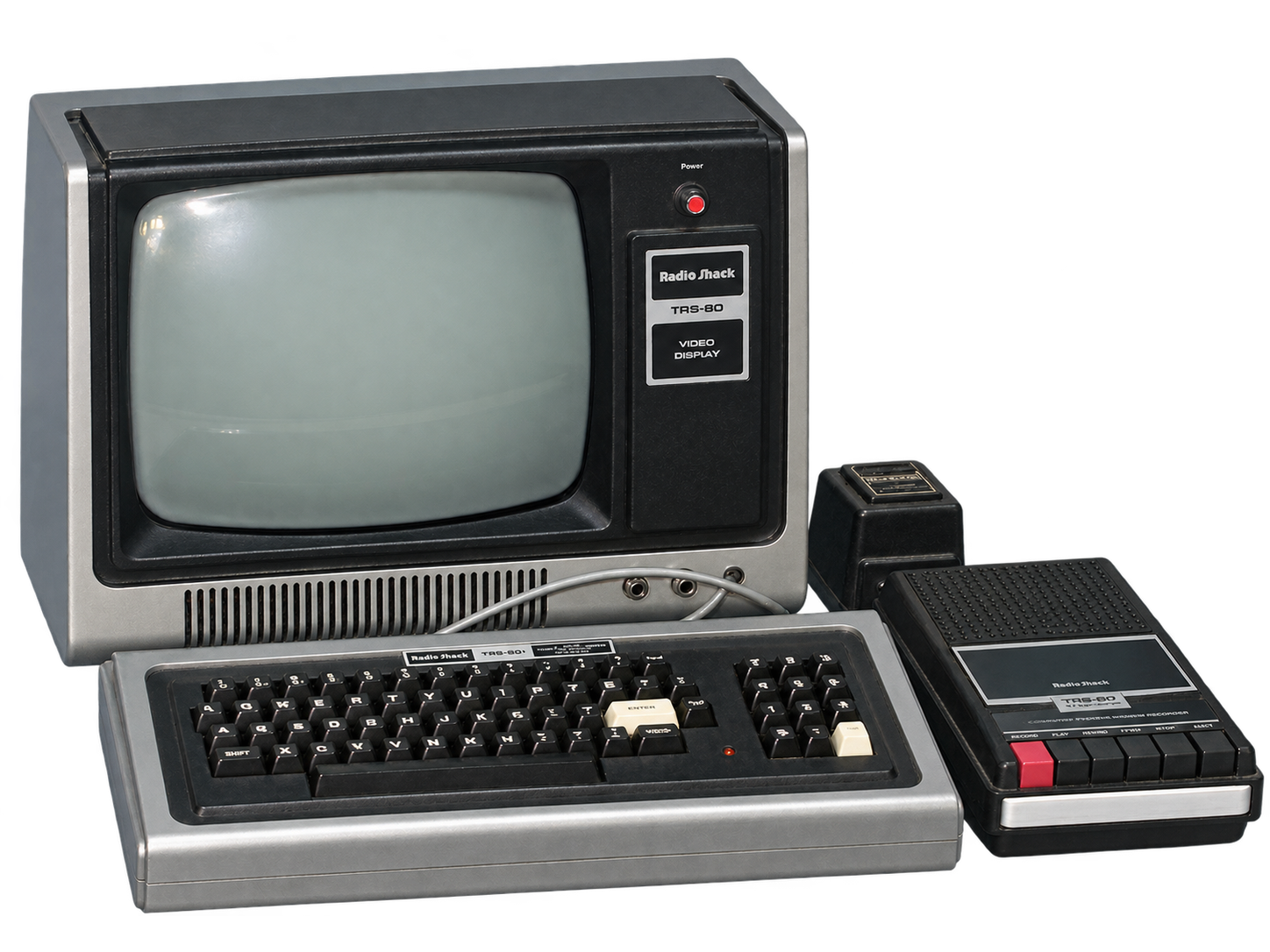
CASSETTE STORAGE
Cassette tape provided inexpensive mass storage for early Model I systems and remained widely used even after disk systems became available.
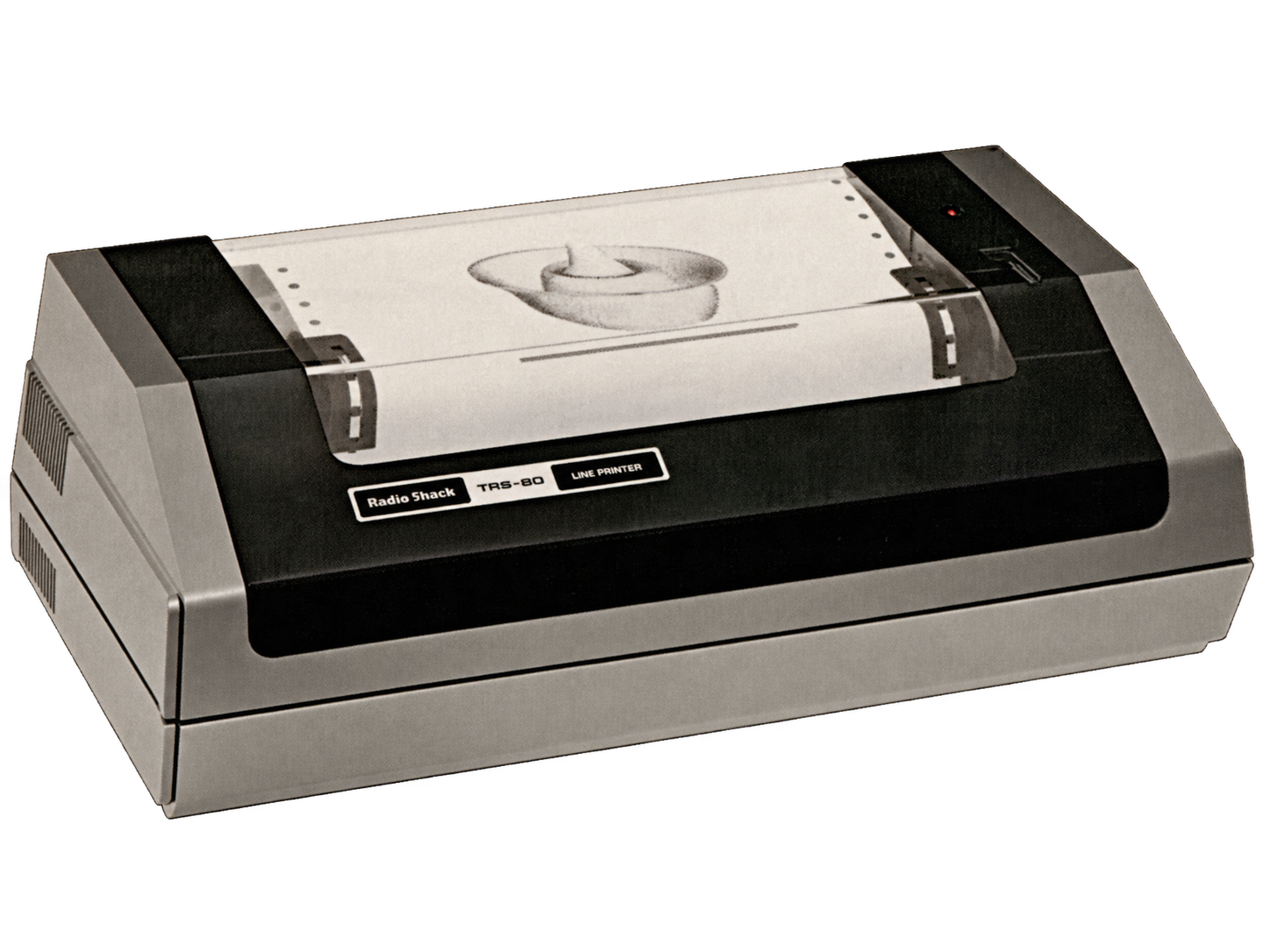
PRINTERS
Radio Shack offered several printers during the life of the Model I, allowing the system to handle word processing, business reports, program listings and other printed output.
SOFTWARE
The popularity of the TRS-80 created a substantial software market. Radio Shack published its own applications and games while independent developers produced thousands of additional programs.
BASIC Programming - Level I and Level II BASIC made programming one of the central uses of the Model I.
TRSDOS - Radio Shack's disk operating system provided file and disk management for floppy-equipped systems.
Scripsit - Radio Shack's word-processing software turned disk-equipped TRS-80 systems into practical writing machines.
VisiCalc - The influential electronic spreadsheet was available for the TRS-80 and helped demonstrate the value of personal computers in business.
Games - The Model I accumulated a large library of commercial and independently produced games, ranging from adventures and simulations to arcade-style titles.
MODEL I TIMELINE
CATALOGS & ADVERTISING
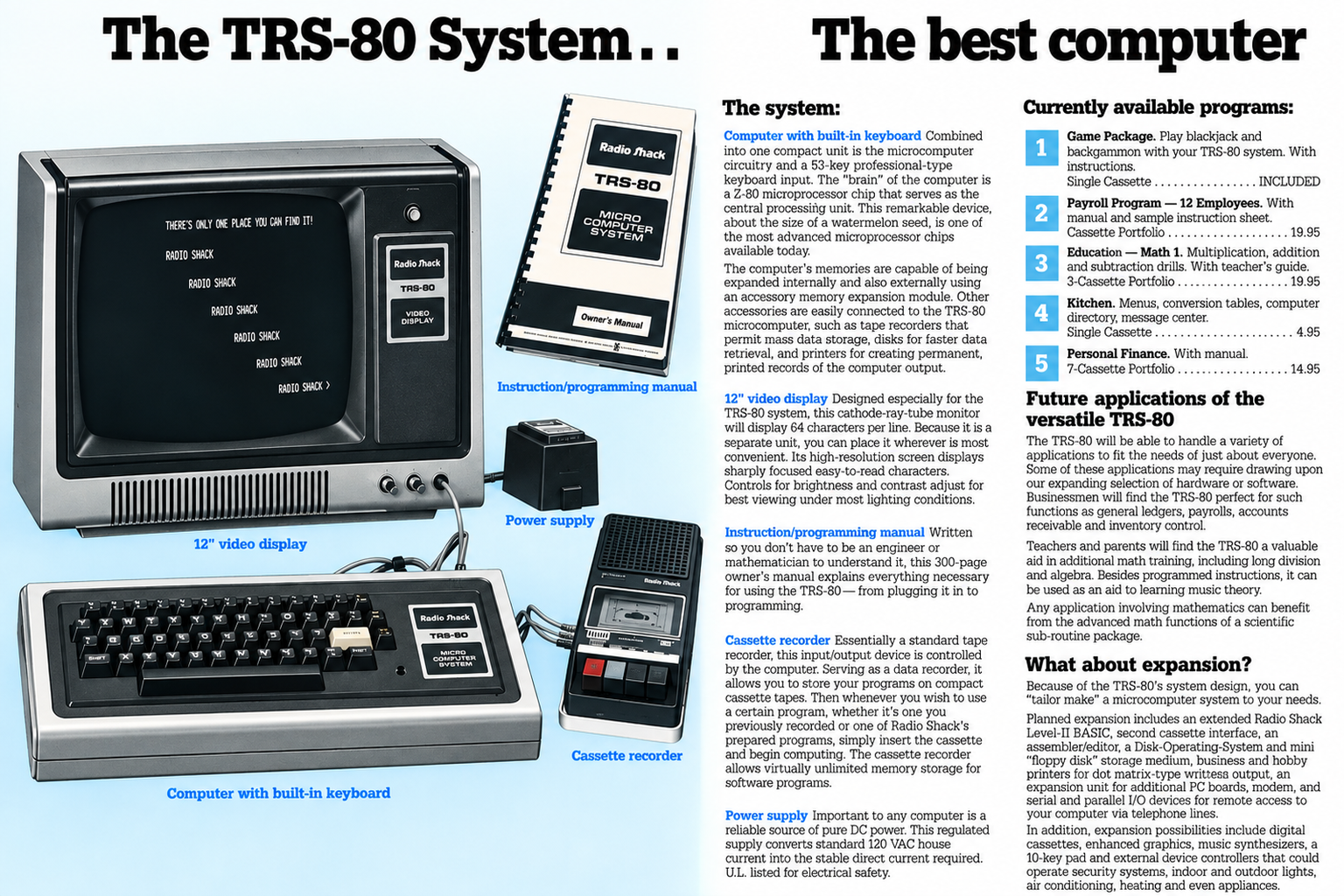
Radio Shack's enormous retail presence was one of the TRS-80's greatest advantages. Company catalogs, flyers and newspaper advertising introduced millions of customers to personal computing and documented the rapidly expanding Model I product line.
TRS-80 Model I Information Links
Wikipedia TRS-80 Model I Entry
Stats, basic hardware descriptions and capabilities. A useful starting point for general Model I information.
Provides an overview of system options, model numbers, peripherals and the history of the machine.
A detailed article covering the machine, its options and numerous Radio Shack catalog advertisements.
Ira Goldklang's TRS-80.com Model I Entry
An extensive Model I resource covering history, specifications, hardware, software and related information.
PC Magazine Look Back at TRS-80 Computers
A retrospective covering several of the better-known Radio Shack computers.
Radio Shack's Original TRS-80 Family
Low End Mac's overview of Radio Shack's Z80-based computer family and some of its contemporary competitors.
The Smithsonian National Museum of American History collection entry for the TRS-80.
A useful overview of the Model I and its historical impact.
David Keil's Model I Emulator Page
Information about David Keil's TRS-80 emulators and Model I emulation.
Vintage Computer Model I Entry
A concise reference covering the basic specifications of the Model I.
Time: Please Don't Call It Trash-80
A retrospective discussing Radio Shack and the TRS-80's success during the early personal-computer revolution.
Radio Shack's First PC: 45 Years of TRS-80
A modern overview of the Model I and its impact on the early personal-computer market.
TRS-80 Model I Resource Links
Expansion hardware and other products for various vintage Radio Shack TRS-80 microcomputers.
A traditional-format newsletter covering TRS-80 computers and the enthusiast community.
Hardware support for numerous TRS and Tandy computers.
A podcast focused primarily on the TRS-80 Model I, II, III and 4 families while also covering other Radio Shack computers.