
TRS-80 BUSINESS COMPUTER FAMILY
MODEL II • MODEL 12 • MODEL 16 • MODEL 16B • TANDY 6000
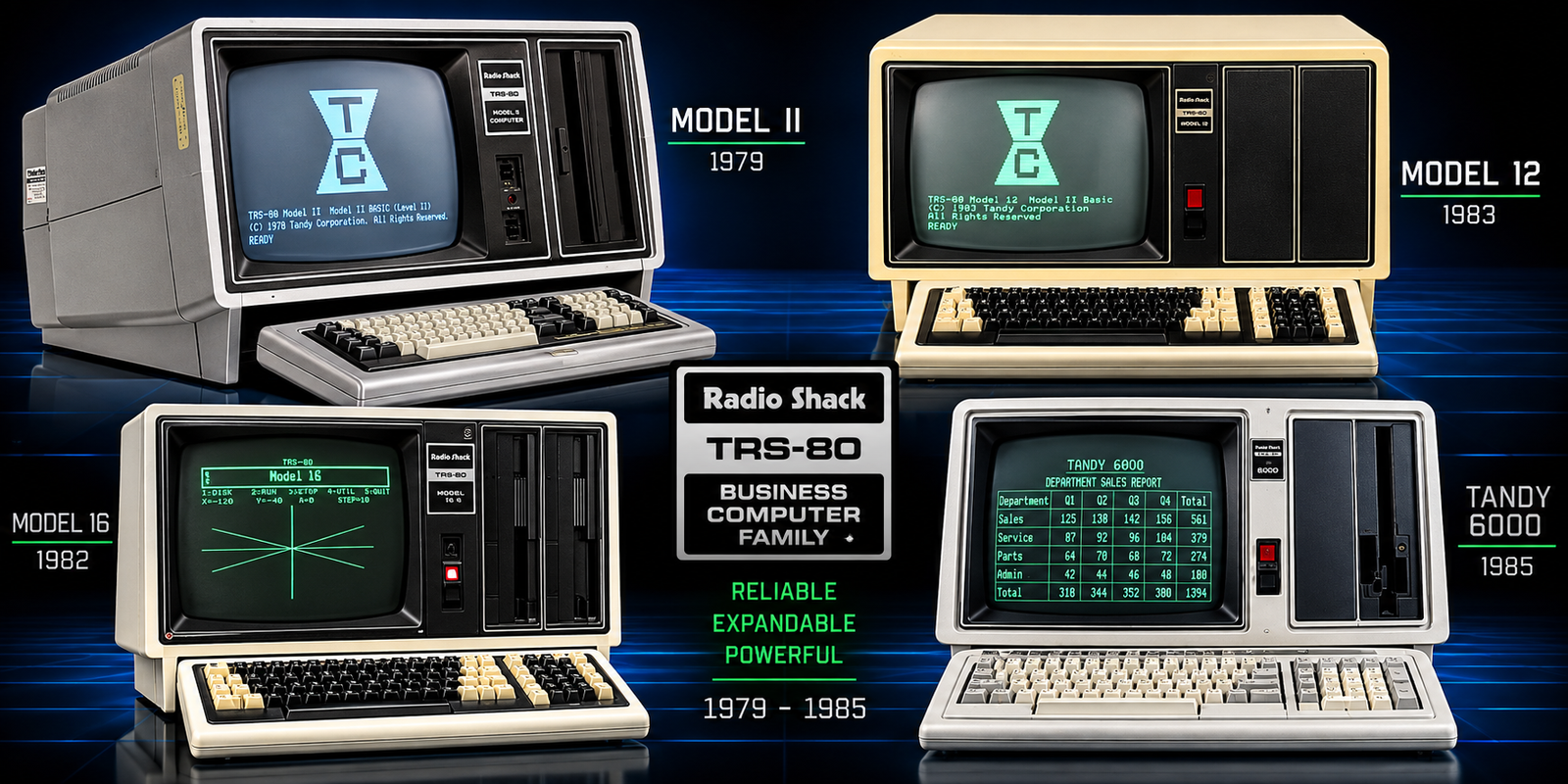
THE OTHER TRS-80
To many people, the name TRS-80 immediately brings to mind the Model I, Model III or Model 4. But beginning in 1979, Radio Shack offered another family of TRS-80 computers aimed squarely at the professional and business market.
The TRS-80 Model II was not an upgraded Model I. It was a completely different computer, designed from the beginning for business applications. Its 4 MHz Zilog Z80 processor, 80-column display, large 8-inch floppy disk drive and professional keyboard placed it in an entirely different class from Radio Shack's original home and small-business microcomputer.
Over the next several years the architecture evolved through the Model 16, Model 12, Model 16B and finally the Tandy 6000. The addition of the Motorola 68000 processor transformed the platform into a powerful multi-user system capable of running XENIX while retaining the Z80-based architecture required for Model II compatibility and peripheral control.
These machines represented the high end of Radio Shack's computer business. Fully configured systems could include multiple terminals, hard disks, printers and sophisticated accounting, database, word-processing and software-development packages.
TRS-80 MODEL II
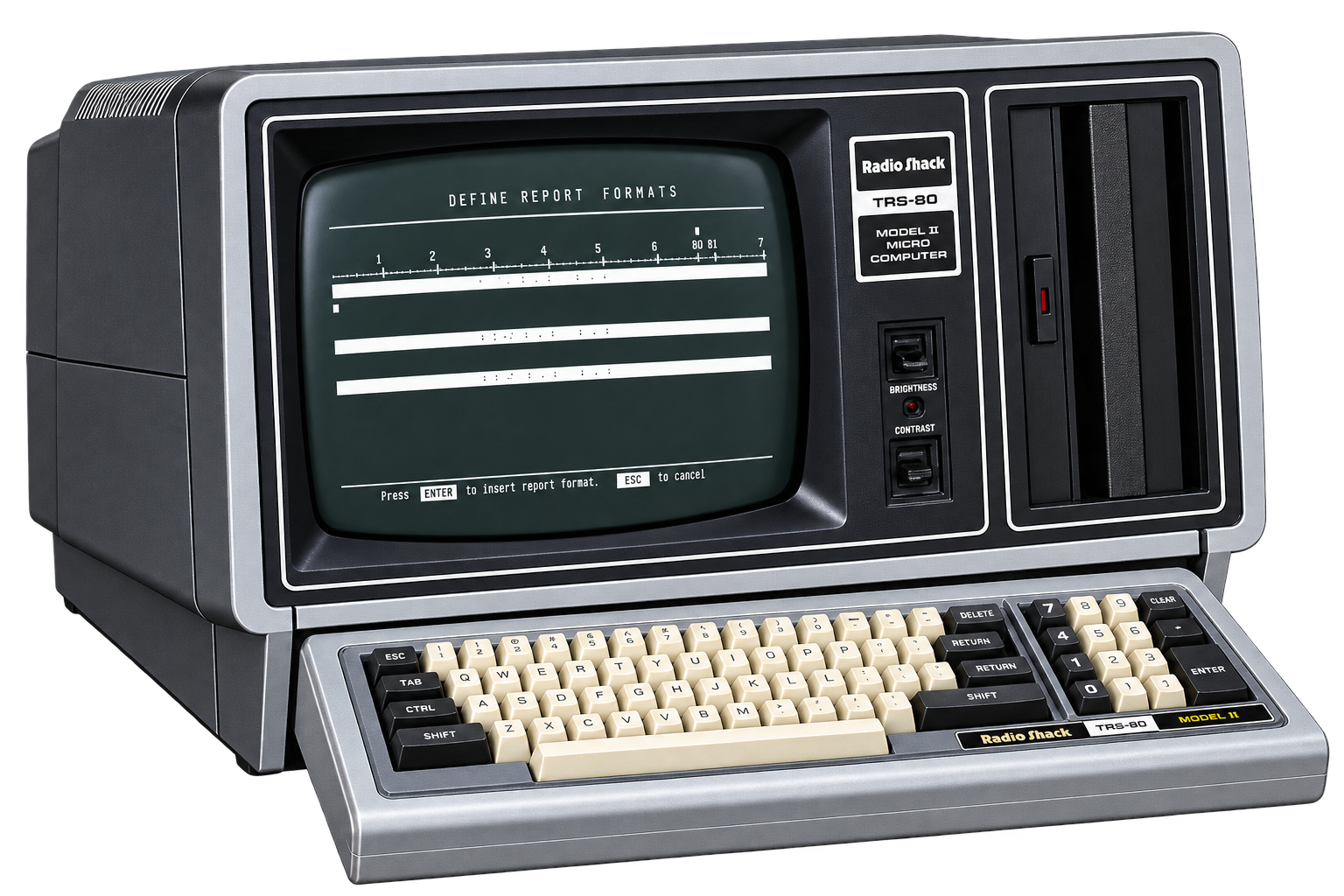
Introduced in 1979, the Model II established Radio Shack's dedicated business-computer line. Rather than extending the Model I architecture, Tandy designed an entirely new system around a 4 MHz Zilog Z80 processor.
The Model II incorporated a 12-inch display and an 8-inch double-density floppy drive into a substantial desktop cabinet. A detachable professional keyboard and 80-column by 24-line text display made it much better suited to accounting, word processing, database work and other business applications than the original TRS-80.
Early machines were available with 32K or 64K of memory. The computer provided parallel and serial interfaces and an internal card cage for expansion. External floppy systems allowed a properly equipped Model II to operate with multiple 8-inch drives.
| Specification | TRS-80 Model II |
|---|---|
| Introduced | 1979 |
| Processor | Zilog Z80A |
| Clock Speed | 4 MHz |
| Initial Memory | 32K or 64K RAM |
| Display | 80 columns x 24 lines |
| Internal Storage | 8-inch double-density floppy disk |
| Expansion | Internal card cage and external peripherals |
| Interfaces | Parallel and RS-232 serial interfaces |
| Operating Systems | Model II TRSDOS; CP/M available from third parties |
TRS-80 MODEL 16
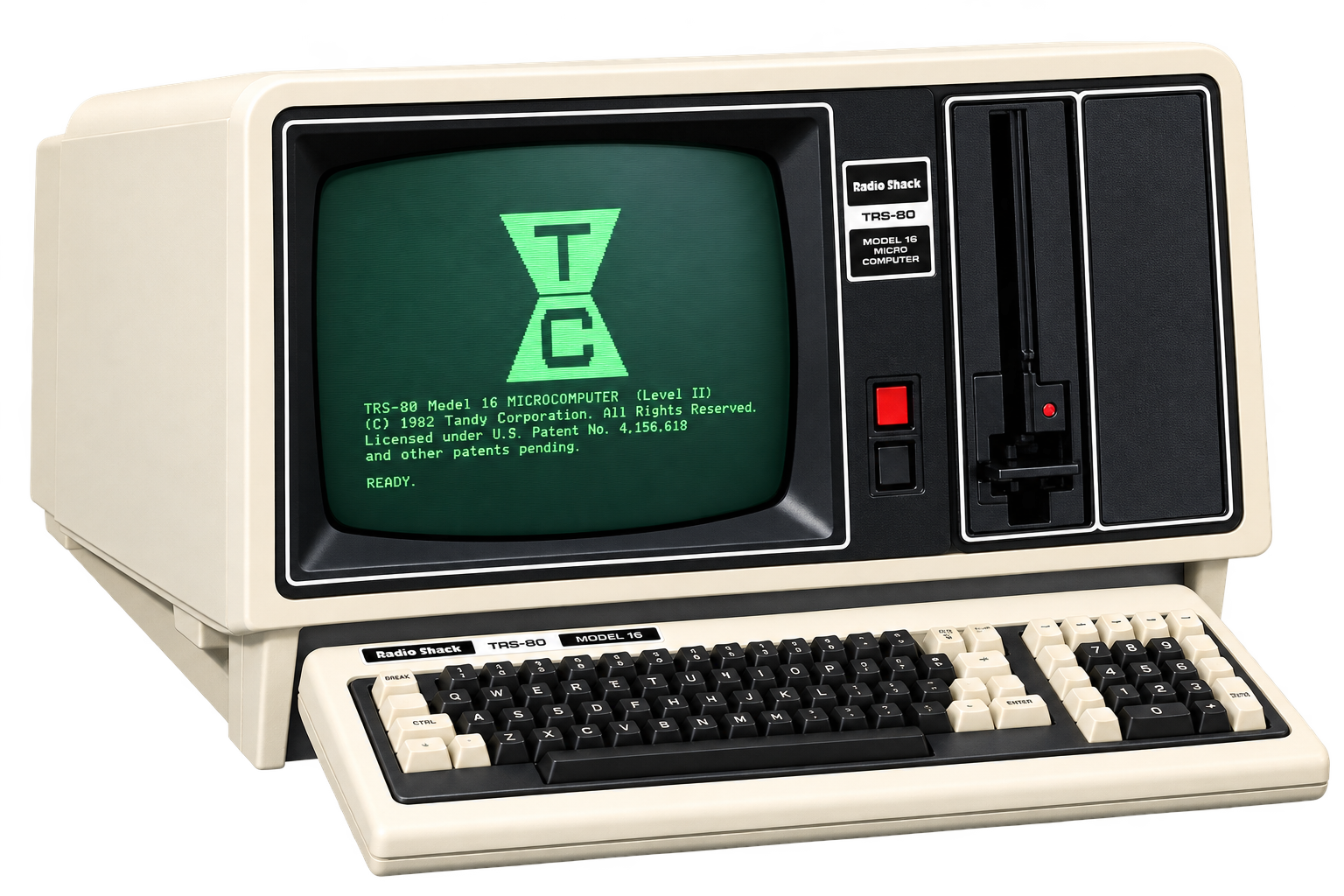
Introduced in 1982, the Model 16 represented the most important architectural change in the business computer family. Radio Shack retained the Model II's Z80-based hardware while adding a Motorola MC68000 processor.
This dual-processor arrangement allowed the Model 16 to retain compatibility with much of the existing Model II environment while providing the processing power and address space needed for a much more sophisticated operating system.
The Motorola processor made Microsoft's XENIX operating system particularly important to the Model 16. XENIX transformed the machine into a multi-user business computer capable of supporting terminals and multiple simultaneous users.
Existing Model II owners were not necessarily left behind. Radio Shack offered upgrade paths that could add Motorola 68000 capability to suitable Model II systems.
TWO PROCESSORS, TWO WORLDS
I/O & MODEL II
ENVIRONMENT
XENIX &
16-BIT APPLICATIONS
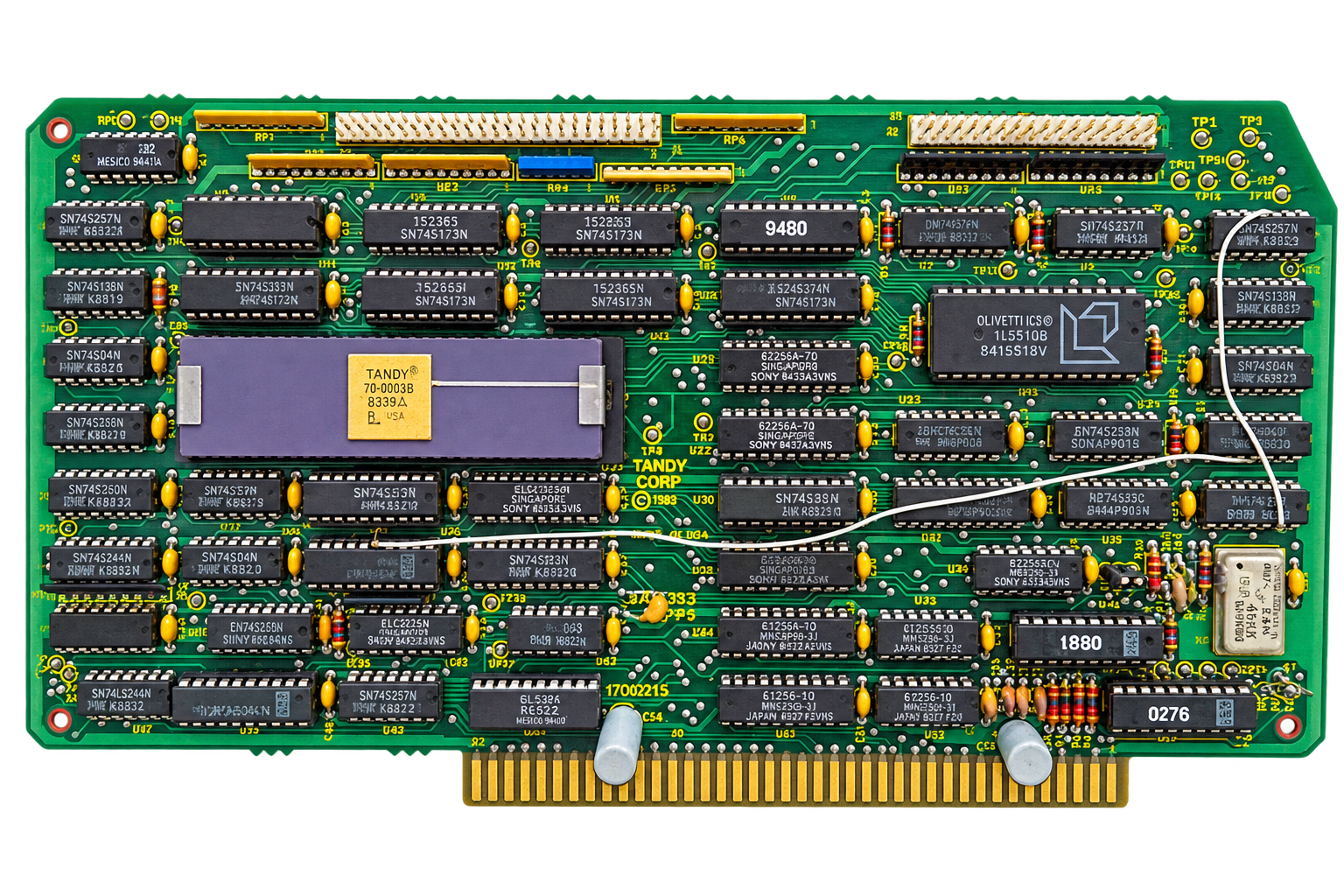
The dual-processor architecture is one of the most interesting aspects of the Model 16 family. Rather than simply replacing the Z80, Radio Shack added the Motorola 68000 as another processor within the system.
Under the 68000 environment, the Z80 and its associated hardware remained an important part of the machine's input/output subsystem. This approach allowed Tandy to build upon the existing Model II hardware platform while moving into a far more capable 16-bit computing environment.
TRS-80 MODEL 12
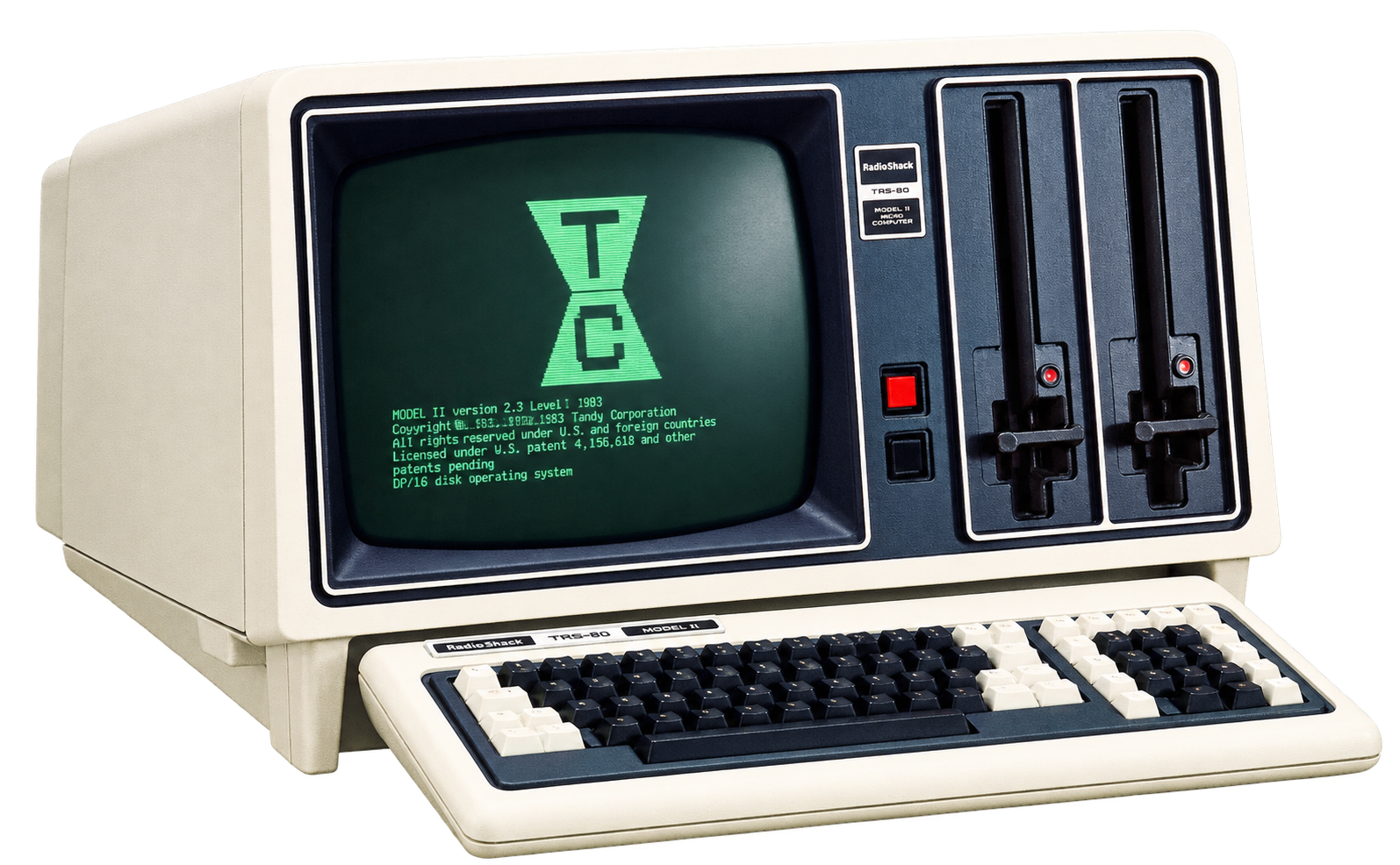
The Model 12 arrived in 1983 as the successor to the original Model II. It continued the Z80-based business-computer architecture but incorporated the redesigned cabinet and internal construction that would also form the basis of the Model 16B.
For businesses already invested in Model II software and peripherals, the Model 12 provided a path forward without requiring an immediate move to the more expensive Motorola 68000/XENIX environment.
The relationship between the Model 12 and Model 16B was particularly close. The Model 12 provided the Z80-based platform, while the addition of the appropriate Motorola 68000 hardware could transform the system into the more powerful dual-processor configuration.
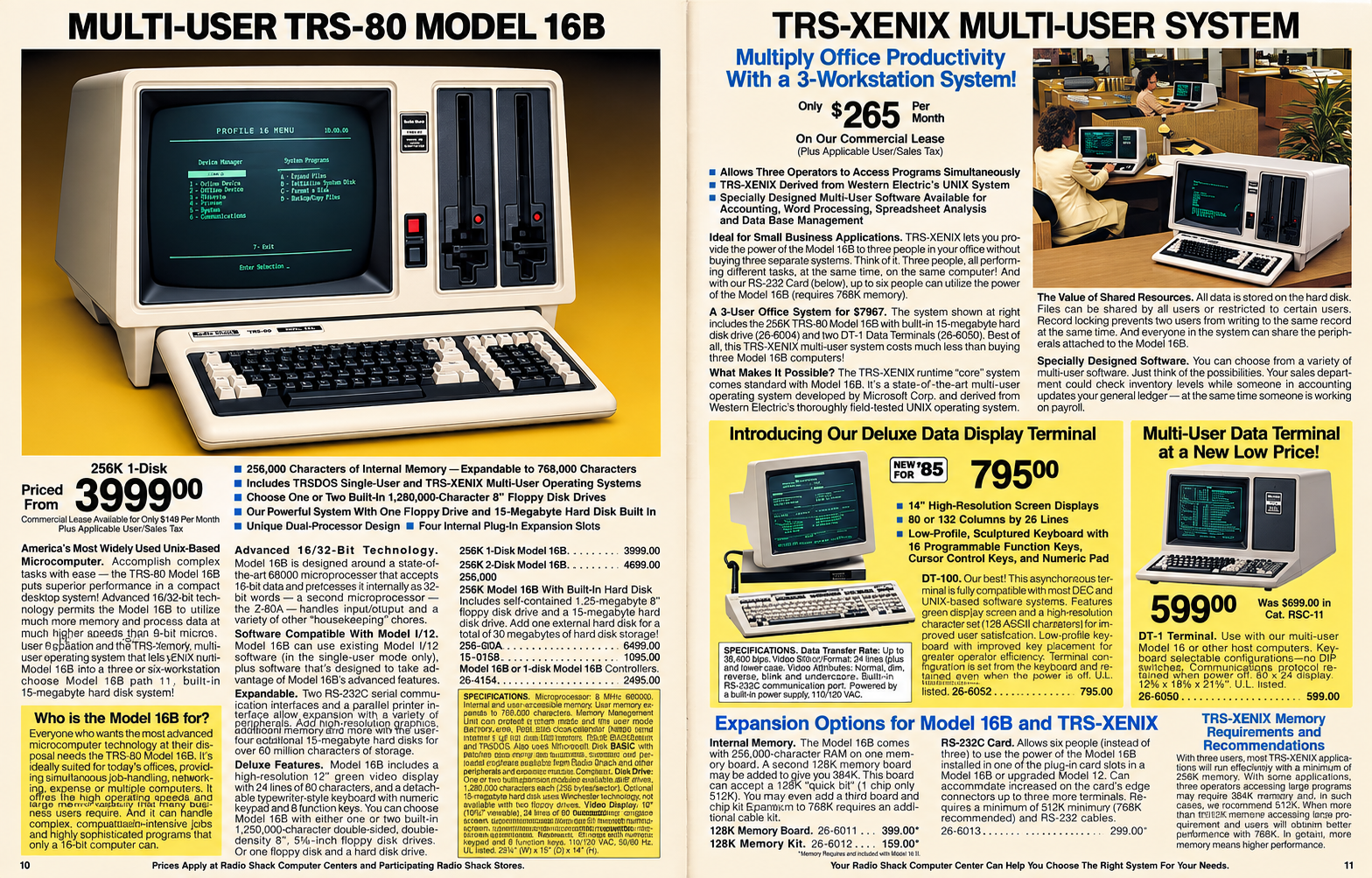
TRS-80 MODEL 16B
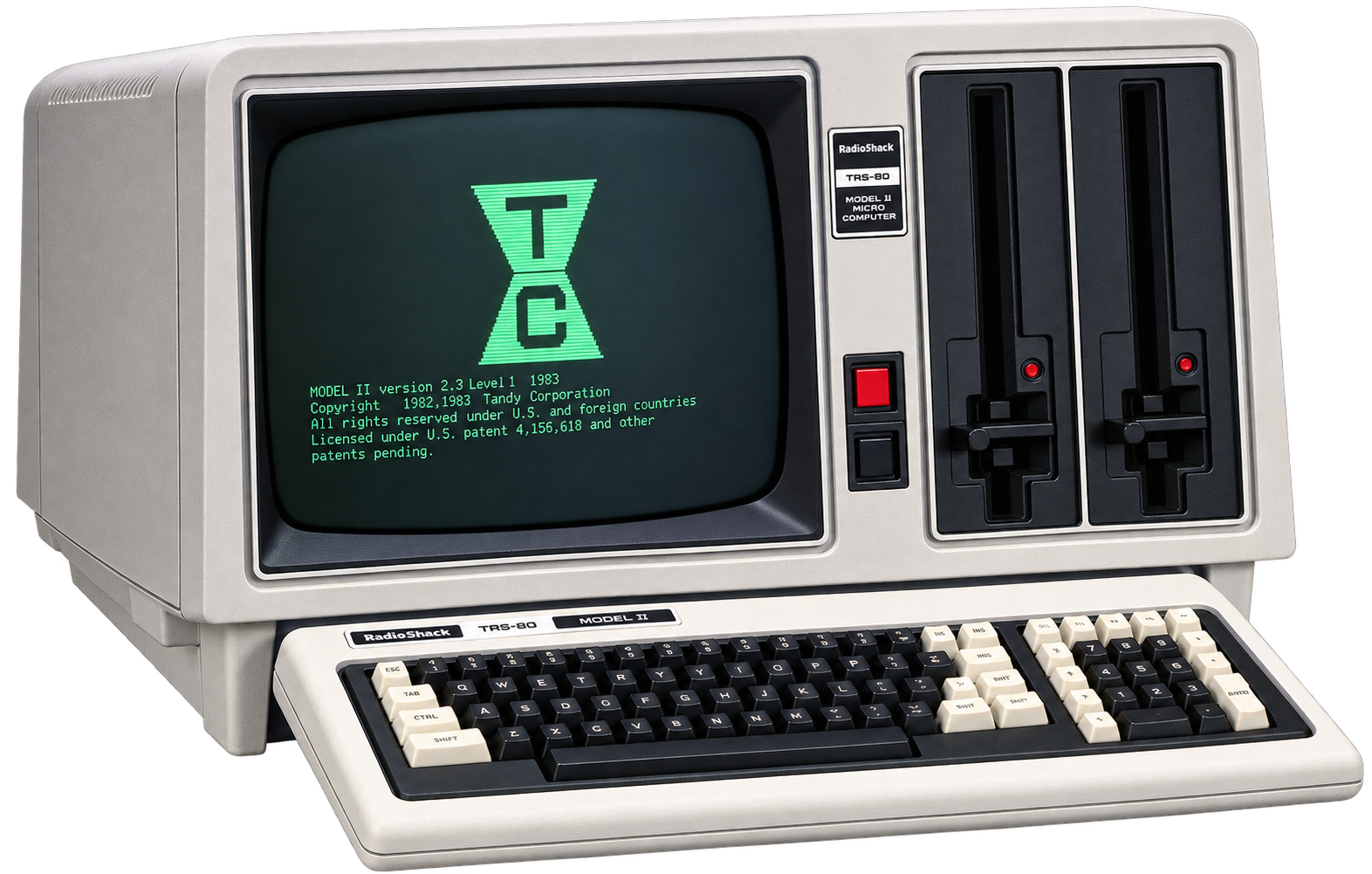
Introduced in July 1983, the Model 16B combined the redesigned Model 12-style chassis with the dual-processor concept introduced by the original Model 16. It was sold with 256K of memory and was designed around Tandy's increasingly important TRS-XENIX multi-user environment.
Like its predecessor, the Model 16B combined a Z80 subsystem with a Motorola 68000 processor. A revised, more compact 68000 processor board replaced the larger board used in the original Model 16.
The result was a second-generation implementation of Radio Shack's multi-user business architecture and a direct technological predecessor to the Tandy 6000.
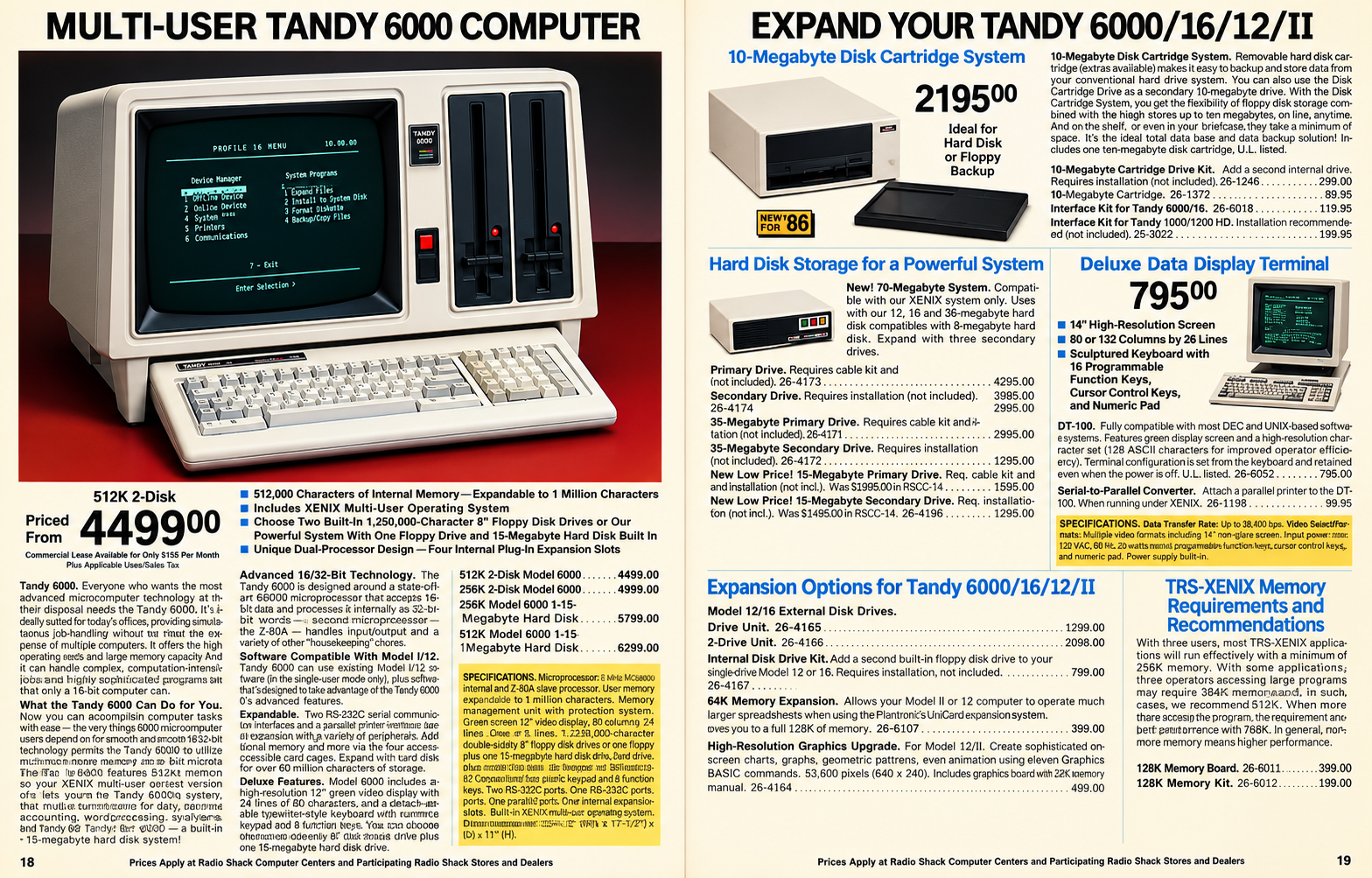
TANDY 6000
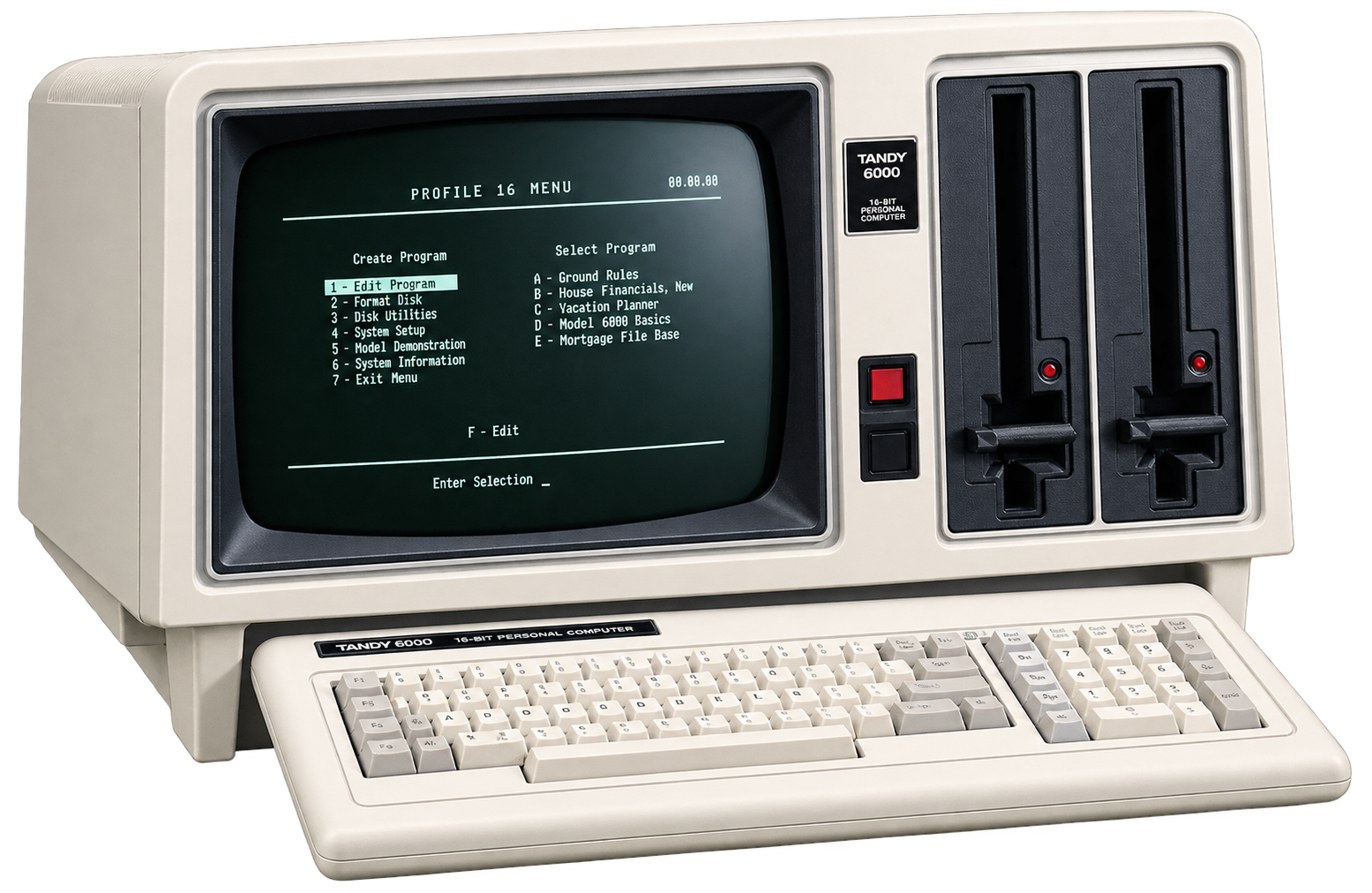
Introduced in 1985, the Tandy 6000 represented the mature form of the Model II business-computer architecture. By this time Tandy was moving away from the TRS-80 branding on its professional computer products, but the 6000 remained a direct descendant of the Model II family.
The system retained both Z80 and Motorola 68000 processing hardware while emphasizing the 68000 and XENIX environment. Configurations could include substantial memory, 8-inch floppy storage, hard disks and multiple user terminals.
With XENIX, a properly configured Tandy 6000 could function less like the popular conception of an early personal computer and more like a small multi-user business server, supporting several people working simultaneously.
FAMILY COMPARISON
| Feature | Model II | Model 12 | Model 16 | Model 16B | Tandy 6000 |
|---|---|---|---|---|---|
| Introduced | 1979 | 1983 | 1982 | July 1983 | 1985 |
| Z80 Processor | Yes | Yes | Yes | Yes | Yes |
| Motorola 68000 | No | No | Yes | Yes | Yes |
| Display | 80 x 24 | 80 x 24 | 80 x 24 | 80 x 24 | 80 x 24 |
| Primary Floppy | 8-inch | 8-inch | 8-inch | 8-inch | 8-inch |
| TRSDOS / Z80 Environment | Yes | Yes | Yes | Yes | Yes |
| XENIX | No | No | Yes | Yes | Yes |
| Multi-user Focus | Limited | Limited | Yes | Yes | Yes |
THE 8-INCH DISK SYSTEM
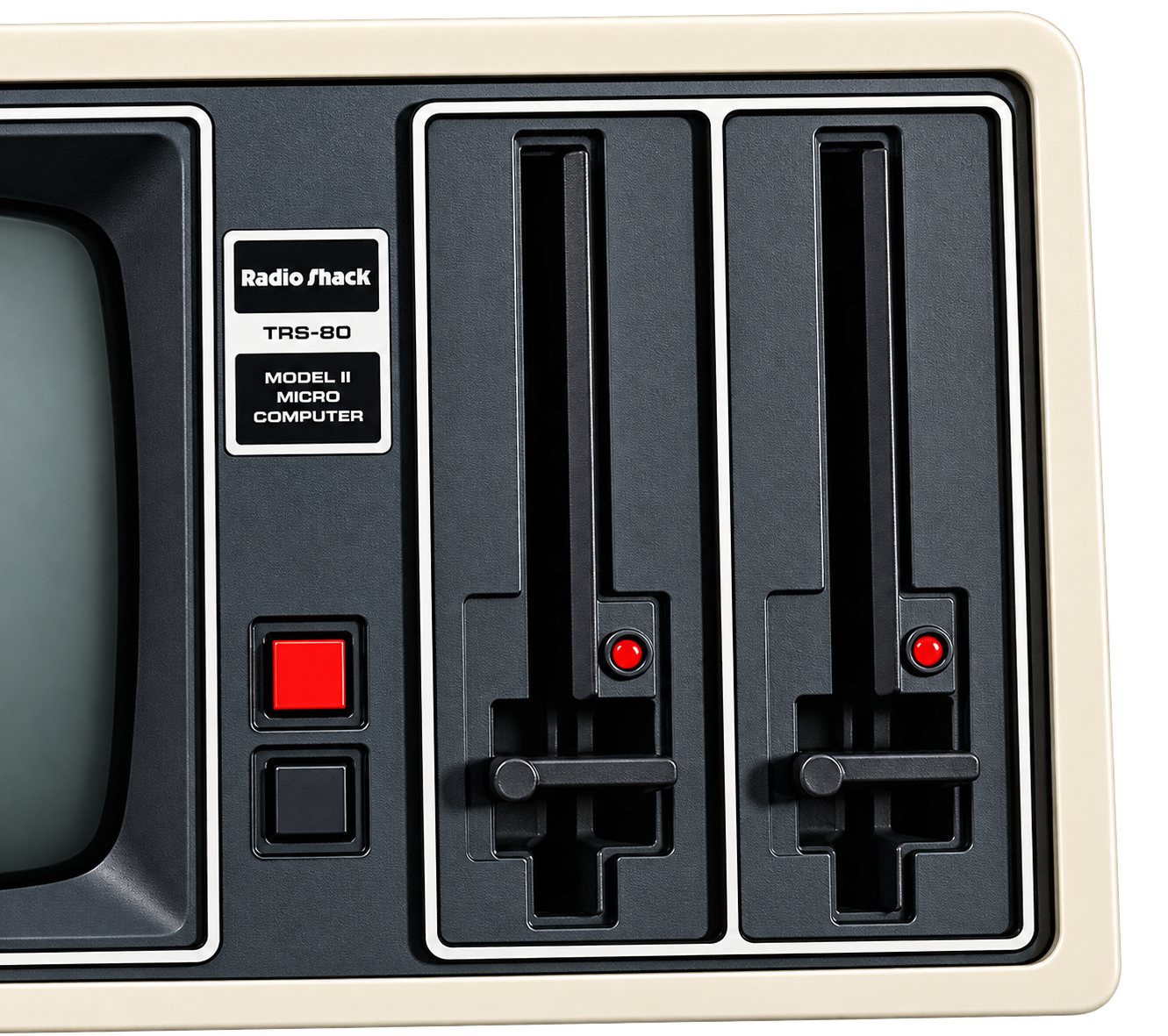
BUSINESS-CLASS STORAGE
The large 8-inch floppy disk was one of the most immediately recognizable features of the Model II family. At a time when Radio Shack's smaller TRS-80 systems commonly used 5.25-inch disks, the business systems used the physically imposing 8-inch format.
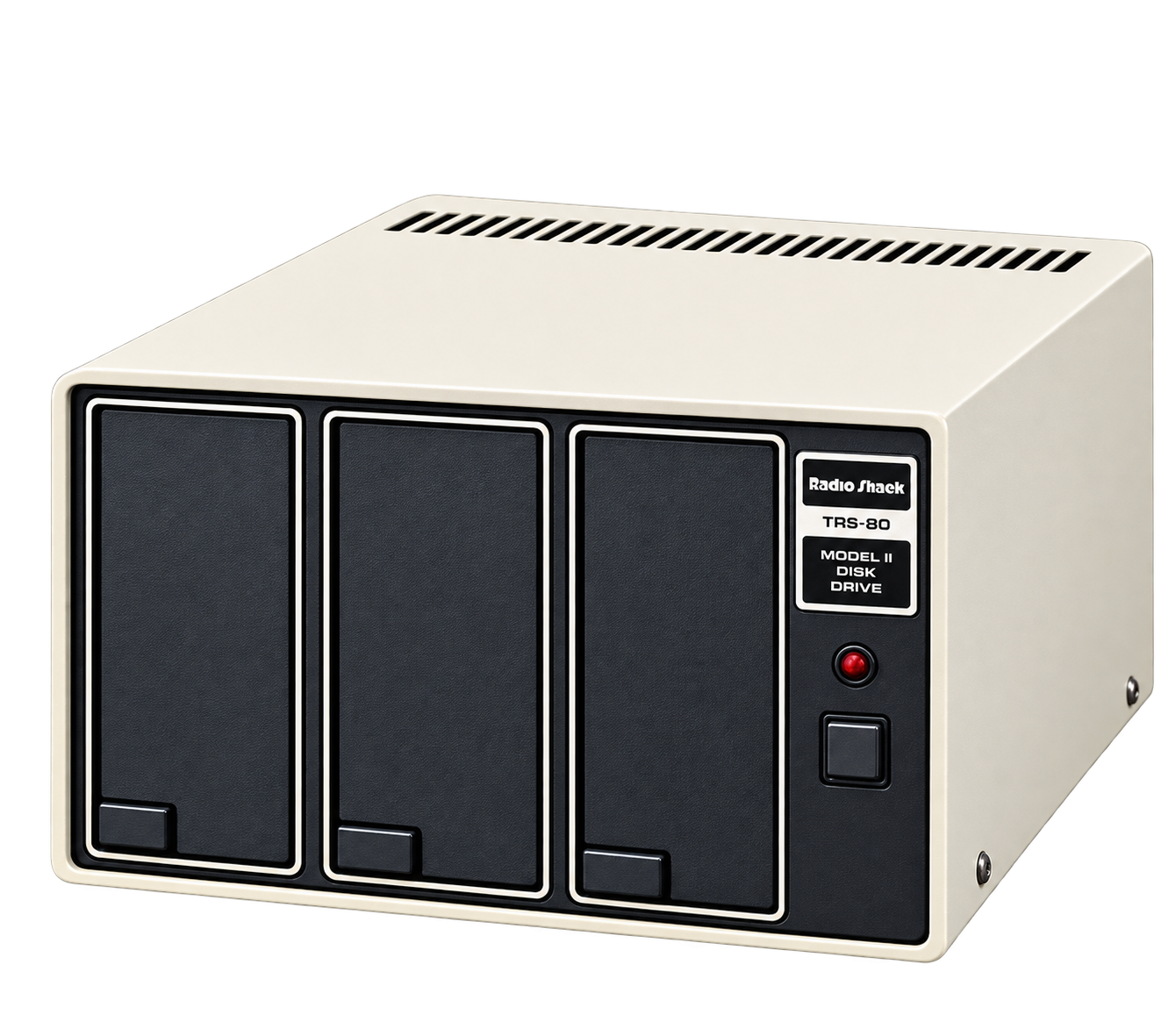
EXPANDABLE DISK SYSTEMS
External drive cabinets could expand the storage available to the Model II family. Hard-disk systems later provided much larger capacities for accounting databases, multi-user applications and other demanding business workloads.
OPERATING SYSTEMS
TRSDOS - The Model II family used its own branch of Radio Shack's TRSDOS operating environment, distinct from the versions used by the Model I/III/4 family.
CP/M - Third-party CP/M implementations were available for the Z80-based Model II family, opening access to a substantial library of business software outside Radio Shack's own TRSDOS environment.
XENIX - Microsoft's UNIX-derived XENIX operating system became central to the Motorola 68000-equipped systems. Tandy moved the Model 16 line toward XENIX in 1983, and TRS-XENIX became a defining feature of the Model 16B and Tandy 6000 as multi-user business systems.
Multi-user Computing - Under XENIX, the later systems could support multiple terminals and simultaneous users, moving the machines into territory normally associated with much larger business systems.
BUSINESS SOFTWARE
Radio Shack supported the business line with a substantial catalog of professional software. Applications ranged from general office programs to highly specialized accounting and development packages.
Accounting - General ledger, accounts receivable, payroll, inventory and other financial applications formed an important part of the software catalog.
Word Processing - Scripsit and later XENIX-based Scripsit products provided professional document preparation.
Spreadsheets - VisiCalc and later spreadsheet products gave businesses tools for budgeting, forecasting, financial analysis and planning.
Database - Profile and later multi-user Profile software provided database and information-management capabilities for customer, inventory and other business records.
Development - BASIC, COBOL, FORTRAN, assemblers and other programming tools allowed organizations to develop custom applications.
THE TRS-80 GOES TO WORK
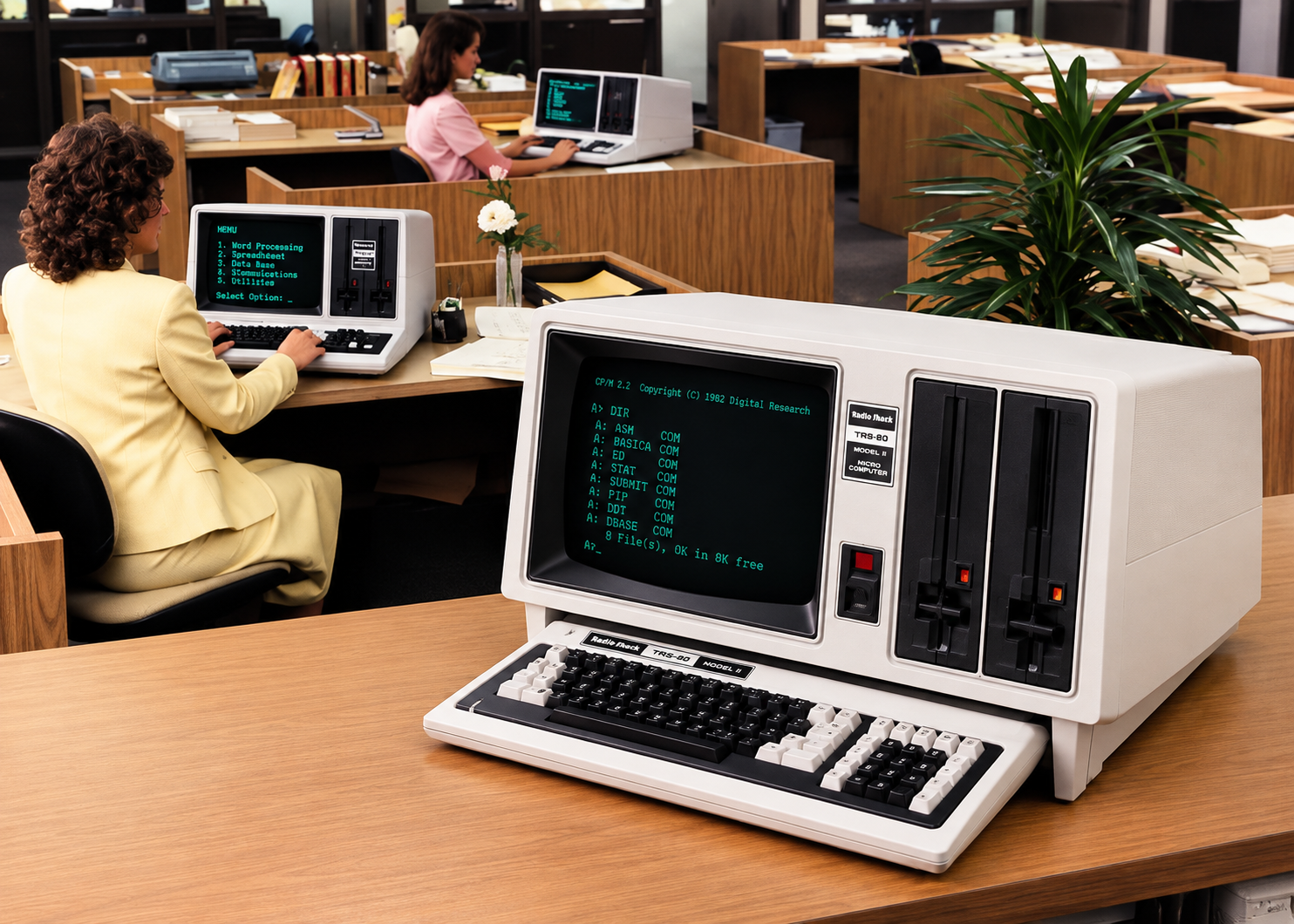
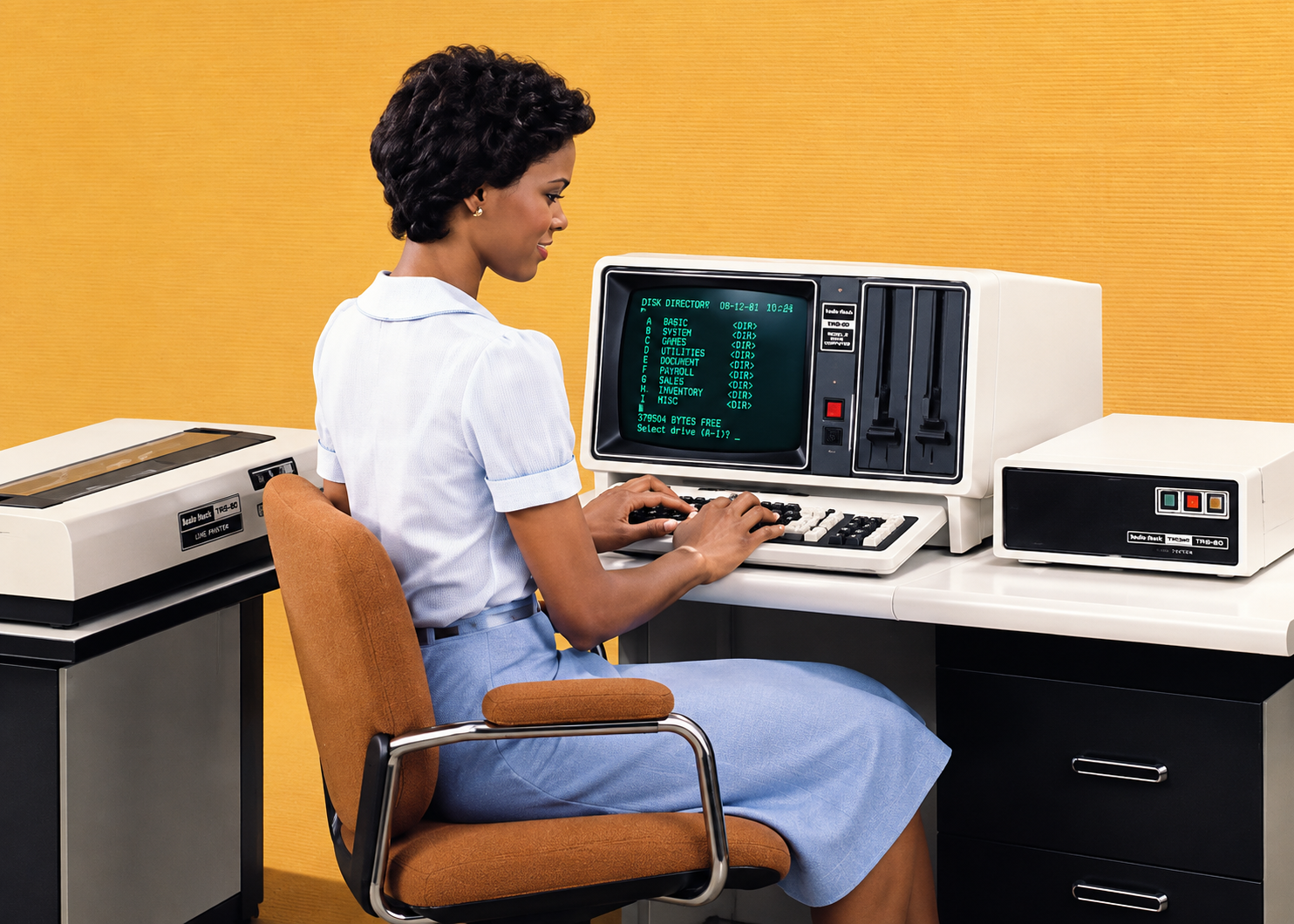
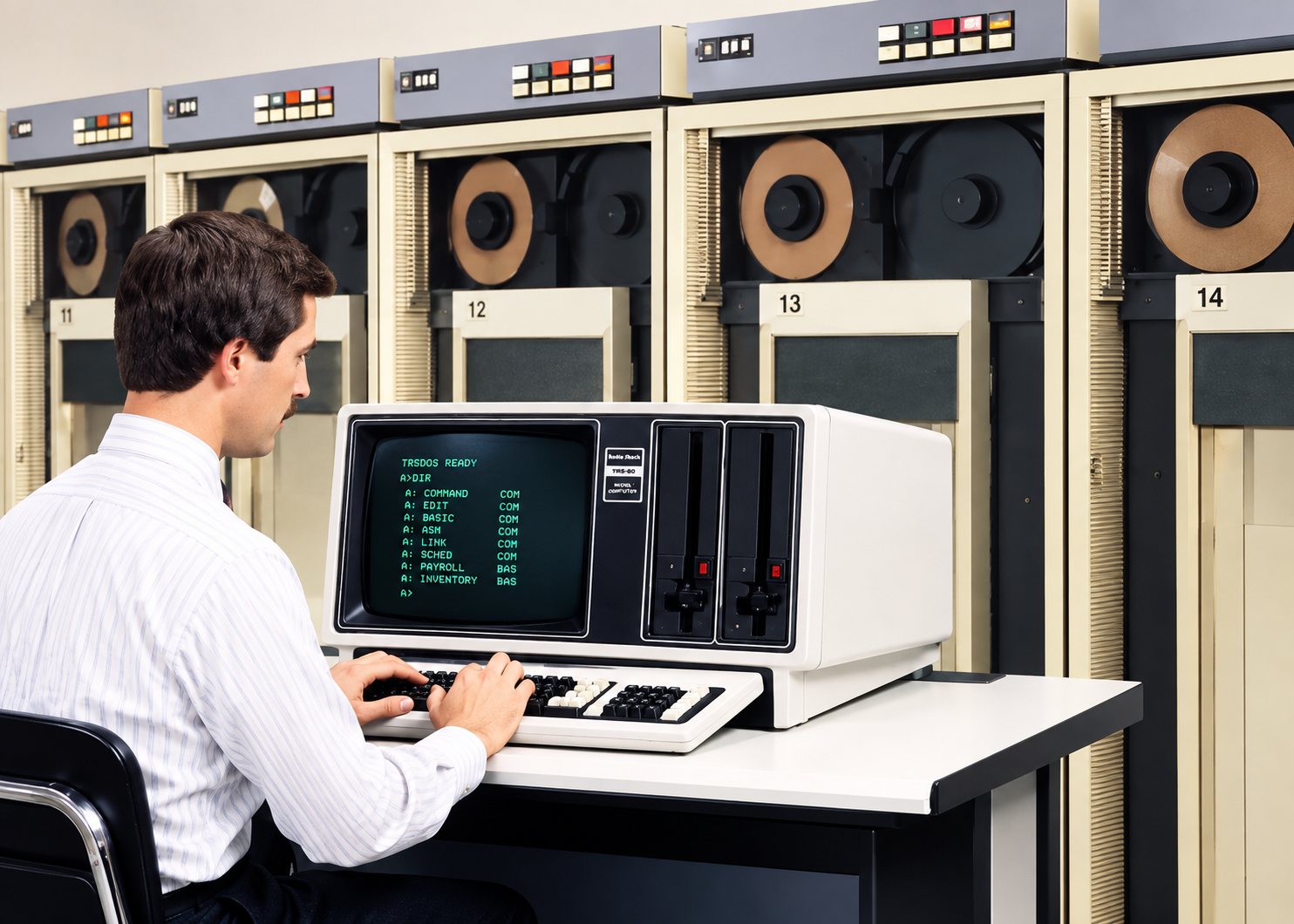
Radio Shack marketed the Model II family as serious office equipment rather than simply larger personal computers. Period advertising showed the systems handling accounting, database work, document preparation, printing and, with the later 68000/XENIX machines, shared multi-user workloads.
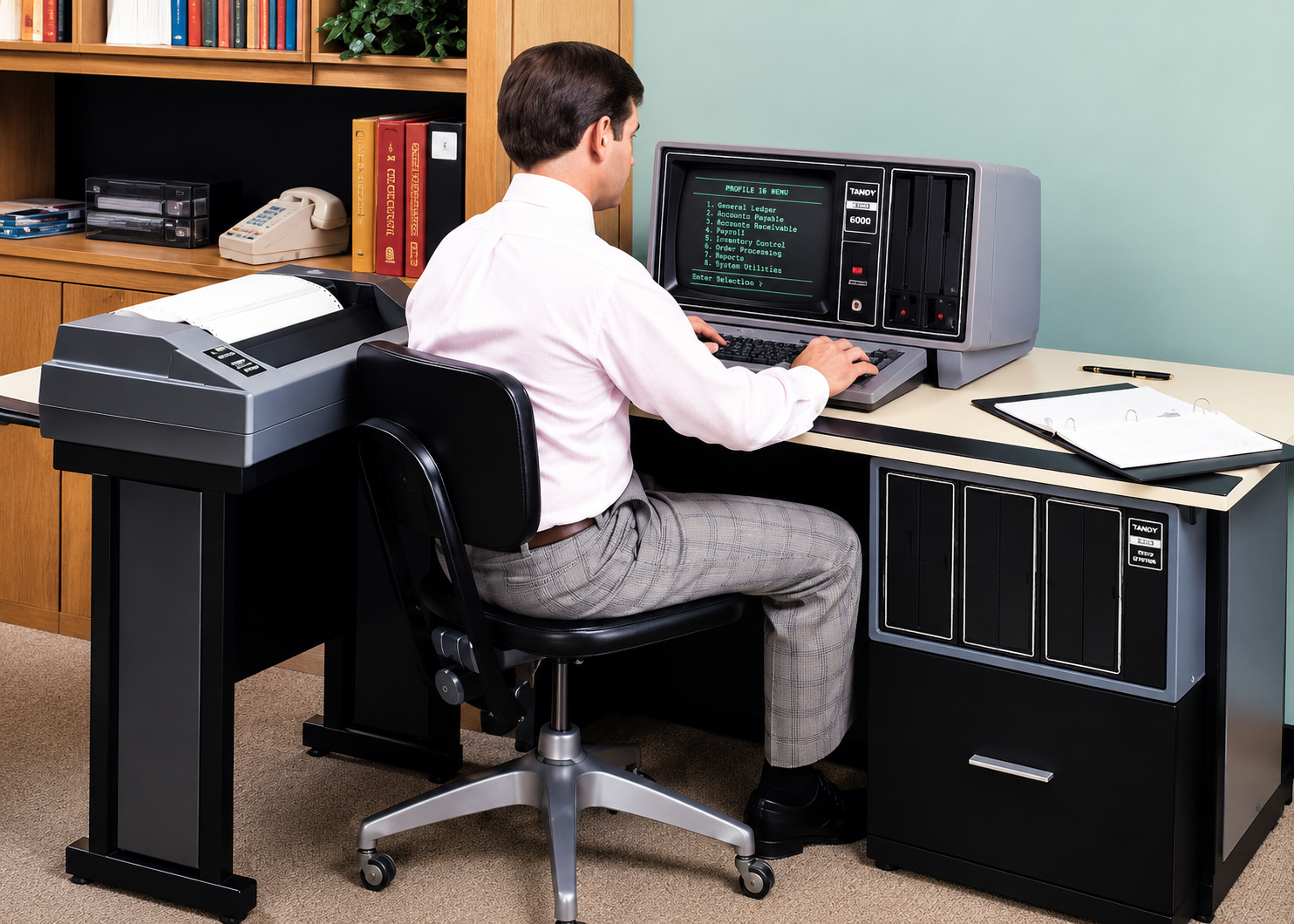
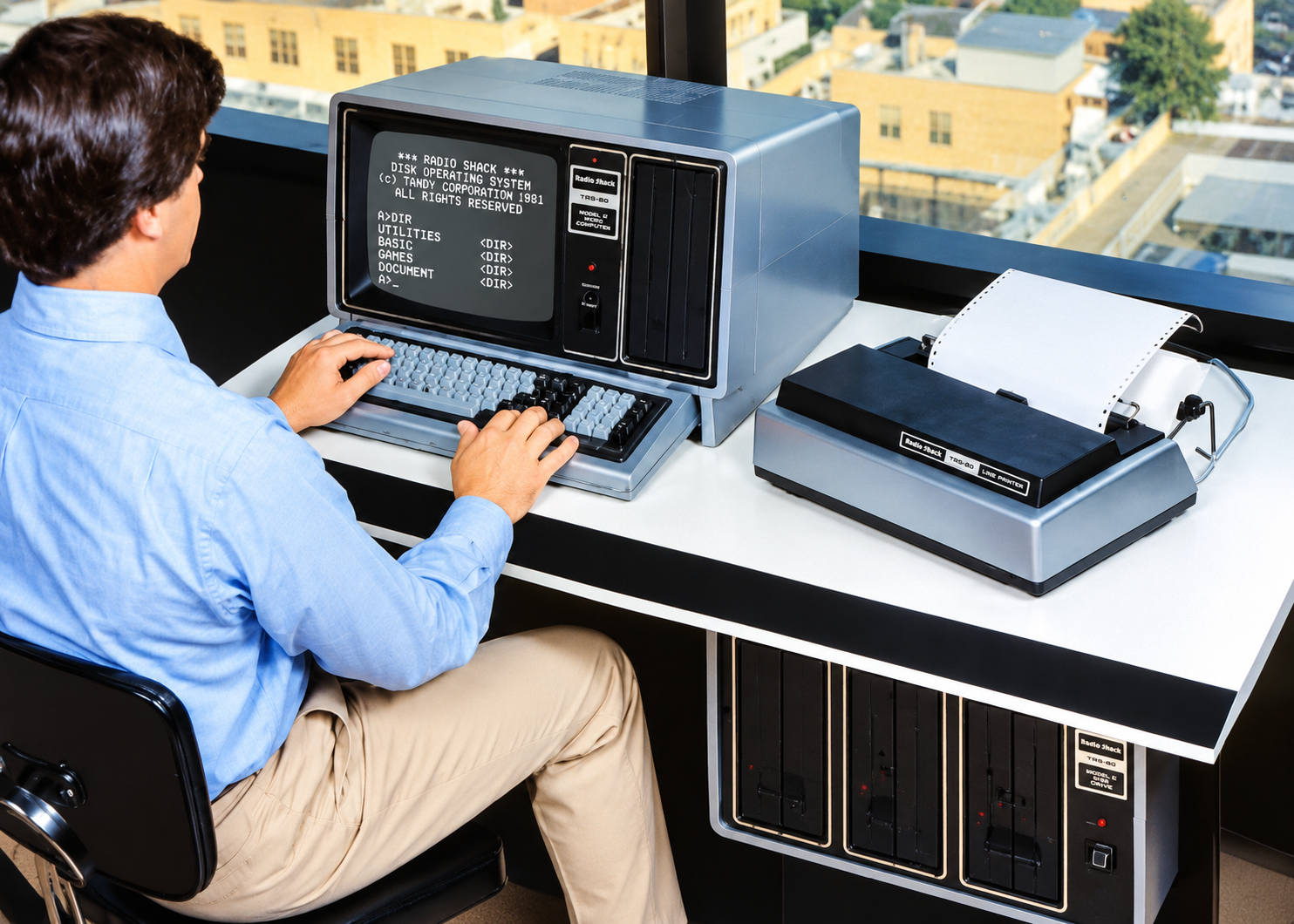
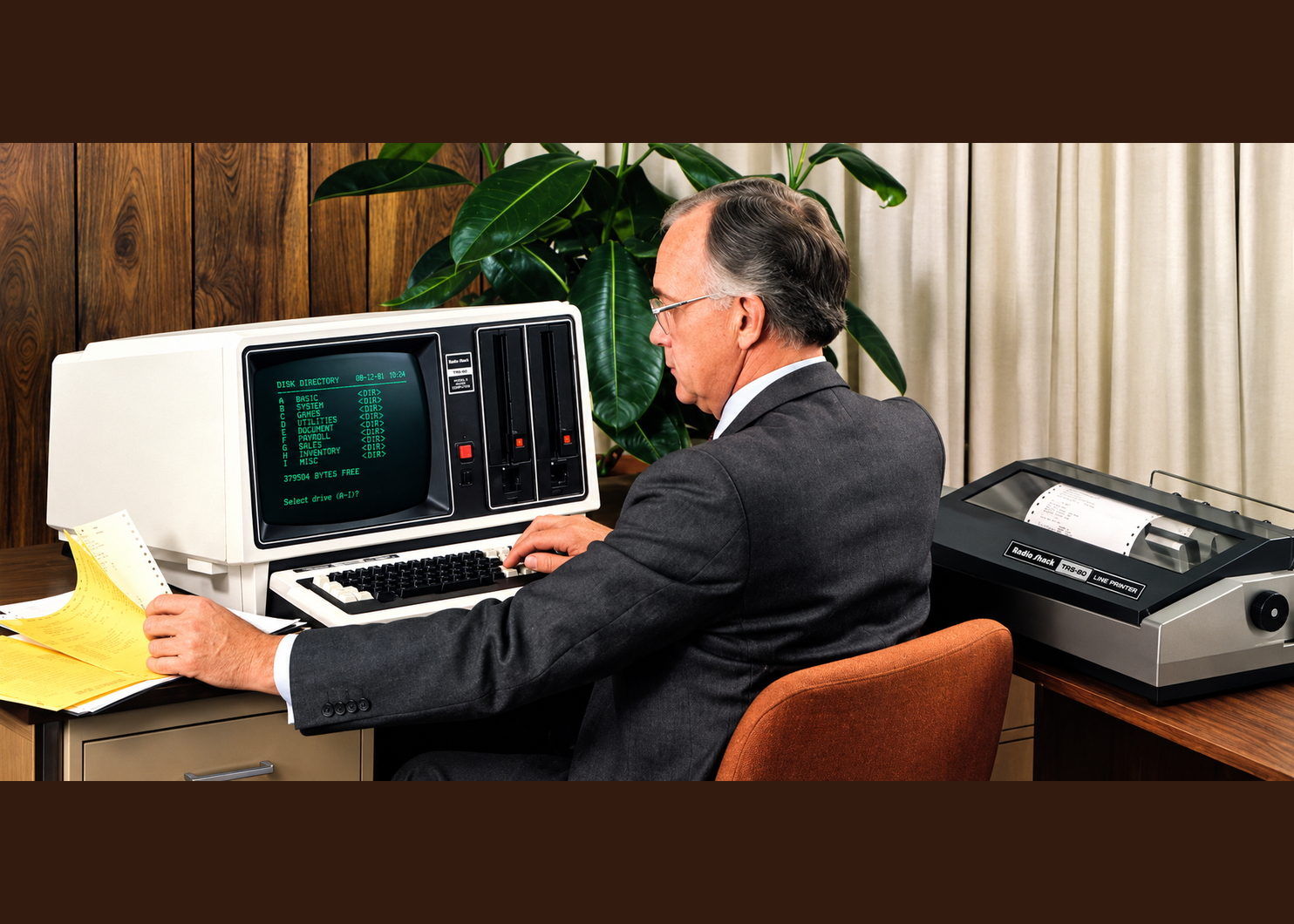
BUSINESS COMPUTER TIMELINE
CATALOGS & ADVERTISING
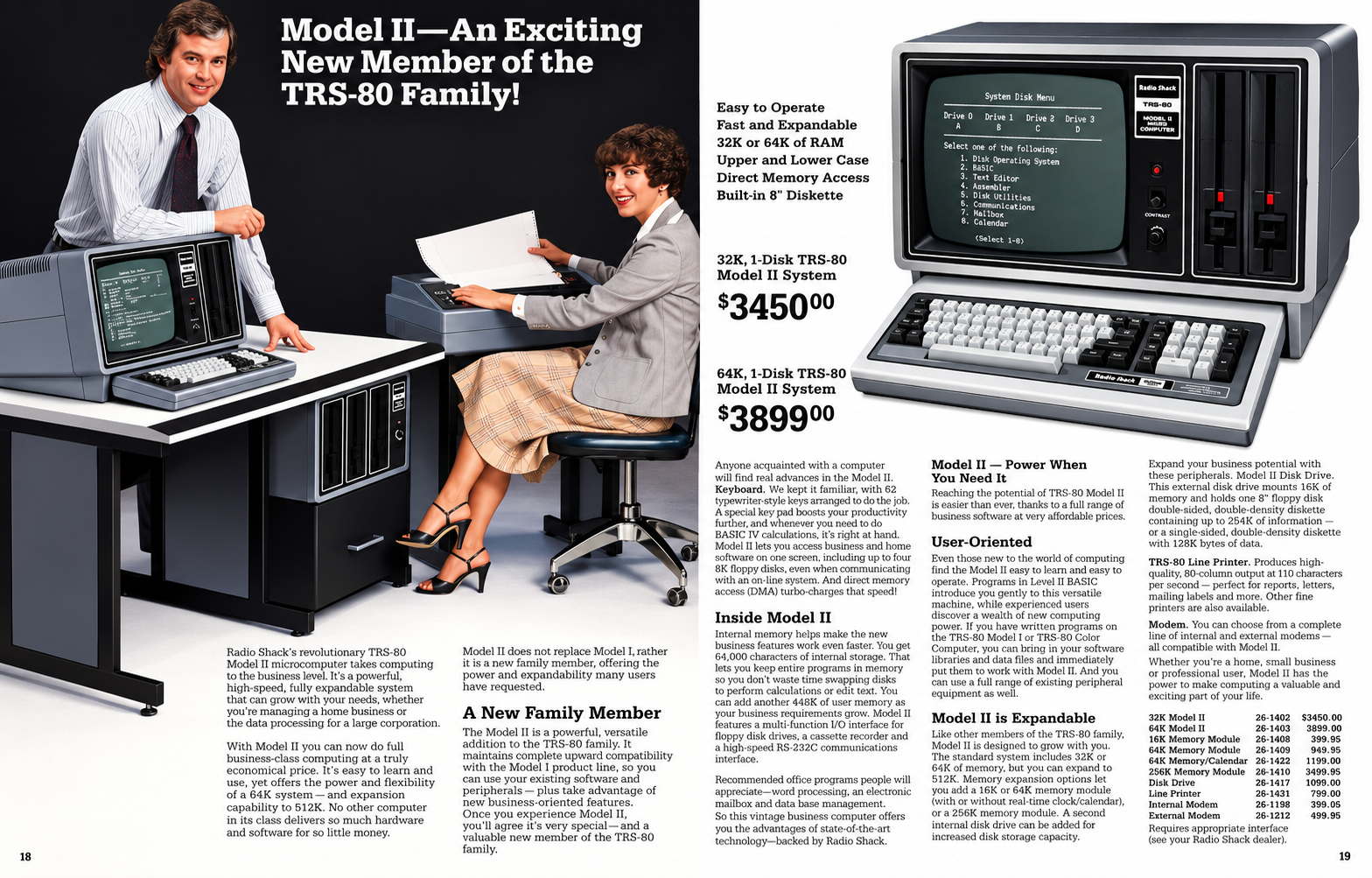
Radio Shack's catalogs documented the transformation of the business-computer family from a powerful Z80-based desktop system into a sophisticated multi-user platform.
TRS-80 Model II Information Links
Wikipedia TRS-80 Model II Entry
General specifications, history and an overview of the Model II business-computer family.
An overview of the system, configurations, peripherals and history.
Detailed Model II history, specifications, options and Radio Shack catalog material.
Ira Goldklang's Model II Entry
Model II and Model 16 history, specifications, hardware and software information.
A Model II preserved by the DigiBarn Computer Museum.
Hackaday article covering the repair and restoration of a Model II.
Model II Technical Information
A brief history and technical overview of the computer.
PSKI Model II Software Archive
An archive of software for the Model II family.
Centre for Computing History Model II
A brief history and hardware overview.
A large collection of technical documents related to the Model II family.
Information about using the Lo-Tech IDE adapter with the Model II.
Historical and technical information about the Model II and Model 12.
TRS-80 Model 12, 16, 16B & Tandy 6000 Information Links
A brief overview of the TRS-80 Model 12.
Information about the Model 16, Model 16B and Tandy 6000.
Overview of the Model 12 configuration and available options.
Photographs and technical documentation related to the Model 12.
Virginia Computer Museum Tandy 6000
Information about a restored machine from the Model II business-computer family.
Photographs and specifications for the later business-computer hardware.
An overview of the Model 16 and its place in the business-computer family.
Model 16 / 6000 CPU Board Spotter's Guide
A guide to identifying the different Motorola 68000 processor boards used in the Model 16, Model 16B and Tandy 6000.
Historical discussion of differences between the Model 16B and Tandy 6000.